Music Has Always Been Visual - 2026 Makes That Inevitable
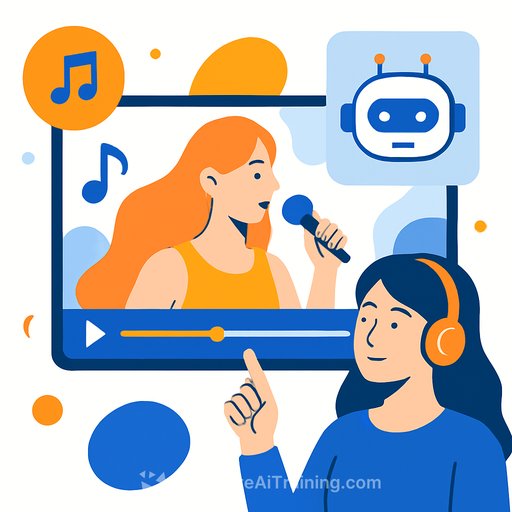
Music and visuals have always moved together. Album art, stage design, fashion, and videos shaped how we feel the sound. By 2026, that link tightens as AI music video generators turn songs into living visuals in minutes, without crews or long edits. This isn't about shortcuts. It's about a new visual language that grows from the track itself.
From Traditional Music Videos to Intelligent Visual Systems
Music videos started as captured performance, then grew into storytelling and cinema. Platforms pushed toward speed and impact across formats. Now, artists can work at the concept level while AI handles the translation from audio to motion.
Rhythm becomes movement. Melody maps to color. Structure becomes visual flow. The artist sets intent; the system renders it in sync with the music.
For a quick historical context on how we got here, see the evolution of music videos and broadcast-era influence via music video and MTV.
What an AI Music Video Generator Really Does
At its core, the system listens before it creates. Modern tools analyze musical features and convert them into visual behavior.
- Tempo and beat patterns
- Dynamic changes across the track
- Emotional tone and intensity
- Structure: intros, drops, bridges, transitions
The output isn't a static animation sitting on top of a song. It's a responsive visual that feels rhythmically alive and emotionally aligned. By 2026, the fidelity is strong enough for serious releases, not just tests or throwaway clips.
Why Artists Are Turning to AI-Driven Visuals
- Creative accessibility: You don't need a crew to ship a visual that matches your sound.
- Speed without compromise: Stay visible and consistent without losing your aesthetic.
- Room for experimentation: Spin up multiple interpretations of one track and pick the strongest.
- Platform flexibility: Build once, render for streaming, socials, and live shows.
The 2026 Shift: Emotion, Identity, and Real-Time Visuals
Emotion-aware systems can tell the difference between two tracks with similar tempos and very different moods. A slow, melancholic piece triggers a different palette, motion style, and pacing than a minimal ambient cut.
Artist identity becomes the anchor. Creators set color palettes, motion rules, and visual signatures that carry across releases. On stage, real-time visuals respond to the performance in the moment, turning each show into a unique visual set.
Beatviz: A Tool Built Around Sound, Not Templates
Beatviz reflects the shift from presets to musical responsiveness. Instead of forcing your track into rigid looks, it maps visuals to beat, structure, and emotional arc. The visual supports the song rather than competing with it.
For independent musicians and producers, this keeps the intent intact while skipping technical roadblocks. It's a practical path to consistent visuals that feel like your sound.
Practical Workflow: Turn a Track into a Visual System
- Prep your audio: Export a clean master and an instrumental if possible. Clear dynamics help the system "hear" your intent.
- Define identity: Set your palette, typography (if used), motion behaviors, and texture. Think "visual brand kit" for music-see the Design tag.
- Prompt for mood, not objects: Describe feeling, pacing, and story beats. Let the system choose forms that fit the sound.
- Iterate in passes: First pass for structure, second for style, third for detail. Lock the rhythm before polishing.
- Version for platforms: Cut master (16:9), portrait (9:16), square (1:1), and loopable hooks for shorts.
- Test live: Route stems or MIDI to drive real-time changes for performances and DJ sets.
AI as a Creative Partner, Not a Replacement
Technology has steered music from electric guitars to digital production. AI-driven visuals are another step in that line. The artist still sets the North Star. AI speeds execution and broadens what your visuals can do, while the emotional core stays human.
A New Visual Era for Independent Music
- More diverse visual storytelling across genres
- Bolder, more experimental aesthetics
- Stronger presence for emerging artists globally
We don't just hear music anymore. We experience it across screens, stages, and feeds-instantly and visually.
Looking Toward the Future
By the end of 2026, AI music video generators won't feel new-they'll feel necessary. As music changes, how we see it changes with it. Artists guide the vision. The tools translate sound into sight.
If you want structured ways to level up your workflow with generative video tools and AI, explore curated options at Complete AI Training: Generative Video Tools or browse the latest AI courses.
Your membership also unlocks: