Musk and Hassabis debate whether AI will unlock new laws of physics
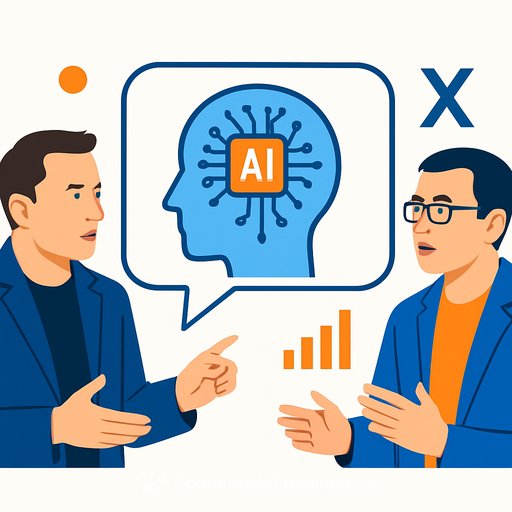
Elon Musk and Demis Hassabis, CEO of Google DeepMind, disagreed on Saturday about AI's role in future scientific discovery. Musk said major breakthroughs like those of Isaac Newton or Albert Einstein will likely remain rare. Hassabis argued AI could still help scientists find elegant descriptions of unsolved problems.
The exchange took place on X, the social media platform Musk owns. Hassabis had shared an excerpt from a biography describing his view that AI could uncover the underlying rules of reality.
Musk's position: most of physics is settled
Musk said modern physics already explains most of reality. He wrote that "the pattern of the quarks, leptons & photons is almost everything."
He predicted future scientific work will focus on creating new systems and technologies based on existing knowledge rather than discovering fundamental laws. In another post, he wrote: "Reality is the ultimate eval. Physics is the law, everything else is a recommendation."
Hassabis counters: AI can find patterns in complexity
Hassabis said AI could still advance scientific understanding by finding "elegant and compact descriptions" of unresolved scientific problems. This would require large-scale pattern analysis across massive datasets, he said.
Hassabis frames science as a search for deeper structure in the universe. He has long held that AI can help uncover the underlying rules of reality.
Musk said he shares Hassabis's sentiment on this point, though the two diverged on how much room remains for fundamental discovery.
For scientists exploring how AI can support research, AI for Science & Research courses offer structured training on practical applications in your field.
Your membership also unlocks: