
AI news ·
Musk's X.AI sues Minnesota to block enforcement of new anti-nudification law
xAI sued Minnesota over an AI nudification law with $500,000 fines per violation. The company claims the rule unconstitutionally restricts protected speech in its Grok tools.
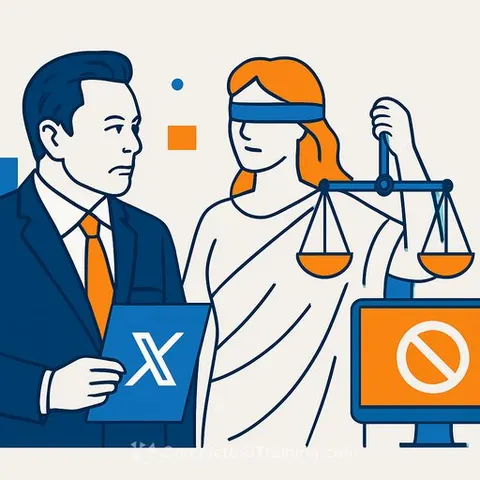
X.AI LLC, the Elon Musk-owned developer of the Grok family of AI models, filed a federal lawsuit on July 27 against Minnesota Attorney General Keith Ellison, seeking to block enforcement of a new state law that targets "nudification" technology. The statute-the first in the nation to penalize platform operators rather than just the creators of nonconsensual intimate deepfakes-takes effect August 1 and carries civil penalties of up to $500,000 per violation. The company argues the law is so overbroad that it will unconstitutionally force xAI to restrict its image-generation tools even for protected speech.
According to the complaint, the law will interfere with the operation of its flagship generative AI models known as Grok (from xAi), which include the image- and video-generation tool Grok Imagine. The suit claims that the statute "imposes an overbroad, content-based ban on free speech and the tools of visual expression in a clumsy attempt to prohibit 'nudification.'" xAI does not contest Minnesota's interest in curbing harmful deepfakes, but says the law "extends far beyond that goal, exposing a wide array of protected speech to civil liability and government sanctions."
Minnesota's strict liability approach
The legislation, Minnesota Statutes Section 325E, prohibits anyone who owns or controls a website, application, or software from "nudifying" an image or video on behalf of a user or from allowing users to do so through the service. Nudification is defined as altering or generating a depiction of an "intimate part" that was not in the original image of an identifiable person, if the result is realistic enough that a reasonable person would believe the body part belongs to that individual. The law borrows the definition of "intimate parts" from a criminal sexual conduct statute and includes the primary genital area, groin, inner thigh, buttocks, and breast-body parts that, xAI notes, cover ordinary clothing like shorts and swimsuits.
Unlike the federal TAKE IT DOWN Act and other state laws that target only the knowing dissemination of nonconsensual intimate images, the Minnesota statute contains no knowledge or intent requirement. xAI's complaint underscores that it is "a strict-liability statute keyed solely to whether a user succeeded in creating a covered image using the AI provider's platform," regardless of the safeguards the platform has in place. The law also permits victims to sue for damages, including compensatory and punitive awards, and explicitly preserves Section 230 immunity.
First Amendment and overbreadth claims
The lawsuit argues that the statute's definition of prohibited conduct is so broad it sweeps in images with artistic, political, satirical, educational, medical, or religious value. Because the definition of "intimate part" extends to inner thighs and breasts, xAI says the law "bans ordinary depictions of men without shirts, people in shorts or swimsuits, and other body parts routinely displayed in public-far beyond what an ordinary person would consider 'nudification.'" The complaint also notes that the law would reach images created by the subject themselves, and images that are never shared publicly.
"There is no safe harbor for good-faith efforts of the provider of general-purpose AI creative tools to avoid harms," the complaint states. xAI contends that less restrictive alternatives already exist, pointing to the federal TAKE IT DOWN Act and Minnesota's own laws against nonconsensual dissemination of explicit deepfakes. The company says it has no choice but to restrict Grok Imagine's features when the law takes effect, chilling protected speech that was freely available before.
Legislator and executive response
The day after the suit was filed, Representative Jess Hanson, the bill's primary drafter, called the lawsuit "absolutely disgusting" and said, "Nudification is simply an indefensible tool of AI. As the use of AI continues to grow, so does its potential harms, with nudification features being among the most urgent to address-and that's exactly why we banned them in Minnesota." Governor Tim Walz posted on X, "See you in court, creep."
Why this matters for legal professionals
The case tests how far states can go in regulating AI tools without running afoul of the First Amendment, particularly when the law imposes strict liability on platform operators for user-generated content. The outcome will shape the legal landscape for AI for Legal practitioners advising developers, as it marks the first time a court will weigh a content-based, no-fault regime against a platform's expressive rights and the availability of existing criminal and civil remedies. The emphasis on "intimate parts" as defined in a criminal code-rather than sexually explicit content-also raises novel questions about the precision required in AI legislation.