
AI news ·
My Visa Source uses AI for document work while keeping legal judgment with lawyers
AI-informed clients now walk into immigration consultations with chatbot research and confident conclusions that may still miss a single checkbox forfeiting their appeal rights. Lawyers increasingly must correct knowledge, not supply it.
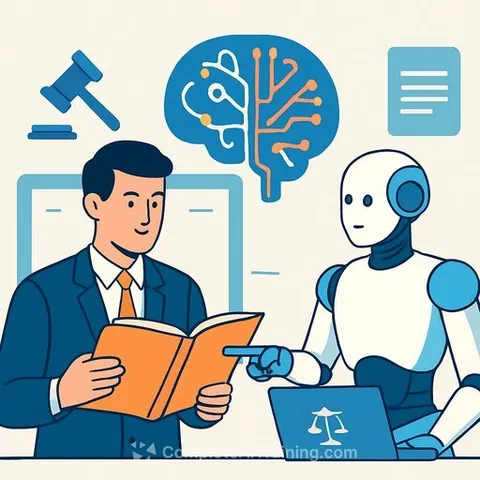
The Knowledge-Judgment Gap: How AI Changed Immigration Law Practice
Clients arrive at immigration consultations with AI-generated research, multiple chatbot queries, and confident conclusions about their eligibility. They know more than they did five years ago. What they don't know is whether that knowledge applies to their specific situation.
This is the central problem facing immigration lawyers in 2026. A client researching spousal sponsorship across three AI platforms may still miss that a single checkbox selection forfeits their right to appeal. They may not understand how a brief overstay years ago changes their entire eligibility analysis. They have information. They lack judgment.
Sonia Mann, Co-Founder and COO of My Visa Source, describes the shift directly: "When the internet became big, clients knew so much because they were reading blogs, watching videos. Now they've taken that and grown their knowledge exponentially because of AI."
The Numbers Behind Over-Information
Research from Docketwise found that 51 percent of prospective law firm clients now view chatbots as a useful starting point for exploring legal options. They arrive with conclusions, sometimes accurate, often incomplete or wrong for their specific circumstances.
"Sometimes it's information overload," Mann said. "They don't even understand what they know."
Government Agencies Are Using AI Too
The challenge runs both directions. While clients query AI tools to prepare their cases, government agencies use automated systems to process them.
Immigration, Refugees and Citizenship Canada has deployed bulk processing software for high-volume application types. In the United States, USCIS and ICE use AI for fraud detection, document processing, and compliance risk scoring. Federal courts have increasingly quashed refusal decisions that fail to demonstrate individualized review of specific evidence on file.
When automated systems produce outputs that affect a person's immigration status, human review becomes the critical safeguard. Applicants and their counsel are now challenging decisions on the basis that refusal letters were generated through automated means without the procedural fairness the law requires.
Infrastructure, Not Replacement
My Visa Source treats AI as infrastructure for legal work, not as a substitute for legal analysis. Document drafting, translation, legal research, and case precedent review are areas where AI tools reduce error and compress time.
What AI cannot do is assess a specific client's risk profile, account for discretionary factors that affect a decision-maker's analysis, or determine the real strategic options across a complex factual situation.
Immigration law requires this kind of judgment more than most practice areas. An immigration case involves overlapping eligibility criteria, multiple regulatory frameworks, and timelines that interact with employment, family status, and physical presence. The strategic advice that determines which path a client takes, and whether that path produces the outcome they need, requires human judgment.
"AI should be a tool that you use to become a better lawyer, to serve your clients," Mann said. "It should not replace your decision making. If it makes you better at your job, faster, more efficient, that's fantastic."
What Cannot Be Automated
Some cases are not primarily legal problems. A client facing a medical emergency who is also at risk of losing status if a decision does not arrive in time is navigating something more than a regulatory process. A family separated while an appeal moves through the system is living with a specific question about whether they will be allowed to stay in the same country.
AI can help draft the brief. It cannot have the conversation that determines whether a family stays together.
My Visa Source's operational infrastructure, KPI-driven structure, precedent library, and response-time standards exist so that when a high-stakes case arrives, the team can respond fast. The system creates capacity for the human response.
"We literally come together in the office and say, okay, this is important," Mann said. "What is the risk to the family legally? What can we do? How can we make sure that people can stay here and they can be together? That's where the human element comes in."
Adaptation Without Replacement
My Visa Source's position on AI is direct: resistance is not an option. The technology exists. Fighting it would be illogical.
"We have to adapt our practices to make sure that we're providing legal services in a world with AI, harmoniously, in a way that serves our clients and is regulatory compliant," Mann said.
Adaptation and replacement are different things. The firm is building tools and processes that use AI to make legal work faster, clearer, and more consistent. The judgment that produces the outcome stays with the lawyers. The empathy that matters to the person on the other side of it stays there too.
For legal professionals managing this shift, resources on AI for Legal practice and AI Learning Paths for Paralegals can help teams build competency with these tools while maintaining the human judgment immigration law requires.