
AI news ·
Navigating Copyright in the Age of AI: How the US Copyright Office Defines Human Creativity and AI Collaboration
The US Copyright Office registers AI-assisted works but grants protection only if human creativity is key. Legal debates continue as AI reshapes art and music industries.
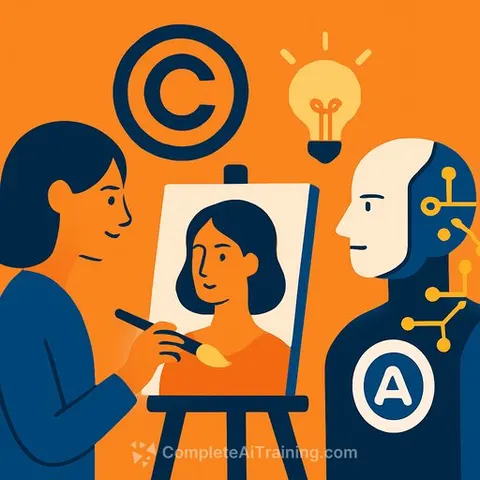
The US Copyright Office and AI-Generated Works
The US Copyright Office has registered over 1,000 works that include AI-generated material. However, this does not mean that copyright protection will be granted for every piece created with AI tools like ChatGPT, especially memes or short video clips. The office applies specific criteria before granting legal protections.
Assistant General Counsel Jalyce Mangum explained in an interview with Wipo Magazine how the process works. She highlighted the key distinction between using AI as a tool to assist human creativity versus AI replacing human creative input. According to Mangum, copyright eligibility hinges on whether AI enhances human expression or is the actual source of the creative choices.
Examples of AI-Assisted Copyrighted Works
A notable example is country singer Randy Travis’s recent album Where That Came From, which used an AI-generated clone of his voice. Travis lost much of his speaking ability after a stroke, making the AI assistance essential for recording the song. This collaboration between human creativity and AI was deemed eligible for copyright protection.
Internationally, the lines can be blurry. Mangum mentioned that South Korean authorities granted copyright to a fully AI-generated movie because of the human creativity involved in selecting, coordinating, and arranging the AI-generated elements.
AI Music and Legal Challenges
AI-generated art and music are increasingly entering mainstream markets. In 2024, rap producer Metro Boomin released a song sampling a track created entirely by the AI music tool Udio. The song amassed 3.4 million listens on SoundCloud. Despite this success, Udio faces a copyright lawsuit from the Recording Industry Association of America, underscoring ongoing legal debates.
Ongoing Industry Concerns
While some welcome these emerging legal clarifications, resistance remains. Paul McCartney, for instance, has warned that AI could "rip off" future musicians, urging the UK government to protect artists. Ironically, McCartney also used AI to revive John Lennon's voice on a 2023 track.
Other creators in publishing, photography, and related fields have launched lawsuits against AI companies, claiming unauthorized use of their work to train large language models (LLMs). This shows that legal frameworks around AI and copyright continue to evolve as the technology advances.
- Key takeaway: Copyright protection for AI-generated works depends heavily on human creative input and involvement.
- Legal professionals should monitor: How courts and copyright offices worldwide rule on these issues.
For legal professionals interested in the intersection of AI and intellectual property law, staying informed on current cases and evolving standards is essential. More resources on AI and law can be found at Complete AI Training.