
AI news ·
NC AI and Hyundai Rotem win South Korean defense contract to develop physical AI simulator and modular robot system
NC AI and Hyundai Rotem won a South Korean defense contract to build military robot simulators using physical AI that trains machines in virtual environments. NC AI's World Model matched NVIDIA's Cosmos performance using 75% fewer GPU resources.
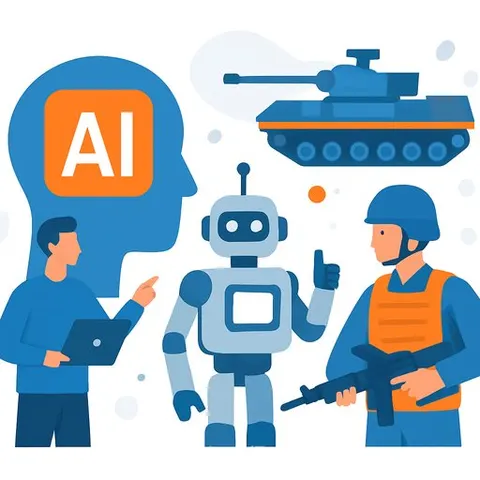
South Korea Backs NC AI's Robot Simulator Tech in Defense Push
NC AI and Hyundai Rotem won a contract from South Korea's Agency for Defense Development to build a simulator and robot system for military applications. The project centers on physical AI-technology that trains robots in virtual environments close enough to reality that they function reliably on actual battlefields.
NC AI will develop the "World Model," the core technology that acts as a robot's brain. A World Model simulates real-world physics and environmental conditions, generating training data that reduces the gap between virtual and physical performance. This addresses a persistent problem: robots trained in simulation often fail when deployed in unpredictable terrain.
The company plans to combine its existing work in 3D virtual world construction with its proprietary 3D generative AI to produce high-quality synthetic data for defense applications.
Efficiency gains over competitors
NC AI demonstrated technical advantages in March when it released a World Foundation Model that matched performance from NVIDIA's Cosmos model while using 75 percent less GPU resources. The company achieved this by deriving robot actions directly from latent space data rather than generating full video frames first.
The contract signals recognition of domestic physical AI development outside global tech companies. South Korea faces military staffing shortages, making autonomous systems development a strategic priority.
What this means for developers
The project addresses core technical challenges in robotics: synthetic data generation, sim-to-real transfer, and foundation model efficiency. Developers working on robot systems, simulation platforms, or generative AI and LLM applications will see these techniques adopted more widely in defense and industrial automation.
Lee Yeon-soo, NC AI's CEO, said the company aims to prevent dependence on foreign technology while advancing South Korea's defense AI capabilities.