Americans are using AI for financial advice more than you think
AI has moved from novelty to normal. According to FNBO's 2025 Financial Wellbeing Study, 46% of Americans have used AI to help with their personal finances - and 50% say they trust AI for advice. If you lead a finance team, advise clients, or manage budgets, your stakeholders are already forming money decisions with AI in the mix.
That's both an opportunity and a responsibility. Used well, AI speeds up planning work you already do: clarifying cash flow, surfacing blind spots, and stress-testing goals. Used poorly, it invites privacy risk and bad decisions.
Where AI already shows up in your workflows
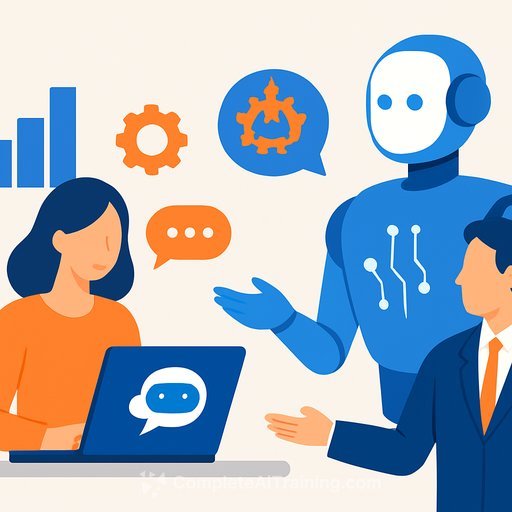
- Customer interactions: AI powers chat support, account assistance, and basic Q&A.
- Risk and fraud: Pattern detection flags anomalies across transactions and logins.
- Credit and product fit: Scoring models and recommendation engines steer offers.
- Security: MFA and behavioral checks reduce account takeover risk.
- Planning support: Tools like ChatGPT and Gemini help draft budgets, categorize spend, and pressure-test scenarios.
What AI is good at - and where humans still win
"The steps a good planner takes, reviewing cash flow, spotting blind spots, stress-testing goals, aren't magic. They're methodical. And AI can learn to do that well, as long as it gets the right data and context," said Andrew Latham, CFP, of SuperMoney.com.
But there's a line. "The gap between AI and a human CFP gets smaller every day. That said, human advisors still bring something AI can't replicate yet: relationships, accountability, and the ability to keep you from making emotional mistakes in a rough market. The future is both working together."
Should you trust AI implicitly?
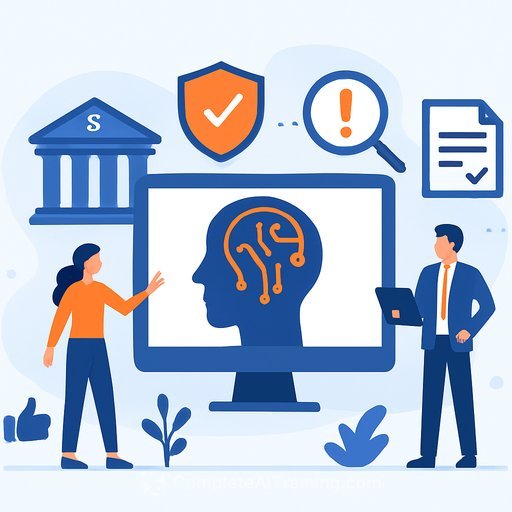
Short answer: no. Consumers worry about overdependence on tech and privacy exposure - and they're not wrong. A 2025 IBM report found 13% of organizations reported breaches of AI models or applications, and 8% didn't know if they'd been compromised.
"The data shows that a gap between AI adoption and oversight already exists, and threat actors are starting to exploit it," said Suja Viswesan, vice president, security and runtime products at IBM. "As AI becomes more deeply embedded across business operations, AI security must be treated as foundational. The cost of inaction isn't just financial, it's the loss of trust, transparency, and control."
Practical ways finance professionals can use AI, today
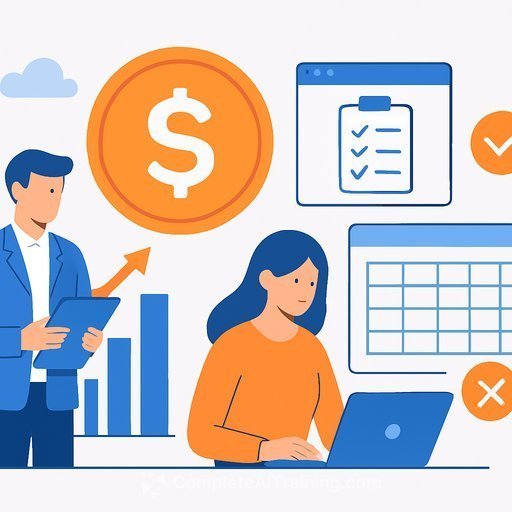
- Budget drafts and cash flow views: Have AI summarize bank exports, tag categories, and highlight outliers before you refine.
- Scenario testing: Prompt AI to model "what if" cases (rate changes, contribution shifts, debt paydown speeds) to frame options fast.
- Policy and client education: Turn dense disclosures into plain-language summaries, FAQs, and checklists you can review and approve.
- Comparative analysis: Ask AI to outline key feature and fee differences across products, then validate against source documents.
- Blind-spot checks: Use AI to probe plans for missed expenses, liquidity gaps, or overconcentration - then you confirm or dismiss.
Tips for using AI responsibly with money
- Review privacy policies and settings: Know how your platform stores, trains on, and shares data. Disable chat history or model training on sensitive sessions where possible.
- Avoid oversharing: Don't paste names, dates of birth, account numbers, statement images, or any client identifiers. Use summaries or sanitized samples instead.
- Don't let AI be the final decision-maker: Use it to expand options and clarify trade-offs. Final calls should reflect goals, constraints, risk tolerance, and your professional judgment.
Next steps for finance teams
- Set an internal AI use policy: what data is allowed, which tools are approved, and how outputs get reviewed before client use.
- Start small: Pilot one or two workflows (expense categorization, scenario notes). Measure time saved and error rates.
- Upskill your staff: Build prompt patterns, verification checklists, and security hygiene into your training.
If you want structured ways to integrate AI into finance work, explore AI for Finance. Concerned about data exposure and model risk? This AI Learning Path for Cybersecurity Analysts can help your team tighten controls around AI tools.
Bottom line: AI is already in your clients' pockets. Treat it like leverage - useful for speed and breadth - while you own the nuance, ethics, and final calls.
Your membership also unlocks: