South Korea's High Schoolers Are Turning AI Into a Weekly Study Habit
Nearly half of South Korean high school students now use AI to study at least once a week, according to a nationwide survey of 3,525 students. Specifically, 47.7% reported weekly use: 25.2% use it once or twice per week, 14.4% three or more times, and 8.1% almost daily. Another 29.6% use AI only once or twice a month, while 22.7% never use it.
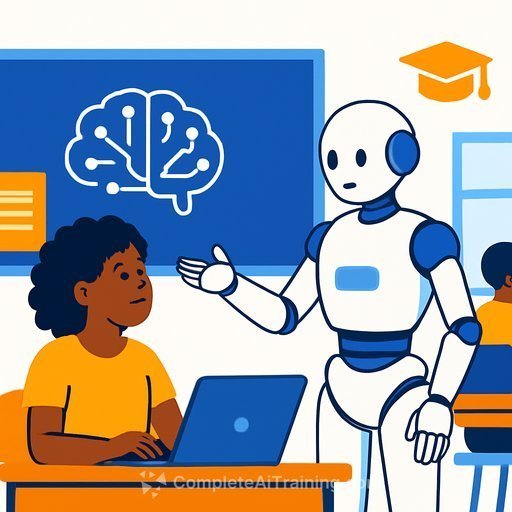
Students aren't just fishing for answers. They're using AI to ask questions, clarify concepts, and steer their problem-solving process-functioning more like digital tutoring than shortcuts.
How Students Are Using AI
- Explaining unfamiliar concepts: 49.7%
- Helping solve problems: 29.0%
- Summarizing notes or reading passages: 27.9%
- Feedback on answers: 17.4%
Think of this as "question-first learning." Students query, get immediate explanations, and then apply that guidance to the next step. The feedback loop is fast, interactive, and available on demand.
Policy Shift: AI-Focused Schools and Integrated Learning
South Korea's Ministry of Education has named 1,141 elementary, middle, and high schools as AI focus schools with support from 17 regional education offices. These schools will integrate AI-related learning across subjects, expand interdisciplinary programs, and strengthen ethics education. Activities include AI clubs and hands-on learning.
The ministry plans to expand the program to 1,500 schools by 2027 and 2,000 by 2028. Translation: access, structure, and expectations are moving into the core of schooling, not the fringe.
What This Means for Educators
Students are already building AI into their routines. Bans don't teach judgment. Guidance does. Here's how to turn this momentum into learning gains without losing academic integrity.
- Set clear norms: when AI is allowed, how to cite it, what "acceptable help" looks like, and how to protect privacy.
- Teach better questions: ask for step-by-step explanations, request hints before answers, and require students to restate what they learned in their own words.
- Redesign assessments: collect process evidence (drafts, chat excerpts, version history), use oral checks, and emphasize applied, personal, or local contexts.
- Differentiate at scale: use AI to adapt reading levels, generate varied examples, and produce targeted practice-then review and refine.
- Tighten feedback loops: have AI draft rubrics, sample feedback, and quick checks, while you handle final judgment and nuance.
- Plan for equity: ensure device access at school, provide offline options, and build supports for students with limited at-home connectivity.
- Invest in PD: short practice-based sessions, teacher-led demos, and shared banks of prompts, tasks, and guardrails.
30-60 Minute Lesson You Can Run This Week
- Pick a concept students typically struggle with (e.g., a tricky theorem or historical cause-and-effect).
- Have students ask an AI tool for a plain-language explanation and a worked example.
- Students compare the AI explanation to your text/notes and highlight agreements, gaps, and errors.
- Students solve a similar problem and write a short reflection: "What did the AI help me notice?"
- Close with a quick ethics check: What data did we share? How should we cite this help?
Guardrails That Keep Learning First
- Bias and accuracy: require cross-checking with class materials and at least one additional source.
- Attribution: students note where and how AI contributed (e.g., idea generation, outline, example).
- Privacy: avoid inputting personal data; use approved accounts and school-managed tools where possible.
- Assessment integrity: blend in-class work, oral defenses, and unique prompts that reward original thinking.
Resources for Implementation
- AI Learning Path for Secondary School Teachers - practical classroom workflows, lesson ideas, and policies.
- AI for Education - strategies for curriculum integration, teacher training, and ethics.
- UNESCO Guidance on Generative AI in Education - policy-aligned guardrails and classroom considerations.
Bottom Line
Students are already treating AI like an after-hours tutor. Schools are catching up with structure and support. If we teach strong prompts, require transparent use, and assess thinking-not just outputs-we can raise understanding without losing academic honesty.
Your membership also unlocks: