
AI news ·
Nebraska Supreme Court suspends Omaha attorney who submitted AI-generated brief with 57 defective citations
Nebraska suspended attorney Greg Lake indefinitely after he submitted a brief with 20 fabricated case citations generated by AI he never disclosed. It's the first U.S. license suspension tied to AI errors in legal filings.
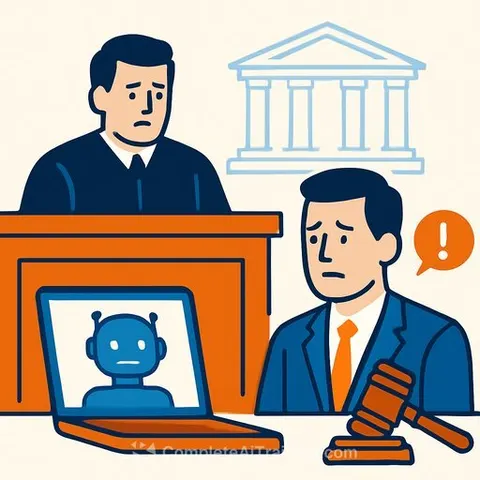
Nebraska Court Suspends Lawyer Over AI-Generated Fabricated Citations
The Nebraska Supreme Court suspended attorney Greg Lake indefinitely on April 15 after he submitted a divorce appeal brief containing 57 defective citations out of 63 total-including 20 entirely fabricated case references and four invented cases that do not exist.
Lake used AI to draft the brief without disclosing it to the court, then gave inconsistent explanations when justices questioned the errors during oral argument in February. He first blamed a broken computer and a wrong file upload. An investigation revealed he had actually relied on AI and then misrepresented the facts to the tribunal.
The suspension marks the most severe professional sanction tied to AI errors in U.S. legal practice to date. Previous cases resulted in financial penalties-Oregon imposed $109,700 in sanctions on one attorney, and the Sixth Circuit fined two Tennessee lawyers $30,000 each-but none had suspended a lawyer's license entirely.
What the Court Found
The Nebraska Supreme Court's March opinion stated the errors were "easily preventable with basic verification through standard legal research platforms." The court found Lake violated professional conduct rules requiring candor toward the tribunal.
The justices noted: "AI, like other technological tools, can be a benefit to the legal community, but it must be used with caution and humility."
All seven justices voted unanimously to refer Lake for discipline.
The Broader Pattern
This case is not isolated. Researchers tracking AI hallucination cases in legal proceedings now document more than 1,200 globally, with approximately 800 from U.S. courts. The pace has accelerated to roughly ten cases from ten different courts on a single day.
Each high-profile sanction sends a regulatory signal about what constitutes responsible AI use in professional settings. The legal profession's response to AI errors will likely inform how regulators approach AI deployment in finance, medicine, and government.
What Lawyers Should Know
The Nebraska case establishes clear consequences for undisclosed AI use in legal work. Courts are scrutinizing citations and explanations with heightened attention. Misrepresenting how a document was prepared-whether through AI or otherwise-compounds disciplinary exposure.
Lawyers considering AI tools for legal research or brief writing should verify all citations independently through standard legal databases before filing. The burden of accuracy remains with the attorney, not the tool.
For guidance on responsible AI implementation in legal practice, see AI for Legal and the AI Learning Path for Paralegals.