
AI news ·
Neuroscience research shows AI makes foundational learning more critical for children
An IDB report warns early AI and screen use alters developing brains. For children ages 0 to 2, this exposure physically undermines foundational reading skills.
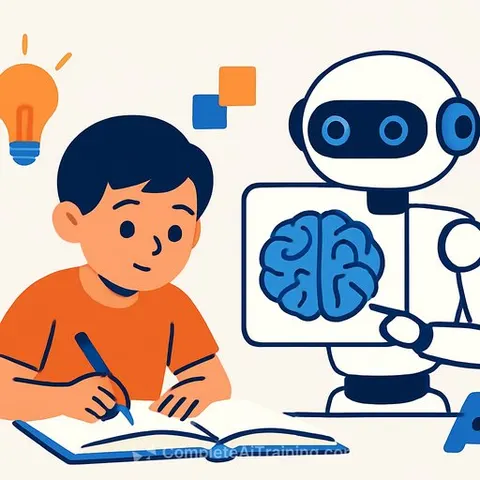
A new report from the Inter-American Development Bank examines how artificial intelligence is colliding with decades of neuroscience, and the message is blunt: technology does not change how the brain learns, but it makes getting the foundational stages right far more urgent. Published June 30, 2026, the analysis draws on brain imaging studies and cognitive research to show that reading and complex thinking require explicit, carefully timed instruction-and that screens and AI tools, when introduced too early or used as shortcuts, are physically altering developing brains in ways that undermine those very skills.
Reading is not natural. No child is born with neural circuits for decoding text. Unlike spoken language, which human brains evolved to process, reading demands systematic teaching and thousands of hours of practice. Research by Stanislas Dehaene and Maryanne Wolf demonstrates that the brain must repurpose existing regions-originally built for object recognition and language-to link visual letter patterns to sounds and meaning, a process scientists call neuronal recycling. This rewiring only occurs through direct instruction, corrective feedback, and repetition. Comprehension, too, is a combination of decoding and language skills, neither of which develops through mere exposure to print.
How the brain learns at different stages
Neuroscience now provides a clearer map of learning across life stages, and the requirements at each stage are distinct. During childhood, the brain is in a critical window of high plasticity. Explicit, teacher-directed literacy instruction works best here. Daily practice, positive reinforcement, and successful experiences build the neural pathways that make reading automatic.
Adolescence brings a reorganization of the prefrontal cortex, the area responsible for planning, emotional regulation, and impulse control. Teenagers learn more effectively when they are taught metacognitive strategies-how to monitor their own learning-and when they work on complex, collaborative problems tied to identity and autonomy. Young adults continue to have brain plasticity but rely more heavily on prior knowledge and executive functions, so instruction must connect clearly to practical goals.
Technology is changing the brain-and not always for the better
The brains of today's children and adolescents are developing under conditions no previous generation experienced. A recent study on infant screen exposure found that higher screen time in babies ages 0 to 2 led to accelerated maturation of certain brain networks. This isn't a sign of precocious development. When networks form too fast, they sacrifice the efficient connections needed for complex thinking. The picture is similar to removing a building's scaffolding before the structure is reinforced.
During adolescence, excessive digital device use delays development of the prefrontal cortex. Social media, cyberbullying, and dopamine-driven feedback loops hit the teenage brain precisely when it is most sensitive to peer validation and social comparison. The consequences are visible in rising mental health struggles and in measurable changes to the neural architecture that underlies attention and self-control.
AI use specifically introduces a risk researchers at the Massachusetts Institute of Technology call cognitive debt. In a study where college students used varying levels of AI support to write essays, those who over-relied on the tools showed reduced neural engagement during the task, weaker memory recall, and a diminished sense of ownership over their writing. The study concluded that early and uncritical use of AI for cognitive work can hinder the deep learning that builds lasting expertise.
Two risks for education systems
When schools rush to adopt AI without anchoring decisions in brain science, two predictable problems emerge. The first is skill replacement instead of skill enhancement. A student who uses AI to write an argument before learning to craft one independently may never develop the cognitive muscles that make independent thinking possible. It's the difference between verifying mental math with a calculator and never learning multiplication in the first place.
The second risk is inequality amplification. Students who already possess strong foundational skills, critical thinking, and metacognitive strategies will use AI to accelerate their learning. Their peers without those foundations will use the same tools as a crutch, widening the gap. Whether AI reduces disparities or deepens them depends on whether the foundational learning gets done right during the early years.
The IDB report argues that education policy must protect the critical window of childhood. For infants and toddlers, screen exposure should be minimized. For children aged 5 to 10, screen-based learning should not dominate. Technology-driven reading programs cannot substitute for a teacher systematically building phonemic awareness and decoding skills. Passive apps that promise natural learning through exposure will not create the neural connections reading requires.
Adolescents need intentional guidance, too. Because their brains are still developing executive function, boundaries around social media and device use matter. The same digital tools can support collaborative learning and digital citizenship if adults help set limits and model responsible use. Teachers seeking to integrate AI tools appropriately need a clear understanding of developmental readiness, a focus of many AI for Education resources.
Why this matters for educators
This neuroscience-informed view upends any assumption that students can simply be handed AI tools and expected to thrive. The timeline of brain development sets hard constraints. Children must first build the neural circuits for decoding and comprehension through direct instruction before they can effectively use technology to extend their thinking. Adolescents need scaffolding that protects their still-maturing prefrontal cortex while teaching them to use digital tools strategically. The most powerful AI cannot think for a brain that has not learned how to think in the first place.