New AI Predicts Enzyme Behavior Without Live Cell Experiments
A novel approach merges machine learning with cell-free systems to accelerate enzyme design—eliminating the need for live cells. This breakthrough cuts the enzyme testing timeline from months to mere days.
Enzymes play crucial roles in digestion, cleaning, perfume production, medicine synthesis, and environmental cleanup by breaking down toxins. Improving enzyme efficiency has long been a scientific priority but traditionally involved slow, labor-intensive methods.
Faster Enzyme Design Through Computation and Cell-Free Systems
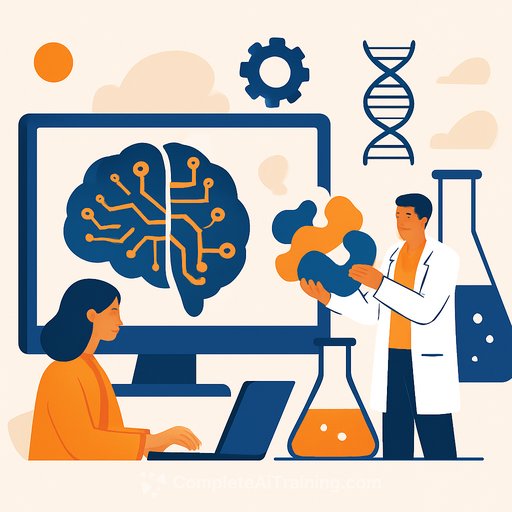
Researchers at Stanford University introduced a method combining computer modeling and machine learning with cell-free systems to predict enzyme behavior. This allows them to screen thousands of enzyme designs computationally before synthesizing only the most promising candidates in the lab.
Michael Jewett, a bioengineering professor leading the study, explained, “We’ve developed a computational process that lets us engineer enzymes much faster by eliminating the need for living cells. Instead, we use machine learning to predict highly active enzymes designed from mutated DNA sequences modeled on the computer. This lets us complete experiments in days rather than weeks or months.”
The study, published in Nature Communications, highlights how skipping live cells speeds up enzyme development dramatically.
Building Enzymes Without Living Cells
Traditionally, enzyme design starts with an existing natural enzyme. Scientists mutate its DNA, insert it into living cells, grow those cells to produce enzymes, then extract and test each variant. This process is slow and often inefficient.
The new method bypasses cells entirely by using cell-free systems—mixtures capable of reading DNA and producing proteins without living organisms. These systems allow rapid and controlled testing of thousands of enzyme variants across multiple chemical reactions.
The researchers focused on amide synthetases, enzymes that form amide bonds found in many pharmaceuticals and food molecules. By testing 1,217 enzyme variants in 10,953 reactions, they generated extensive data. Their machine learning models, employing augmented ridge regression, predicted which DNA mutations increased enzyme activity. This led to enzyme designs producing nine small-molecule drugs, some with activity up to 42 times higher than their natural counterparts.
Accelerating Directed Evolution
The field of directed evolution accelerates natural evolutionary processes by introducing targeted mutations to proteins in the lab. The challenge lies in identifying which mutations improve function.
Machine learning tackles this by modeling numerous mutations simultaneously and predicting their effects. This reduces reliance on trial-and-error experimentation.
Jewett summarized, “Instead of running 10,000 chemical reactions to improve enzyme activity iteratively, we use machine learning to predict highly active variants with far fewer experiments.”
Data Limitations and Challenges
One major challenge is data scarcity. Machine learning requires large datasets to train accurate models, but enzyme research often lacks comprehensive data.
Jewett noted, “Generating large datasets for chemical reactions is slow and rarely reported in literature. Many studies provide data for only a handful of enzyme variants—sometimes as few as ten—making it difficult to train robust models.”
In this study, testing about 3,000 mutants across 10,000 reactions was a significant effort but still insufficient for full model development. Achieving the potential of this approach requires datasets covering tens of thousands of variants.
Expanding Applications and Future Directions
Despite data challenges, this platform shows promise. The team demonstrated producing a small-molecule drug at 90% yield—up from 10% previously. They also designed enzymes for eight additional drugs, confirming the method's versatility.
Potential future uses include designing enzymes to break down environmental toxins, improve digestibility of protein-rich foods, and replace hazardous chemical processes with safer, cost-effective alternatives.
- Environmental toxin degradation
- Enhanced nutrition through improved protein digestibility
- Safer, cheaper industrial chemical processes
The research group is seeking partnerships within the pharmaceutical industry to further test and expand their platform, aiming to apply it to a broader range of chemical reactions beyond amide bond formation.
Conclusion: A New Path for Enzyme Engineering
This method marks a significant advance in enzyme creation by combining machine learning and cell-free systems. Faster testing and better predictions enable scientists to pursue enzyme designs with real-world impact—whether for medicine, environmental cleanup, or industrial applications.
Progress depends on expanding datasets, increasing computational capacity, and fostering collaboration. As this approach matures, enzyme engineering could become more agile, scalable, and impactful than ever before.
For researchers interested in AI applications in biology and protein engineering, exploring courses on machine learning and automation can provide valuable skills. Visit Complete AI Training for resources on the latest AI technologies.
Your membership also unlocks: