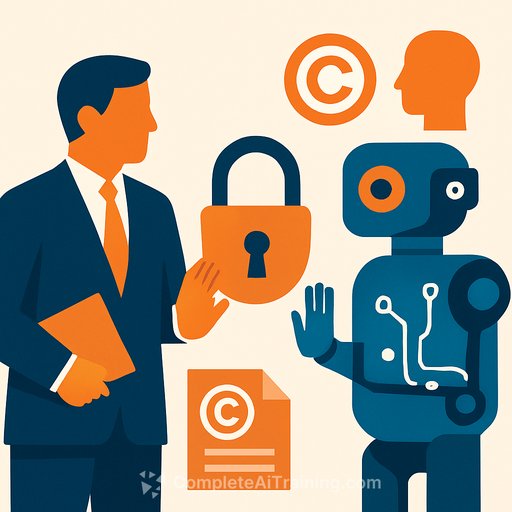
New Congressional Bill Targets AI Training on Copyrighted Works and Personal Data Without Consent
A bipartisan bill introduced by Senators Josh Hawley (R-MO) and Richard Blumenthal (D-CT) seeks to restrict AI companies from using copyrighted material or personal data to train language models without explicit consent.
The AI Accountability and Personal Data Protection Act would empower individuals and companies to take legal action if their personal data or copyrighted content is used without permission. This bill addresses growing concerns among creators who feel exploited by AI companies leveraging their work without compensation or approval.
Protecting Creators and Consumers
Senator Hawley criticized AI firms for profiting off creative works without offering creators any form of recourse. He emphasized the need for legal protections that allow workers to defend their data and intellectual property.
The bill also forbids using data if consent was obtained through coercion, deception, or as a condition for accessing a product or service when the data collected exceeds what is reasonably necessary. Senator Blumenthal highlighted the importance of holding tech companies legally accountable when they violate consumer privacy by collecting or sharing personal information without explicit consent.
Context: Legal Battles and Industry Practices
This legislation comes amid a complex legal environment. Recently, a court ruling favored AI companies by allowing them to train models on copyrighted content without creators' consent, provided the materials were acquired legally. This ruling opens the door for AI firms to avoid costly licensing deals by purchasing physical or digital copies of copyrighted works and using them for training.
- For example, AI companies could buy a single issue of a major publication like The New York Times for a few dollars and incorporate it into their training data.
- Some large publishers have already negotiated licensing agreements with AI developers like OpenAI to permit the use of their copyrighted content.
- At the same time, several lawsuits challenge the boundaries of fair use in AI training, with outcomes still pending.
What This Means for Writers
For writers and creators, this bill represents a potential shift toward greater control over how their work is used in AI development. If passed, it could provide stronger legal tools to protect your creative output and personal data from unauthorized exploitation.
Understanding how AI models are trained and the legal frameworks around data use is increasingly important. For those interested in enhancing their knowledge about AI and its impact on creative professions, resources like Complete AI Training’s latest AI courses offer practical insights.
The ongoing debate over AI training data highlights the tension between technological innovation and intellectual property rights. Creators should stay informed and prepared to advocate for their rights as the landscape evolves.
Your membership also unlocks: