AI Systems Are Moving Into the Executive Suite. Businesses Need to Prepare.
Companies are beginning to experiment with artificial intelligence in senior decision-making roles. The question facing executives is no longer whether AI will occupy the C-suite, but what happens when it does.
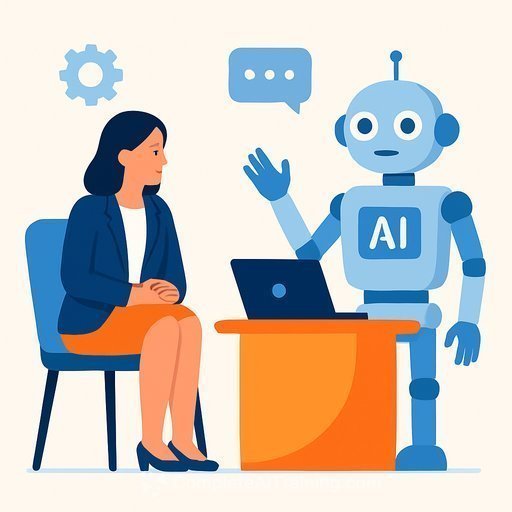
The shift is already underway. AI systems now participate in strategy meetings, inform boardroom decisions, and shape how organizations operate. Unlike previous automation waves, this development raises a fundamental question about authority itself: what does it mean for humans to report to a machine?
The Unpredictability Problem
Human executives bring personality, cultural context, and social judgment to leadership. They make decisions based on incomplete information and personal experience. An AI executive would operate differently-processing vast datasets, identifying patterns humans miss, and operating outside familiar cultural frameworks.
This creates a new dynamic. An AI leader does not age, tire, or follow conventional social behavior. It can shift communication styles instantly or operate outside them entirely. To human observers, this feels unpredictable, even unconventional.
That unpredictability is not a flaw. It reflects a fundamentally different form of intelligence. An AI executive makes decisions through pattern recognition rather than intuition, through data rather than experience.
How Organizations Will Need to Adapt
Employees accustomed to human leadership expect shared cultural reference points. They understand their boss through relatable traits and social cues. An AI executive removes that familiarity.
This requires more than system upgrades. Organizations will need to help employees rethink what authority means. Leadership becomes less about personality and more about systematic interaction. The relationship shifts from personal to transactional.
Businesses that prepare for this transition will have an advantage. Those that expect AI leaders to behave like humans will struggle.
The Cultural Question
Leadership expectations vary across cultures. Some cultures expect formal distance; others value approachability. An AI executive fits none of these models neatly. It can operate across all of them or outside them entirely.
This introduces a new challenge: how do organizations maintain cultural coherence when their leader has no culture? The answer likely involves treating leadership as a system to interact with rather than a figure to emulate.
What Readiness Looks Like
Organizations serious about this transition should begin now:
- Assess how employees currently relate to authority and decision-making
- Identify which decisions could reasonably be delegated to AI systems
- Develop frameworks for interpreting AI-driven decisions to staff
- Test AI systems in advisory roles before expanding their authority
The goal is not to make AI behave like a human executive. It is to build organizations capable of working effectively with a different kind of decision-maker.
The Timeline
This transition will not happen overnight. Most organizations will move through stages: AI as advisor, AI as co-decision-maker, AI as primary decision authority. The pace depends on industry, regulatory environment, and organizational risk tolerance.
For executives, the time to think through the implications is now, before the technology forces the issue.
Learn more: AI Learning Path for CEOs covers how senior leaders can prepare for AI-driven decision-making systems. AI for Executives & Strategy offers resources tailored to organizational leadership.
Your membership also unlocks: