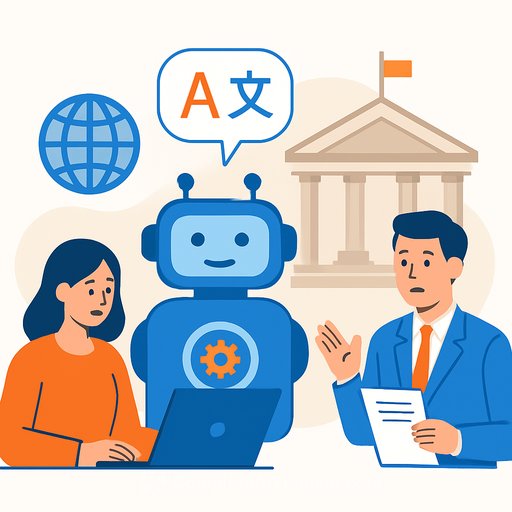
New Brunswick pilots AI translation for internal work
New Brunswick has rolled out an internal AI tool, ChatGNB, for government employees. The Department of Finance and Treasury Board has been piloting it for about a year, using it mainly to translate internal documents between English and French.
The site runs on Microsoft Azure and uses GPT-4 Turbo, with access limited to staff who sign in with a GNB email. It does not browse the internet and its training data stops at April 2023. The government says it's focused on efficiency and cost reduction, and that setup came at no additional cost.
There are clear guardrails: keep sensitive and personal information out, expect bias in outputs, and review for accuracy. The tool also supports idea generation, drafts, explanations, and summaries.
What stays human-for now
According to the department, collective agreements, contracts, policies, and any external-facing documents will continue to be handled by Service New Brunswick's translation services. That line is important. It keeps high-risk, public, or legally binding content with professional translators.
Translators' concerns you should factor in
Certified translators are worried about accuracy, context, and job impacts. "There should be a human being in charge who can be held responsible," said Sergey Petrov, president of the Corporation of Translators, Terminologists and Interpreters of New Brunswick.
Petrov also flagged the long-term effect on minority-language protection. Heavy use of AI for English-French translation could, over time, influence language quality and cultural integrity-an issue with real stakes in a bilingual province.
Why this matters if you work in government
- Speed vs. accuracy: AI gets drafts out fast, but precision and tone still require human judgment.
- Obligations: Official languages requirements and public trust demand high standards, especially for public or legal content.
- Accountability: Someone must own the output. AI can assist, but it cannot be responsible.
- Records and risk: Treat AI outputs as work records. Keep logs and be ready to explain choices.
Practical guardrails to adopt in your branch
- Classify content. Use AI for low-risk internal drafts; route anything public-facing or legal to SNB translators.
- Ban sensitive data. No personal, confidential, or restricted information in prompts or uploads.
- Require human review. A qualified bilingual reviewer checks all AI translations shared outside the immediate team.
- Name an owner. Every translated document has a designated human approver.
- Standardize language. Maintain a glossary and style guide; enforce terminology consistently across teams.
- Log usage. Keep prompts and outputs with version control and change history.
- Track quality. Sample outputs monthly, measure error rates, and set thresholds for escalation to SNB.
- Add labels. Mark AI-assisted drafts clearly to avoid accidental release without review.
Fast review checklist for AI translations
- Intent and audience: Does the translation match purpose, tone, and reading level?
- Terminology: Validate program names, acronyms, and legal or technical terms.
- Numbers and details: Confirm figures, dates, units, currencies, and names.
- Citations and statutes: Check references to policies, acts, and directives.
- Formatting: Ensure bilingual headers, templates, and accessibility are intact.
- Cultural nuance: Watch for phrasing that may erode minority-language integrity.
- Source alignment: Spot-check key paragraphs against the original; scrutinize risk-heavy sections line by line.
Data protection notes
ChatGNB is hosted on Microsoft Azure, which offers enterprise security controls. Still, treat it as a shared service: avoid sensitive inputs, assume logs may be retained, and follow your departmental privacy guidance.
The model's knowledge ends in April 2023, and it can produce confident mistakes. Bias is possible. Human review is part of responsible use, not an optional step.
Procurement and workforce planning
Expect demand for translators to shift from full translations to higher-value tasks: reviewing, localizing, maintaining term bases, and handling complex or public materials. This is a chance to upskill teams and update service-level agreements with clear criteria for when AI is in or out.
- Stand up a small AI translation working group to set glossaries, QA standards, and escalation paths.
- Offer targeted training for reviewers and editors on AI-assisted workflows and prompt quality.
What to watch next
Will usage expand beyond translation into drafting and summarization? What accuracy thresholds will departments adopt? Expect updates to AI guidance, more detailed review protocols, and closer tracking of language quality in both English and French.
Helpful resources
- Microsoft Azure OpenAI Service overview
- Office of the Commissioner of Official Languages for New Brunswick
Upskill your team
If your branch is adopting AI-assisted translation, focused upskilling helps reviewers catch errors faster and enforce terminology consistently. Start with practical, job-aligned training and repeatable checklists.
Your membership also unlocks: