
AI news ·
New York appeals court orders law firm to pay $2,500 over AI hallucinations
A New York court fined the Lamonsoff law firm $2,500 for submitting AI-generated false citations. The ruling holds firms responsible for verifying AI outputs, rejecting ignorance.
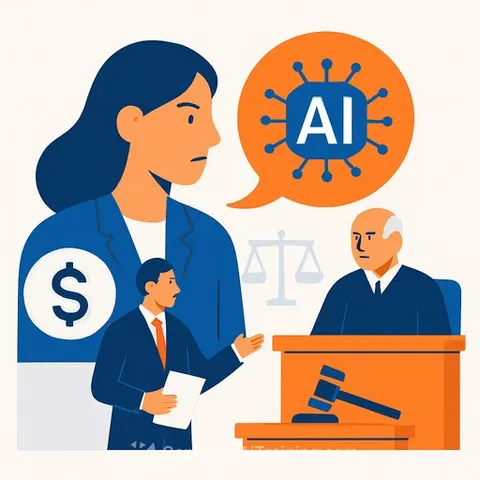
New York's Appellate Division, Second Department ordered the Law Offices of Michael S. Lamonsoff to pay a $2,500 penalty after the firm submitted a case filing that contained AI-generated hallucinations amounting to "significant misrepresentations," the court said in its June 24, 2026 ruling. The sanction marks one of the growing number of disciplinary actions courts are taking against attorneys who fail to verify artificial intelligence outputs before filing them with the court.
The penalty was imposed despite an affirmation from the firm's general counsel stating that the firm had not been aware an attorney had misused the technology. The law firm's name appeared on the filing that drew the court's scrutiny, and the court made clear that a firm's ignorance of an attorney's AI use does not absolve it of responsibility for what gets submitted under its name.
The court's reasoning
The appellate division did not accept the firm's lack of awareness as a defense. By placing its name on the filing, the firm vouched for the accuracy of its contents-and the court held it to that standard. The $2,500 penalty, while modest in dollar terms, sends a signal that AI for Legal work carries real professional risk when outputs go unchecked.
The ruling adds to a body of case law emerging across jurisdictions where judges have sanctioned lawyers for citing fictitious cases, statutes, or precedents fabricated by generative AI tools. In each instance, the common thread is the failure to independently verify what the software produced.
Why this matters for legal professionals
Law firms cannot outsource their ethical obligations to software. When an attorney signs a filing, the contents are that attorney's responsibility-regardless of whether a human or a machine drafted them. The Second Department's ruling underscores that claiming ignorance of an attorney's AI use does not shield a firm from sanctions. The practical takeaway: every AI-assisted filing needs a verification step built into the workflow, and supervising attorneys should treat AI tools the way they treat junior associates-review everything before it goes to the court.