
AI news ·
New York City delays school AI guidance after draft sparks backlash
NYC schools delayed final AI guidelines until summer after nearly 6,500 critical comments. Teachers now lack clear classroom AI rules.
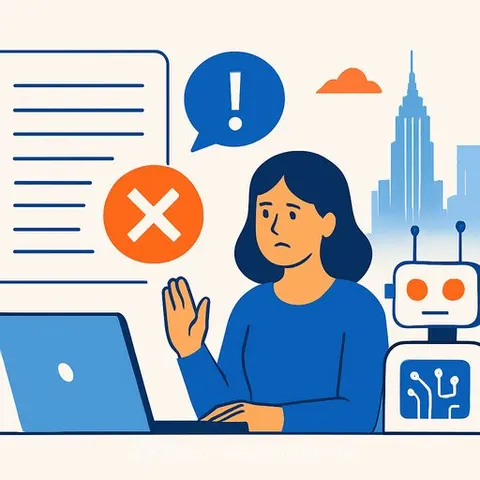
New York City education officials are delaying the release of final artificial intelligence guidelines for city schools until this summer following intense backlash to a March draft. The pause leaves teachers and administrators without clear rules on classroom AI use as the technology becomes more prevalent.
Draft policy draws heavy criticism
First Deputy Chancellor Danielle Giunta announced the delay during a Wednesday City Council hearing. She cited nearly 6,500 public comments on the initial draft and a shifting national debate as reasons for the extended timeline.
The March draft used a traffic light framework to categorize AI risk. It prohibited using AI for grading and assessments but allowed it for brainstorming lesson plans. The draft largely ignored student AI use, which prompted parents to pack public meetings and criticize the approach.
Leadership acknowledges missteps
Schools Chancellor Kamar Samuels said the initial draft "missed the mark" and described AI as "the most invasive technology that we've seen." He indicated the final guidance will include stricter limits for younger students.
Giunta said the city is considering different expectations based on age and grade level. The goal is to prepare older students for a world where AI is present without letting it replace their critical thinking. Educators managing this shift can find structured guidance through the AI Learning Path for Teachers.
Council presses for transparency
City Council members pressed Education Department officials on how extensively AI tools are already used in classrooms. Manhattan council member Carmen De La Rosa, who chairs the technology committee, highlighted the need for clarity.
"There are huge gaps in our understanding of how the technology is being deployed and when," De La Rosa said. "We do need the time to be able to wrap our arms around what is happening in our classrooms."
In response, education officials said they are working with superintendents and principals to develop a clearer picture of current school tool usage. Families are also pushing for a greater say in how their children interact with these systems.
A history of shifting rules
The Education Department's stance on the technology has shifted multiple times in recent years. City officials blocked ChatGPT in 2023, then rescinded the ban three months later.
Former schools Chancellor David Banks grew supportive of the technology but never released a clear policy. That left current leadership to finalize the rules while individual schools continue to devise their own approaches, highlighting the need for broader AI for Education training.
Why this matters for educators
The delay in final guidelines means teachers will continue to make independent decisions about classroom technology this semester. Educators should document their current AI practices and prepare to adjust their lesson plans once the city releases its updated, age-specific rules this summer.