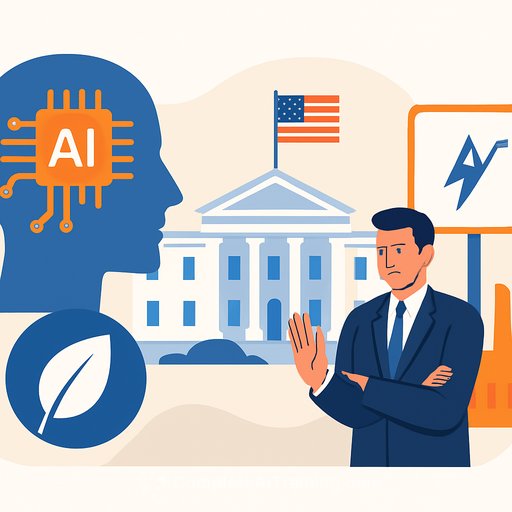
New York's AI Rulemaking Meets a New White House EO: What Counsel Should Watch
New York is intent on leading AI regulation. A new White House executive order could slow that momentum, but legal effects are unlikely to be immediate.
State policy voices say the order does not invalidate New York's current work. The bigger risk is future federal action and potential Department of Justice litigation that could pressure how Albany drafts the next wave of bills.
What the executive order changes - and what it doesn't
Executive orders direct federal agencies; they don't automatically override state law. Preemption requires authority grounded in a federal statute or duly issued regulation, or a clear conflict with federal objectives.
Translation for counsel: watch agencies, not headlines. If federal departments move to regulate AI practices, attach conditions to grants or procurement, or signal preemption in rulemaking, that is where friction with New York could start.
Where legal friction could arise
- Conflict/obstacle preemption: If federal agencies set AI standards and New York imposes different or stricter obligations, companies may face dueling mandates. Litigation could test whether state rules stand as an obstacle to federal objectives. See an overview of preemption doctrine at LII.
- Field preemption (longer-term): If Congress enacts comprehensive AI legislation and delegates to agencies, expect arguments that federal law occupies the field for certain issues.
- Dormant Commerce Clause: State rules that reach activity outside New York or burden interstate commerce-common risks with AI model development and data flows-invite challenge. Background at LII.
- First Amendment and due process: Restrictions on model outputs, content moderation, or disclosure duties could face speech and vagueness challenges, depending on drafting.
Current read from Albany
Policy leaders suggest no near-term disruption to New York's AI agenda. The practical effect is a drafting constraint: upcoming bills may be written with an eye toward minimizing preemption risk and avoiding extraterritorial reach.
Expect closer coordination with the Attorney General and agency counsel to stress clear state interests (consumer protection, civil rights, transparency) and build records that support those interests.
Action steps for in-house counsel and law firms
- Map overlapping duties: Build a matrix of current and proposed New York AI requirements against emerging federal guidance. Flag areas likely to conflict.
- Tighten vendor terms: Add audit rights, data provenance, model change notices, and jurisdiction-specific compliance clauses to AI and data processing agreements.
- Set a preemption watchlist: Track federal rulemaking, OMB memos, grant conditions, and DOJ statements of interest that could signal litigation posture.
- Operational readiness: Keep documentation: impact assessments, bias testing protocols, training records, and incident response playbooks. These are your first line of defense with regulators.
- Role-based training: Provide targeted training for legal and regulatory teams - see AI Learning Path for Regulatory Affairs Specialists and leadership-focused guidance at the AI Learning Path for Technology Managers.
NYSERDA's 15-year energy plan: why it matters to AI clients
New York's energy plan, discussed by NYSERDA leadership and criticized by some environmental groups, signals stricter expectations on power use and emissions. For AI developers and data-center operators, energy policy is a compliance issue, not just a cost line.
Counsel should anticipate siting, reporting, and emissions implications for AI infrastructure, plus potential cross-references between energy and AI governance in future state rules.
What to watch next
- Any DOJ filings or amicus activity challenging or supporting state AI rules.
- Federal agency guidance that hints at nationwide standards for risk assessments, disclosures, or testing.
- New York bill drafts that narrow extraterritorial language and emphasize consumer protection powers.
Resources
Bottom line for legal teams: no immediate shock to New York's AI agenda, but the drafting window just got narrower. Prepare clients for dual compliance, and be ready to brief preemption and interstate commerce risks as the federal picture develops.
Your membership also unlocks: