California Sets AI Procurement Standards, Diverges From Federal Approach
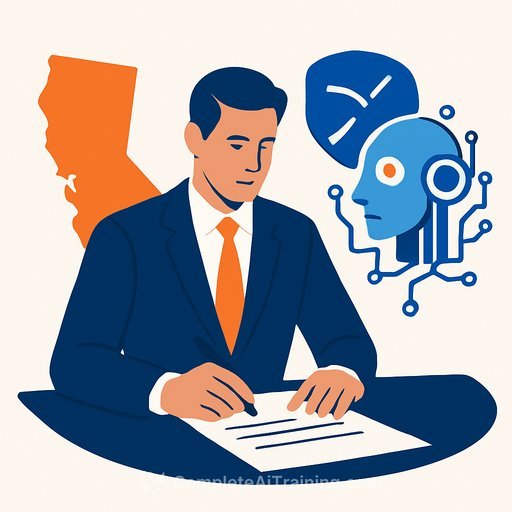
Governor Gavin Newsom signed an executive order requiring AI companies to meet new safety and privacy standards to do business with California. The order directs state agencies to vet vendors based on their policies for preventing illegal content distribution, algorithmic bias, and civil rights violations.
The move reflects a deliberate split from federal policy. Newsom said California will use "every tool we have to ensure companies protect people's rights, not exploit them or put them in harm's way."
What the Order Requires
The Government Operations Agency must develop new contracting processes that require companies to document their safeguards. Vendors will need to explain how they address:
- Exploitation or distribution of illegal content
- Bias in AI models and mechanisms to prevent it
- Violations of civil rights and free speech
The order also authorizes California to separate its procurement process from the federal government's if needed, giving the state independent authority over its AI vendor relationships.
New AI Tools for State Services
California will expand its use of generative AI to improve government delivery. The state is developing an AI tool to help residents navigate state programs and benefits based on life events-such as starting a business or finding employment.
The California Department of Technology will create recommendations for watermarking AI-generated images and manipulated video, making California the first state to establish such guidelines.
Workforce Impact and Public Input
Newsom announced the first statewide engagement effort using "Engaged California," a digital platform designed to let residents weigh in on how state policy responds to AI's effects on employment. The rollout begins in the coming months.
The platform previously served as a pilot tool for wildfire recovery in Los Angeles and gathered input from state employees on government efficiency.
California's AI Market Position
California hosts 33 of the top 50 privately held AI companies globally and accounts for 25% of all AI patents, conference papers, and startups. The Bay Area captured 51% of all U.S. AI startup funding from Q3 2024 to Q2 2025-ahead of New York's 11% and Boston's 5.5%.
The state posted 15.7% of all U.S. AI job openings in 2024, more than double Texas (8.8%) and nearly triple New York (5.8%), according to the 2025 Stanford AI Index.
Three California companies-Google, Apple, and Nvidia-have each reached $3 trillion valuations. All three are involved in AI development and have created hundreds of thousands of jobs.
Existing Protections
California already has laws addressing AI risks. The state has established protocols for child safety, created requirements to prevent self-harm content, cracked down on sexually explicit deepfakes, and mandated AI watermarking. California also protects performers' digital likenesses and prevents AI-generated robocalls used for scams.
Government professionals overseeing AI adoption should review how these standards apply to their agencies. Resources on AI for Government and the AI Learning Path for Policy Makers can help staff understand California's regulatory framework and implementation requirements.
Your membership also unlocks: