PR content that stands out when AI floods the feed
Newsrooms are shifting strategy in 2026, and PR teams should take note. A global study from the Reuters Institute reports that leaders are prioritizing work AI can't copy: original investigations and on-the-ground reporting scored a net +91 for importance, with contextual analysis and explanations close behind at +82.
Translation for comms: commodity content gets automated. Scarcity wins. Your edge is access, context, and accountability.
Why this matters for PR and communications
- Information is cheap. Firsthand knowledge is scarce.
- AI can summarize. It struggles to verify, witness, or add consequence.
- Trust is the differentiator. People reward work that bears risk and receipts.
What AI struggles to replicate
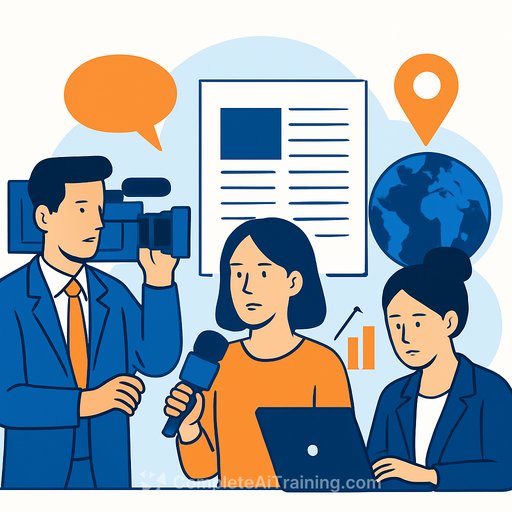
- First-party access: site visits, factory floors, user ride-alongs, regulator briefings.
- Proprietary data: benchmarks, anonymized cohorts, internal trend reports.
- Context with stakes: what a policy means for a sector, not just what it says.
- Expert synthesis: point of view backed by sources, not vibes.
- Accountability: named interviews, method notes, corrections, and timelines.
Build your 2026 PR content portfolio
- Original reporting: 3 customer or partner interviews a month, recorded and transcribed. Publish highlights, full Q&A, and a takeaways brief.
- Data drops: quarterly proprietary stats with a simple methodology appendix and downloadable charts. For practical templates on method notes and data releases, see the AI Learning Path for Research Associates.
- Explainers that travel: "What this means for CFOs/CHROs/IT" in 600-900 words with clear next steps.
- Field notes: event recaps, pilot results, regulatory readouts within 48 hours of the moment.
- Executive POV with receipts: an opinion backed by data, cases, and external citations.
- Live formats: 30-minute briefings or AMAs with a transcript posted same day.
Operating model: where AI helps, where humans lead
- Use AI for research scans, outline options, and first passes on summaries. Humans own interviews, analysis, and final narrative.
- Template every piece with "source notes" linking to docs, call logs, and datasets. If you can't footnote it, don't publish it.
- Create a "verification pass" checklist: claims, dates, numbers, quotes, and permissions.
Editorial guardrails that build trust
- Disclose AI assistance when used for drafting or transcription.
- Quote policy: name the expert or explain anonymity and why it's justified.
- Method appendix for any dataset, even a short one. What's included, what's not.
- Correction protocol posted publicly with a timestamped changelog.
Metrics that prove you're creating scarce value
- Citations from tier-one outlets and analysts, not just social shares.
- Return visits to source-heavy pages and time on page for explainers.
- Inbound requests: journalist replies, speaking invites, policy roundtables.
- Keyword lift for "[your brand] + topic" and branded data terms.
A one-week sprint to put this in play
- Days 1-2: Pick one issue that matters this quarter. Book three stakeholders (customer, partner, domain expert).
- Day 3: Draft a 6-question interview guide. Assign a data pull from internal logs or surveys.
- Day 4: Conduct interviews. Capture quotes, objections, surprises.
- Day 5: Build a 1-page method note and 4-6 charts.
- Day 6: Write the explainer and executive POV. Run verification pass.
- Day 7: Publish the package: explainer, data drop, Q&A, downloadable assets. Pitch three angles to media and analysts.
Common traps to avoid
- Generic thought leadership with no names, numbers, or stakes.
- Over-automating to save time and burning trust instead.
- Publishing without distribution: no pitch list, no follow-ups, no repackaging.
- Claims you can't source in two clicks.
If you want the research backdrop, see the overview from the Reuters Institute. Then build your own moat with access and context, not more sameness.
Need to upskill your team on practical AI use in comms workflows without losing the human edge? Explore AI Research Courses and the AI Learning Path for Research Associates.
Your membership also unlocks: