
AI news ·
Next-generation wealth holders use AI to pressure wealth managers with deeper investment analysis
Younger wealth holders are using AI to build detailed investment theses before advisor meetings, eroding the information edge firms once held. Wealth managers must now compete on judgment and strategic insight, not analytical speed.
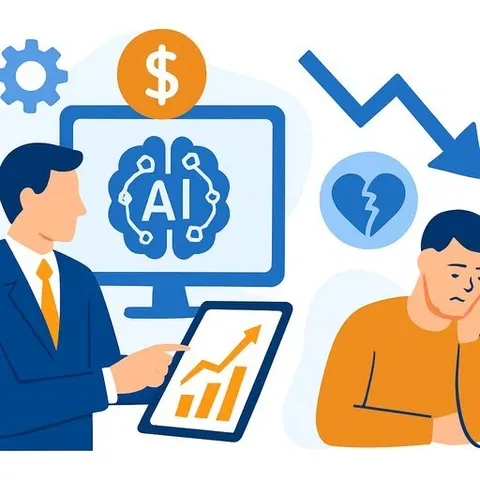
Wealth managers face new competition as clients build AI-powered investment views
Next-generation wealth holders are connecting large language models to financial data terminals and arriving at manager meetings with investment theses built at speeds and depths their predecessors could not match. This shift is reordering what wealth management firms must deliver to remain competitive.
The change reflects a broader pattern: as clients gain access to the same AI tools as their advisors, technical capability alone no longer differentiates a wealth manager. Firms that relied on information asymmetry or analytical speed now compete on different grounds.
Younger wealth holders are using LLMs to process financial data at scale, identifying patterns and building forensic investment views without waiting for quarterly reports or advisor recommendations. They arrive at meetings with fully formed positions, forcing managers to justify their own recommendations against client-generated analysis.
This creates pressure on wealth management firms to move beyond AI as a back-office efficiency tool. Managers must now demonstrate strategic insight, relationship value, and judgment that clients cannot replicate with off-the-shelf technology.
The challenge extends beyond investment selection. Firms must help clients understand the limits of AI-generated analysis, manage the risks of over-reliance on algorithmic views, and integrate those views into broader wealth strategies that account for tax, estate, and family dynamics.
For management teams in wealth management, this signals a need to reassess how AI is deployed across client-facing functions. Training advisors to work alongside client-generated AI output-rather than simply presenting manager-created recommendations-becomes essential.
Learn more about how executives can stay ahead of AI adoption in financial services with AI for Executives & Strategy or explore Generative AI and LLM Courses to understand the technology reshaping client behavior.