Nexus: A Transformative Supercomputer for U.S. Scientific Research
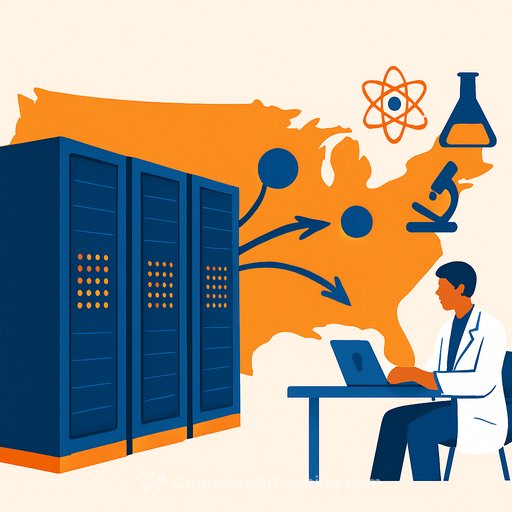
The launch of Nexus, a new supercomputer developed by Georgia Tech with a $20 million grant from the National Science Foundation, represents a major step forward for scientific research in the U.S. This AI-powered system offers immense computational abilities aimed at accelerating innovation across multiple disciplines including drug discovery, clean energy, and climate modeling. Scheduled for completion in spring 2026, Nexus is set to empower researchers nationwide with advanced tools to explore complex scientific challenges.
The Power of Nexus: Unmatched Computing Capabilities
Nexus delivers extraordinary computational strength, capable of performing over 400 quadrillion operations per second. To put this in perspective, this is comparable to every person on Earth performing 50 million calculations at the same time. It boasts 330 trillion bytes of memory and 10 quadrillion bytes of flash storage, positioning it among the fastest supercomputers in the country.
More than raw speed, Nexus is designed with user-friendly interfaces to make advanced AI tools accessible across scientific fields. Researchers nationwide, not limited to major tech centers, can apply for access through the NSF. This approach opens doors for a wider range of scientists to engage with powerful computing resources, encouraging diverse discoveries.
AI Muscle for All: Expanding Research Access
At its core, Nexus facilitates broader access to AI and high-performance computing (HPC). By delivering unprecedented processing capabilities, it enables scientists from various institutions and disciplines to use AI in their work. Georgia Tech’s leadership in AI and HPC development is evident, supported by partnerships such as the National Center for Supercomputing Applications (NCSA).
This collaboration also includes creating a high-speed network connecting multiple systems, which improves efficiency and accessibility. According to Katie Antypas from the National Science Foundation, Nexus will support new scientific workflows and AI applications, helping researchers accelerate discovery and innovation.
Supercharged Brains, Faster Science
Nexus is more than a supercomputer; it’s a tool to advance scientific progress. With its ability to process massive datasets and address complex problems, Nexus supports research in many fields. Its fast data transfer capabilities reduce downtime, allowing researchers to focus on analysis and insights rather than waiting for results.
Suresh Marru, principal investigator of the Nexus project, highlights that the system aims to provide equal access to advanced AI resources regardless of a researcher’s location. Georgia Tech’s role includes reserving capacity for on-campus projects and leveraging experience from prior initiatives like HIVE and the CODA data center to optimize Nexus’s performance.
Anticipating the Impact: A New Era of Discovery
As Nexus nears operational status, the scientific community is eager to see how it will accelerate research. This system is expected to not only speed up existing projects but also enable entirely new areas of investigation. Srinivas Aluru, a senior academic leader at Georgia Tech, points out that Nexus represents years of strategic planning and expertise.
The impact will extend across academic and industrial sectors, providing researchers with tools to explore pressing challenges in AI, climate science, healthcare, and more. Nexus’s development signals a significant advancement in providing equitable access to high-performance computing resources, supporting innovation across the nation.
For researchers interested in expanding their AI and computational skills, consider exploring Complete AI Training’s latest courses designed to build practical expertise in AI technologies.
Your membership also unlocks: