Nightingale AI secures supercomputer time and clinical data for its next phase
Nightingale AI, a large healthcare model led by Imperial College London, has locked in the two ingredients that matter: serious compute and broad, de-identified clinical data. The aim is straightforward-help researchers and clinicians develop treatments, support diagnosis, and monitor illness with a model built for healthcare, not general chat.
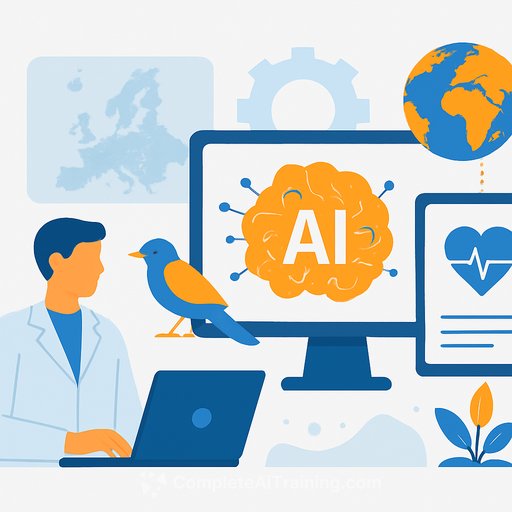
The team is training a "world" model that finds patterns across massive datasets from the UK, EU, and US. This scale is intended to answer wide-ranging health questions with more clinical context than text-only systems can provide.
What's new
- Compute allocation: one million GPU-hours on Isambard-AI in Bristol, currently ranked among the fastest supercomputers globally.
- Data partnerships: access to large de-identified datasets, including a collaboration with the Children's Hospital of Orange County (CHOC) to strengthen AI for under-served paediatric conditions using anonymised EHRs. Learn about CHOC.
- Outcome target: a general-purpose health model that can support research and clinical decision-making across specialties by integrating multiple data types.
How Nightingale AI reasons
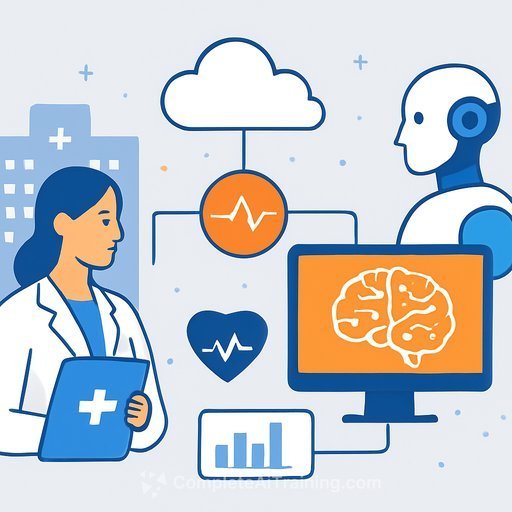
Most models reason over text. Nightingale AI learns from healthcare data in many forms so it can think more like a clinical team reviewing a full chart.
- Structured data: vitals, labs, medications, procedures
- Clinical notes and care plans
- Medical imaging: X-ray, CT, MRI, ultrasound
- Genomics and other omics data
- Waveforms and monitoring data
- Published medical research
By combining these inputs, the model is expected to produce insights grounded in real clinical context-useful for triage support, prognosis, and research pipelines.
Compute, team, and prior work
Isambard-AI is a £225 million system hosted at the University of Bristol. The initial allocation gives Nightingale AI compute on the order of what was used to train early large language models such as GPT-3.
Professor Aldo Faisal, Director of the UKRI Centre for Doctoral Training in AI for Healthcare (AI4Health), will lead a cohort of doctoral and PhD researchers. The team will train the model using data provided in part by CHOC, which previously collaborated with Professor Faisal on AI Clinician-supporting paediatric critical care decisions.
Privacy, safety, and governance
The initiative trains on anonymised data. The model will not share the source records used to create it.
Expect strict data governance, external validation, and bias audits before any clinical deployment. For regulatory framing, see guidance on software and AI as a medical device from the UK MHRA: MHRA SaMD and AI guidance.
What this could mean for care teams
- Earlier flags for deterioration, sepsis risk, and readmission probability
- Decision support that blends labs, notes, and imaging into clearer differentials
- Faster imaging triage and quantification for radiology workflows
- Genomic variant interpretation with clinical context
- Longitudinal monitoring from EHR and device data
- R&D acceleration: cohort discovery, trial feasibility, synthetic control arms
Paediatrics in focus
Children's diseases are frequently under-represented in AI research. The collaboration with CHOC brings paediatric-specific data and expertise into the training mix, aiming to improve coverage for young patients who are often left out of model development.
How to engage or prepare
- Identify high-impact pilot settings (ICU, ED, oncology, radiology) with clear outcome metrics
- Tighten de-identification pipelines and audit trails for data sharing
- Stand up a clinical evaluation framework: calibration, drift monitoring, and human-in-the-loop oversight
- Map workflows early-alerts, ownership, and escalation rules should be defined before deployment
- In paediatrics, ensure age-specific validation and dosing logic, with ethics approvals aligned to local standards
Leadership and support
Nightingale AI is based in Imperial's School of Convergence Science in Human and Artificial Intelligence. It is led by Imperial in partnership with universities across the UK and Europe, and funded by the UKRI AI Hub in Generative Models, the Horizon Europe programme DVPS, and AI4Health.
The initiative is non-profit and independent of commercial interests. It was also highlighted by NVIDIA during the recent state visit of the US President to the UK as one of the UK projects using the company's GPUs.
From the team
Professor Aldo Faisal notes that combining large-scale data with substantial compute capacity sets up a step-change in healthcare AI-supporting medical advances while giving clinicians tools to offer more individual-specific advice, treatment options, and referrals.
Co-lead Dr Marek Rei adds that, unlike general models that mostly read text, this effort is built to combine knowledge across many kinds of medical data to answer clinical questions with more depth.
Upskill your organisation
If you're planning clinical AI pilots or building internal capability, explore role-specific learning paths: AI courses by job.
Your membership also unlocks: