To keep AI out of her classroom, this high school English teacher went analog
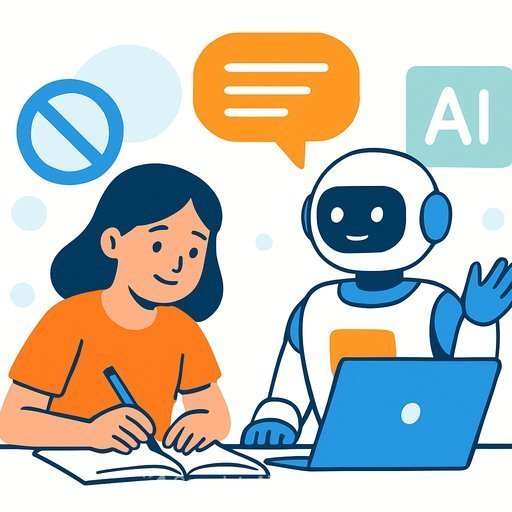
At Southwest High School in Fort Worth, Chanea Bond took laptops off the desks and put pens back in students' hands. Her goal is simple: make thinking unavoidable and writing personal. In a campus serving mostly low-income students, she believes paper-first instruction is the most reliable way to build the skills that matter.
"I know that when my students leave my class they know how to think and they know how to write," she says. That's the metric she optimizes for.
Why she ditched AI
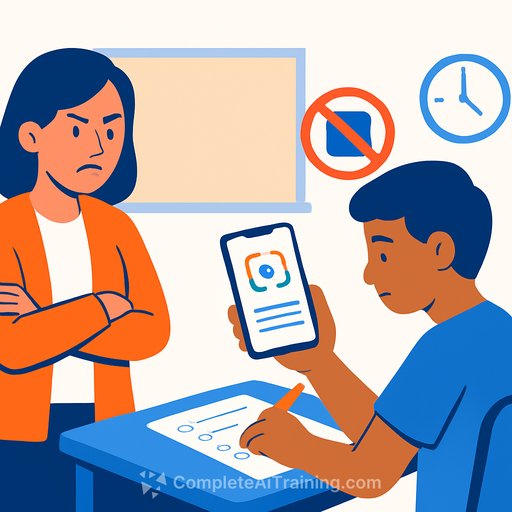
Bond tested AI with a thesis-writing task after students annotated Maya Angelou's "Still I Rise." The results looked polished, but the thinking wasn't there. Students who leaned on AI skipped the hard part - forming an argument - and couldn't engage the text with any depth.
She realized many students can't yet judge whether an AI output is any good. They still need to learn how to craft a thesis, build an argument, and revise with intent. "Where are those skills going to be built, if not here?"
What AI-free teaching looks like (and why it works)
- Daily handwritten journaling: Class starts with a few minutes of writing in notebooks. It builds fluency, lowers the stakes, and lets Bond learn each student's voice.
- Paper-first assignments: Most work is handwritten and turned in physically. Laptops come out at the very end to type the final draft (unless a student has accommodations).
- Process grading: Students submit the thesis, outline, bibliography, and handwritten draft - and each step matters. It's harder to outsource your thinking when you're showing your work.
- Analog supports: Dictionaries in the room and a pocket instructor book for prompts and discussions. No tab-switching. No distractions.
Student response: less noise, more thinking
Junior Meyah Alvarez didn't love the switch at first. Then the writing started to click. "It actually does get my brain thinking," she says. The assignments feel more interactive, and she likes that her opinions and experiences matter.
Sophomore Eligh Ellison has used AI before and still supports the ban. For him, the class is a space to figure out what he thinks - without outsourcing it. "AI has a time and a place," he says, "but we're standing on shaky ground."
One junior, T, tried AI for a last-minute bibliography. Bond spotted it immediately. He redid the work with her help. His takeaway for classmates: slow down, do the thinking, take something real from the assignment.
Counterpoint: teaching with AI, not against it
Not every teacher sees an AI ban as the answer. Bond's colleague in another district, Brett Vogelsinger, models responsible AI use and requires students to be transparent about how they use it. His filter is simple: does this use shortcut my thinking, or push it?
Even he says we're still testing what works. The key is making thinking visible - whether you're on paper or a device.
Policy context: districts and states are moving ahead
Many systems are leaning into AI. Miami-Dade offers high schoolers access to Gemini. New Jersey funded grants to explore AI in classrooms. Federal guidance encourages "responsible adoption," with an emphasis on safety, equity, and human oversight.
District leaders should consult Research on AI in education to help ground policy in evidence. If you're setting policy or PD, it's also worth scanning the U.S. Department of Education's recommendations on AI in teaching and learning. Read the guidance.
Practical takeaways for educators
- Start with writing fluency: Open class with 5-7 minutes of handwritten journaling. Low pressure. No grading on mechanics.
- Grade the process, not just the product: Collect and score thesis, outline, bibliography, and a handwritten draft. Require check-ins.
- Clarify tech use by stage: Draft by hand, revise on paper, type only the final. Make exceptions for accommodations.
- Teach judgment explicitly: If you allow AI, define acceptable use, require disclosure, and compare AI outputs to student drafts.
- Protect student voice: Use journals and quick-writes to help students hear themselves. Confidence precedes quality.
- Reduce overwhelm: Break research tasks into micro-deadlines to prevent last-minute AI shortcuts.
The bigger idea
AI can make writing look finished without the thinking that makes it meaningful. Bond's approach forces the thinking first. Whether you go fully analog or allow guided AI use, the principle holds: Design your workflow so students can't skip the part that actually grows them.
If your district is adopting AI
Pair any rollout with clear guardrails and staff development focused on thinking, not artifacts. For structured options by role, see these curated training paths for educators and support staff: AI Learning Path for Training Instructors.
Your membership also unlocks: