Music Streaming Fraud Case Shows AI's Growing Role in Financial Crimes
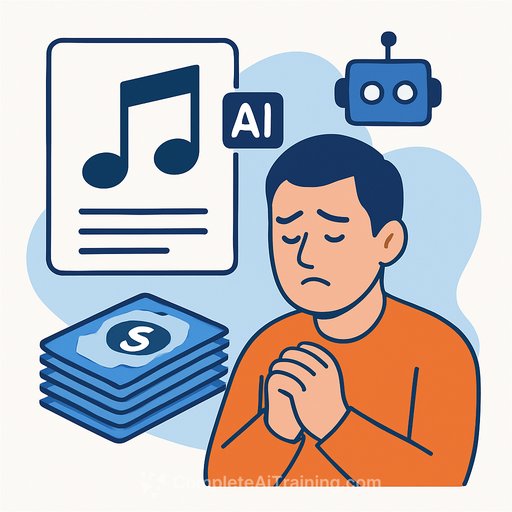
Michael Smith, a 52-year-old from North Carolina, pleaded guilty Friday to defrauding music streaming platforms out of millions of dollars using AI-generated songs and automated bots to artificially inflate play counts. The case marks one of the first successful prosecutions of AI-related fraud in the music industry.
Smith generated thousands of fake songs using artificial intelligence between 2017 and 2024, then used automated systems to stream those songs billions of times. He obtained more than $10 million in fraudulent royalty payments, with annual payouts reaching $1,027,128 at peak activity.
Under his plea agreement with federal prosecutors in New York's southern district, Smith faces up to five years in prison and must forfeit $8,091,843.64 when sentenced in July. He pleaded guilty to conspiracy to commit wire fraud.
Real Money From Fake Streams
The scheme diverted royalties from legitimate musicians and songwriters whose work was actually streamed by real listeners. Streaming services like Spotify, Apple Music, and Amazon Music distribute royalty payments from a shared pool proportional to stream counts.
"Although the songs and listeners were fake, the millions of dollars Smith stole was real," said US attorney Jay Clayton. "Millions of dollars in royalties that Smith diverted from real, deserving artists and rights holders."
Smith generated as many as 661,440 streams daily at his peak. One observer noted he had used "AI make the music AND the audience," generating $1.2 million annually for "music no human ever actually listened to."
A Growing Threat to Musicians
The music industry faces mounting pressure from AI-generated content. Suno, a generative AI music company with 2 million subscribers, produces roughly 7 million songs per day-equivalent to an entire streaming catalog every two weeks.
French streaming service Deezer reports receiving 60,000 fully AI-generated tracks daily. The service found that 97% of listeners cannot distinguish between human-generated and AI-created music.
The volume of AI music threatens to overwhelm legitimate artists. Musicians and songwriters now compete against content that costs nothing to produce and requires no creative effort.
Industry Response
The UK government recently scrapped plans that would have allowed AI companies to use copyrighted works without permission, following opposition from thousands of artists including Elton John, Dua Lipa, and Paul McCartney.
Suno's chief executive acknowledged the tension. "Every single day I'm conflicted," he told Billboard in March. "This s-t is complicated. I want to make sure there's whole future generations of the beauty of art and music and the ability to build careers around it."
The Smith case illustrates how AI fraud mechanisms operate at scale. For professionals in finance, IT, and development roles, understanding how generative AI enables both innovation and financial crime has direct relevance to compliance and security frameworks.
Readers interested in how generative AI works can explore Generative AI and LLM courses. Those focused on the creative industries should consider the AI Learning Path for Vocal Artists & Songwriters.
Your membership also unlocks: