Sanctions Sought After Alleged AI-Generated Fake Citations by North Miami City Attorneys
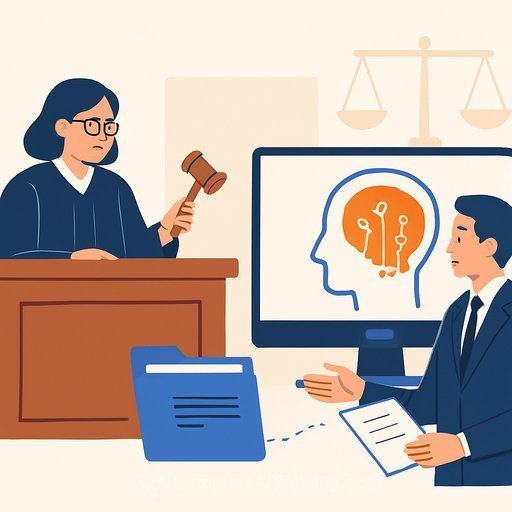
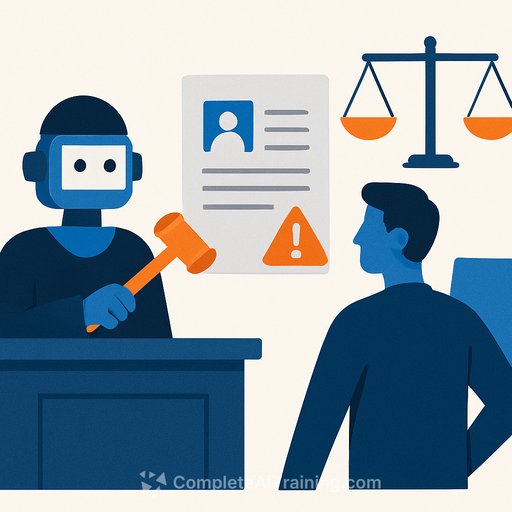
A South Florida lawyer has asked a Miami-Dade County judge to sanction the City of North Miami, the city attorney's office, and assistant city attorney PaulMarie E. Bobb for allegedly submitting a filing that relied on artificial intelligence and cited case law that does not exist.
Faudlin Pierre represents plaintiff Jean Jouse Charlot in a public-records suit tied to Charlot's alleged unlawful arrest by the North Miami Police Department in February 2025. Pierre says he requested arrest affidavits, search warrants, body-worn camera footage, and investigative files in August 2025. By November, he filed a Chapter 119 complaint after the city allegedly failed to produce all requested records.
The city moved to dismiss, asserting it had complied with public-records obligations and produced what it could at the time. Pierre responded with a February 2 motion seeking sanctions, arguing the city's filing used AI and contained fictitious and mischaracterized authority, in violation of a local administrative order requiring disclosure of any generative AI used and forbidding unverified citations.
The citation at issue
Pierre says the city cited "Kline v. Miami-Dade County, 200 So. 3d 271 (Fla. 3d DCA 2016)," which he contends does not exist. He points out that the only Florida appellate decision at 200 So. 3d 271 (2016) is Kline v. University of Miami, a First District case-and that it does not support the city's proposition.
He further argues the city mischaracterized several cases, including Stern v. City of Miami Beach (a matter in which he served as co-counsel), Mazer v. Orange County, and Morris v. City of Miami. In his view, the authorities either don't stand for the cited propositions or were presented without proper context.
Public-records backdrop and current status
Pierre's underlying suit alleges violations of Florida's public-records law, Chapter 119. See Florida Statutes, Chapter 119 for statutory requirements and fee-shifting provisions for prevailing requesters.
Florida Statutes, Chapter 119 (Public Records)
As of February 5, Pierre says not all requested records had been provided, including paid-for body-worn camera footage. His motion argues that "reliance on nonexistent and mischaracterized legal authority" is sanctionable and cites Florida courts' emphasis on candor to the tribunal.
Why this matters for legal teams
The risk isn't AI itself-it's unverified authority and broken internal controls. Courts are making clear: if you submit fictitious citations or misstate holdings, expect consequences.
- Adopt a zero-trust cite check. Shepardize/KeyCite every case. Confirm reporter volume and page, court, year, and that the quoted language actually appears. Verify pin cites.
- Require AI-use disclosure where mandated. Include a short attestation that a human verified all authorities and quotations, consistent with applicable administrative orders.
- Preserve a research record. Save PDFs or authenticated links of all cited opinions. Keep a short memo noting how each case supports the proposition.
- Run a "red team" review before filing. Assign a colleague or paralegal to re-check authorities with a fresh search query on a second database.
- Train the whole team. Set policy that AI tools can draft but cannot be a source of truth. Verification happens on Westlaw, Lexis, Fastcase, or official court sites-every time.
- Tie fees exposure to workflow. In public-records disputes, map deadlines, rolling productions, and exemptions to avoid needless delay and fee claims under Chapter 119.
Practical checklist you can implement today
- Disclosure: If any generative tool touched the brief, add a one-line disclosure and a human-verification statement.
- Authentication: Pull the official opinion PDF from the court or a primary database; don't rely on AI summaries.
- Consistency: Ensure the jurisdiction and standard of review in your cited cases match your issue.
- Proposition mapping: Next to each citation in your draft, write the exact proposition it supports and the pinpoint.
- Final pass: Search the reporter citation directly (e.g., "200 So. 3d 271") to confirm the case name, court, and holding.
What to watch next
- The court's ruling on sanctions against the City of North Miami, the city attorney's office, and assistant city attorney PaulMarie E. Bobb.
- Any required disclosure about AI usage in the city's filings and whether supplemental corrections are made.
- Completion of the records production, including body-worn camera footage, and potential fee exposure under Chapter 119.
For teams tightening policies and training around AI in research and drafting, see AI for Legal for practical workflows that emphasize verification, disclosure, and risk controls.
Your membership also unlocks: