Northwestern Symposium Examines How AI Reshapes Creative Work
Northwestern University's Center for Human-Computer Interaction + Design convened researchers, designers, and artists on March 6 to examine a practical question: as generative AI tools become standard in creative work, how do creators maintain control over their own process?
The symposium brought together faculty, students, and industry partners to discuss three core problems. How does AI shift roles within creative teams? How should interfaces be designed to support what humans actually want to make? And what do people need to know to stay in command of their creative decisions?
Demos Showed AI as a Practical Tool, Not a Replacement
The event opened with working demonstrations. Karan Ahuja and PhD student Chenfeng Gao presented a system that translates text descriptions into designs ready for physical fabrication-bridging the gap between what a designer imagines and what a machine can produce.
Ethan Manilow, a senior research scientist at Google DeepMind, demonstrated music generation models that create audio from text or image prompts. Both demos illustrated the same principle: AI handling technical details so creators could focus on aesthetic and compositional choices.
Three Panels Tackled Real Tensions
The first panel examined whether AI leads to artistic homogenization or enables new forms of expression. Participants discussed the role of struggle in developing taste and mastery-whether creators lose something important when AI eliminates friction.
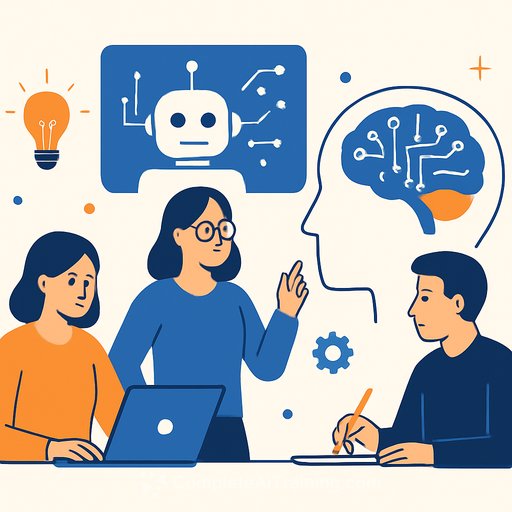
A second panel focused on creative teams. The discussion surfaced a practical concern: people sometimes hide their AI use from teammates due to fear of reputational damage. AI also creates ambiguity around credit and attribution when multiple people contribute through different tools.
The final panel explored how AI affects both experts and novices differently. Experts may over-rely on AI suggestions. Novices may use AI as a shortcut that prevents them from developing fundamental skills. The group discussed the importance of maintaining what one panelist called a "felt experience of control"-the sense that you're making decisions, not just executing them.
What Comes Next
Participants spent the afternoon writing research proposals on questions like: How can AI foster better teamwork rather than isolation? What role does expertise play in deciding when to trust AI suggestions? How might AI be designed to push creators outside their comfort zones rather than reinforce existing habits?
For creatives navigating these tools, the symposium underscored a single point: the design of AI systems determines whether they support your agency or undermine it. That distinction matters more than the technology itself.
Learn more about AI for Creatives and how to maintain creative control when working with generative tools.
Your membership also unlocks: