
AI news ·
Norway bans artificial intelligence in elementary schools
Norway will ban students aged 6 to 13 from using AI in schools to protect basic literacy and math. Older teens can use the tools under direct teacher supervision.
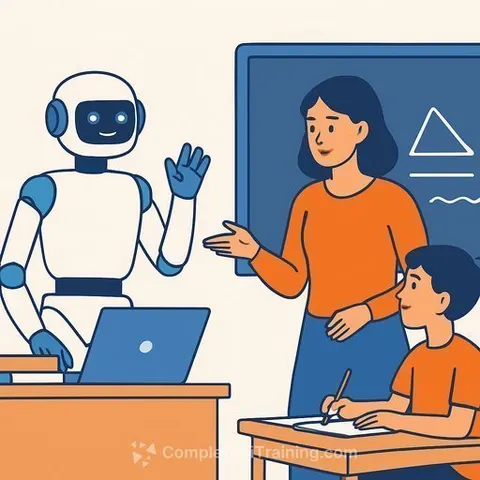
Norway will bar children aged 6 to 13 from using artificial intelligence in schools starting in late August, as the government moves to protect foundational learning amid a global debate over generative AI's effect on cognitive and social development. The restrictions make Norway one of the first countries to impose a near-ban on AI in elementary education, following its earlier smartphone ban that already showed measurable academic and mental health benefits.
Prime Minister Jonas Gahr Støre said the policy reduces the risk that young children miss essential steps in their education. "The most important thing in school is that our children learn to read, write and do mathematics," he told a press conference reported by Reuters. Teenagers aged 14 to 16 will be allowed to use AI only under direct teacher supervision. Students between 17 and 19 will learn to "use AI appropriately" to prepare for further education and work. The government is also set to propose legislation that promotes the use of physical books in classrooms.
Smartphone ban's ripple effects
Norway's earlier prohibition on smartphones in schools produced concrete results. Some studies found that the ban increased students' grade point averages and reduced visits to mental health professionals, particularly among female students. The AI restrictions extend the same logic-keep digital distractions at bay during the years when basic cognitive and social skills form.
US educators push back and adapt
In the United States, parents and teachers are mounting their own pushback against generative AI in classrooms. Grassroots group PACES (Parents for AI Caution in Educational Spaces) is calling on New York City Mayor Zohran Mamdani to declare a two-year moratorium on AI in schools, The New Yorker reported last month.
Technology companies continue to invest in bringing AI to educators. The National Academy for AI Instruction, funded by Microsoft, OpenAI, and Anthropic, offers classes to help teachers incorporate AI tools into their lessons. Randi Weingarten, president of the American Federation of Teachers, told The New Yorker that the project would help teachers navigate the "inevitable." Initiatives like this sit alongside dedicated AI Learning Path for Teachers resources that focus on practical classroom integration.
At the same time, teachers across the U.S. are returning to pen-and-paper blue books for exams to prevent AI-based cheating. Others embed hidden prompts in coursework to detect students who submit AI-generated answers.
Why this matters for educators
Norway's move signals that some governments will prioritize foundational literacy and numeracy over early AI adoption-and will build on data from earlier tech bans to justify restrictions. For teachers, the split policy (no AI for younger students, supervised use for older ones) creates a template that may appear elsewhere. Knowing where your own district stands, staying current on research around AI's developmental impacts, and having clear guidance on when AI use is appropriate in your grade level will become essential. As regulations shift, AI for Education coverage can help track the policies and practices shaping classrooms.