Nvidia and Adobe Partner to Bring Product Digital Twins Into Marketing
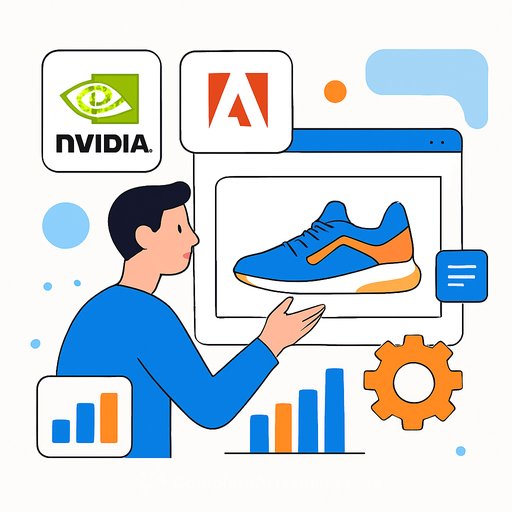
Nvidia and Adobe announced a partnership at GTC 2026 to combine digital product twins with AI-powered content creation, letting brands use accurate 3D product models across design, marketing and campaign workflows instead of relying on AI-generated images that may not match what customers will actually receive.
The partnership addresses a core tension in modern marketing: generative AI can produce content fast, but companies selling physical products need pixel-perfect accuracy. A digital twin-a simulation-ready 3D model created during product design-solves this by providing a single source of truth that moves from the factory floor into campaign production.
From 28 Days to Minutes
Varun Parmar, general manager at Adobe, said the need for marketing content will increase fivefold over the next two years. Generative AI handles volume, but industries like automotive, consumer electronics and luxury goods require exact product representation without hallucination.
The workflow converts computer-aided design files into simulation-ready digital twins, then routes them through Adobe's content automation platform. Campaign assets that once took 28 to 30 days can now be produced in minutes, Parmar said.
Brands also gain a timing advantage. Because digital twins exist before physical products ship, marketing campaigns can launch months earlier. In automotive, where a year or more can pass between final design and production availability, this means being campaign-ready on day one.
Why Digital Twins Matter for Marketing
Rev Lebaredian, vice president of Omniverse and simulation technology at Nvidia, said the difference between a digital twin and a pure AI-generated image matters when representing products to customers.
"As great as AI is at creating content, when you represent your product you need to show exactly what it's going to be like when people interact with it in the physical world," Lebaredian said. "You can't really promise that with a pure AI-generated image."
Digital twins serve a broader function beyond marketing. They act as persistent digital representations that help companies maintain accuracy from design and manufacturing through brand execution. This consistency matters across industries where product identity is central to customer expectations.
For marketing professionals, this means a unified asset pipeline. Instead of recreating product visuals for each campaign, a single digital twin can feed multiple channels-social media, email, commerce sites, video-while guaranteeing brand consistency and product accuracy.
Learn more about AI for Marketing and how automation is reshaping content workflows.
Your membership also unlocks: