Nvidia CEO Warns U.S. Falling Behind China in AI Competition
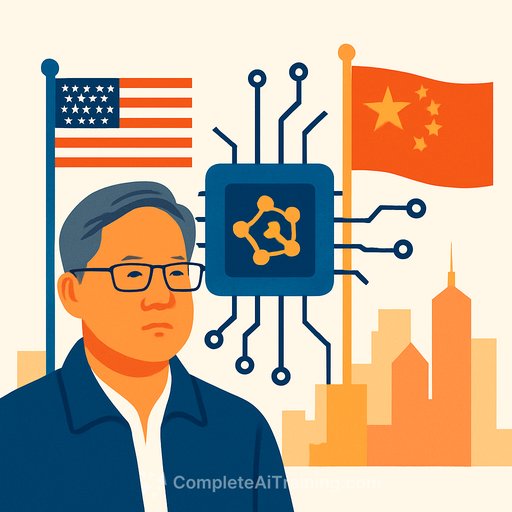
Jensen Huang, CEO of Nvidia, has issued a clear warning to U.S. policymakers: China is closing the gap in artificial intelligence, and America risks losing its lead if it doesn't act decisively. Speaking at the Hill & Valley Forum in Washington, Huang emphasized the urgent need for a national strategy to invest in AI workforce development and technology adoption.
“50% of the world’s AI researchers are Chinese,” Huang noted. This significant talent pool, combined with China’s growing technological capabilities, demands a strategic response from the U.S.
China Is Closing In Fast
Huang highlighted that the U.S. lead over China is now slim. “They’re right behind us,” he said. He pointed to Huawei, despite its blacklisting in the U.S., as a prime example of China’s technological progress. Huawei is developing its own AI chips, aiming to reduce dependence on Western technology and capture the domestic market.
The impact of U.S. export controls on Nvidia itself has been substantial. Restrictions on sales of Nvidia’s H100 processors to China have led to an estimated $5.5 billion revenue loss. Huang argues these export controls have inadvertently accelerated China's push for self-reliance in AI chip development, particularly benefiting Huawei.
A Call for Strategic Investment and Workforce Training
Huang urged the U.S. to fully embrace AI technology, focusing on retraining workers so they can effectively use AI tools. He compared the current AI shift to the Industrial Revolution, suggesting that America’s historical success came from adopting new technologies quickly rather than resisting change due to job displacement fears.
To support this vision, Nvidia announced a $500 billion investment in AI infrastructure over the next five years, including a new AI server manufacturing facility near Houston in partnership with Foxconn.
The Future of Work and AI Talent Shortage
While Huang acknowledges AI will automate many current jobs, he remains optimistic about the evolution of work. He predicts a global shortage of at least 50 million workers by 2030 and believes AI can help fill that gap by augmenting human capabilities.
To address this, Nvidia introduced Groot N1, a foundational AI model designed for humanoid robots, signaling a push towards new AI applications that could transform industries.
What This Means for Executives and Strategy Leaders
- Recognize the narrowing technology gap: China’s rapid AI advancements require a proactive response to maintain competitive advantage.
- Invest in workforce development: Upskilling employees to work with AI technologies is essential to stay relevant.
- Review supply chain and technology dependencies: Consider the risks of export restrictions and the acceleration of domestic alternatives in competitor nations.
- Monitor AI infrastructure investments: Large-scale commitments like Nvidia’s $500 billion plan indicate where future industry growth may concentrate.
For executives looking to deepen their understanding and skills related to AI, workforce training resources are available through platforms such as Complete AI Training, offering courses designed to prepare teams for the evolving AI landscape.
Your membership also unlocks: