Nvidia Releases AI Platform for Hospital Operating Rooms and Logistics
Nvidia this week launched what it describes as the first open platform built specifically for healthcare robotics, providing datasets, simulation tools and AI models designed to train systems on surgical environments and deploy them in clinical workflows. Johnson & Johnson MedTech, CMR Surgical, PeritasAI and Proximie are among the first organizations building on the platform.
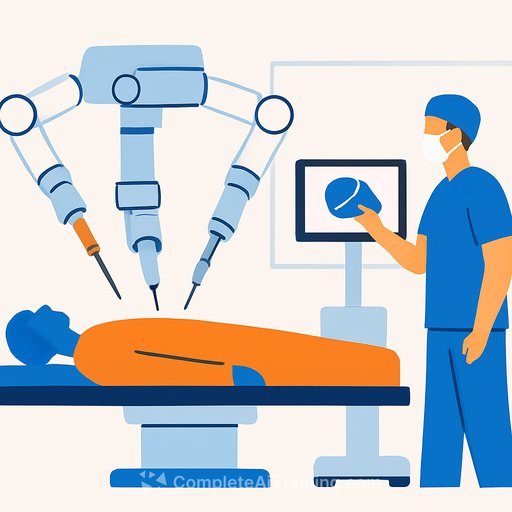
The systems do not replace surgeons. Instead, they observe surgery in real time, coordinate equipment between procedures and handle logistics tasks that consume significant staff hours but require minimal clinical judgment.
Real-Time Surgical Assistance
One application category focuses on intraoperative assistance, where AI analyzes live surgical video and surfaces insights to surgeons without controlling instruments. Proximie is using Nvidia's synthetic data tools to train models that identify anatomy, track procedural progress and provide contextual guidance during procedures.
The core bottleneck in healthcare robotics has been access to training data. Nvidia's Open-H dataset includes 776 hours of surgical video from 35 organizations across multiple robotic systems and procedures. By pooling data across the ecosystem, developers train models that work across different environments rather than learning from narrow, proprietary datasets.
Simulation extends this capability. Nvidia's Cosmos-H models generate synthetic surgical data, allowing developers to test edge cases and rare scenarios without relying solely on real-world footage. This compresses development timelines and reduces iteration costs.
The distinction matters for regulation and risk. AI that observes and informs operates under a different regulatory framework than AI that acts autonomously. Current deployments position these systems as a second set of eyes rather than a replacement for surgical expertise.
Hospital Coordination and Logistics
The second application category addresses hospital coordination: moving patients, tracking instruments, managing sterilization cycles and allocating equipment across departments. These tasks are high-volume, time-sensitive and currently handled by human staff.
PeritasAI is targeting this layer, training systems to manage instrument handling, sterile field coordination and operating room logistics. These areas carry lower clinical risk than surgical assistance and offer faster return on investment.
The economics are straightforward. Administrative and coordination tasks consume significant hospital labor but do not require specialized clinical training. Automating them frees staff time, improves throughput and reduces delays across the system.
Johnson & Johnson MedTech is using Nvidia's platform to generate training data for its MONARCH system, reducing reliance on physical testing. In simulation, hundreds of scenarios run in minutes rather than days, accelerating development cycles for systems that would otherwise require extensive real-world validation.
Why Hospitals Are Adopting Now
The World Health Organization projects a global shortfall of 10 million health workers by 2030. U.S. hospitals report operating below capacity due to staffing constraints, making administrators more willing to deploy automation in workflows previously considered too complex or sensitive.
For operations professionals, these systems address a concrete problem: staffing shortages and cost pressures. The focus on coordination tasks means automation targets the work that consumes time without requiring specialized training, freeing clinical staff for higher-judgment work.
Learn more about AI for Operations and AI for Healthcare.
Your membership also unlocks: