Nvidia’s Strategic Alliance: Preparing AI Infrastructure for the Next Era
The AI landscape is shifting. For the past two years, success has largely hinged on software—building bigger, more complex models. But in 2025, the focus is moving from software alone to the physical infrastructure that supports it.
Nvidia, led by CEO Jensen Huang, is positioning itself at the forefront of this shift. The company’s latest moves emphasize forming strategic partnerships to build scalable AI infrastructure that meets the demands of increasingly powerful models.
The Changing Battleground: From Code to Concrete
As AI models grow, the need for specialized hardware intensifies. The race to outpace Moore’s Law—the traditional doubling of transistor density every two years—is prompting chipmakers to innovate beyond raw transistor counts. Efficiency, speed, and integration of AI-specific processors are now critical.
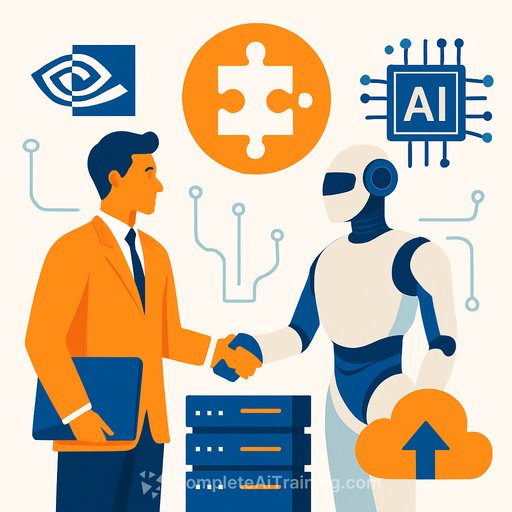
Nvidia’s approach involves creating an “instant AI factory” with its Blackwell Ultra DGX SuperPOD and other advanced platforms. This infrastructure aims to accelerate AI development cycles and deployment, especially for cloud and edge computing applications.
Strategic Partnerships and Geopolitical Dynamics
Nvidia’s alliances extend beyond technology. Recent US agreements allowing the UAE to import up to 500,000 Nvidia AI chips annually reflect a broader geopolitical strategy. These moves impact global supply chains and chip accessibility in regions like the Middle East, affecting key players such as Saudi Arabia and China.
With AI’s strategic importance growing, controlling access to advanced semiconductor technology becomes a lever in international relations. Nvidia’s role in these dynamics highlights how semiconductor firms are entwined with geopolitical developments.
Opportunities for Executives and Strategy Leaders
- Rethink Infrastructure Investment: The shift from software focus to hardware infrastructure means executives must prioritize partnerships and investments that enhance AI hardware capabilities.
- Monitor Geopolitical Shifts: Understanding how trade agreements and export controls affect supply chains is essential for risk management and strategic planning.
- Leverage Cloud and Edge AI: Growth in cloud and edge applications opens new semiconductor opportunities. Aligning with foundries and chipmakers that adapt to these trends will be key.
For leaders shaping AI strategies, keeping abreast of these developments in hardware and international relations will be crucial to maintaining competitive advantage.
To deepen your knowledge of AI infrastructure and its strategic impact, consider exploring specialized courses and training on Complete AI Training.
Your membership also unlocks: