NXP and GE HealthCare bring edge AI concepts to the OR and NICU
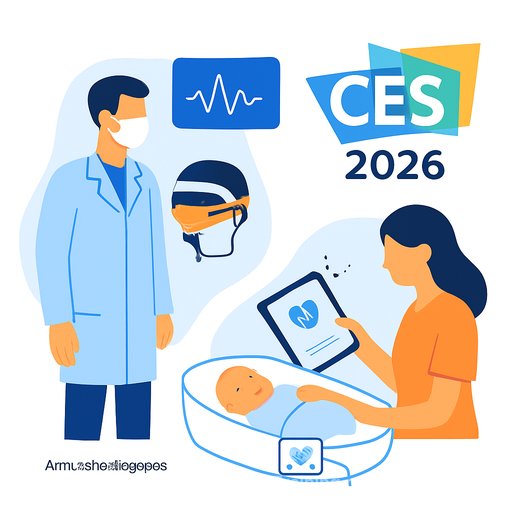
Two familiar names in healthcare and semiconductors are teaming up. NXP Semiconductors and GE HealthCare announced a collaboration to explore edge AI concepts built for acute care, with early demonstrations on anesthesia delivery and neonatal monitoring debuting at CES 2026.
The focus is practical: deliver fast, reliable, and secure insights directly on the device, where clinicians work. By processing data locally, these concepts aim to reduce delay, improve consistency, and keep sensitive information inside the care setting.
Why edge AI matters at the bedside
ORs and NICUs run on seconds and signal quality. Cloud latency and unreliable connectivity can get in the way, especially when teams need immediate answers. Edge AI keeps inference on-device, offering consistent performance and stronger privacy by design.
For clinicians, that can mean fewer taps, fewer interruptions, and more time focused on the patient rather than the screen.
Concept 1: Hands-free anesthesia interaction
The first concept brings voice-enabled, on-device AI to anesthesia equipment. Anesthesiologists could issue real-time voice commands to adjust settings and check status without breaking focus or sterile workflow.
- Eyes remain on the patient; hands stay available for critical tasks.
- Lower cognitive load and fewer non-urgent interruptions in a crowded OR.
- Consistent performance without relying on cloud connectivity.
Concept 2: Intelligent neonatal monitoring at the edge
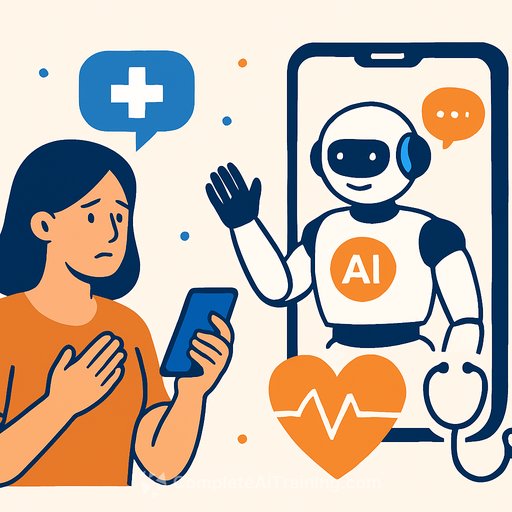
The second concept supports neonatal care with live, on-device monitoring. It aims to detect crying vs. resting, identify unwanted objects in the crib, and recognize if an infant has rolled onto their stomach-then log the event and alert care teams, if appropriate.
- All image processing runs locally using models built with NXP's eIQ AI Toolkit. No images leave the device.
- Agentic AI on the edge helps prioritize what matters and when to notify staff.
- Privacy and security are central to the design.
Security, privacy, and Responsible AI
Both concepts align with GE HealthCare's Responsible AI principles: safety, security, privacy, validity, transparency, explainability, and fairness. The technical foundation combines NXP applications processors with integrated NPUs and a dedicated NPU, enabled by the eIQ AI Toolkit.
Local processing supports stronger data governance while keeping clinicians in the loop.
What leaders said
"At GE HealthCare, we build AI that keeps clinicians at the center, assisting clinical judgment and freeing up time for patient care," said Jeff Caron, Chief Digital & Technology Officer, Patient Care Solutions, GE HealthCare. "Collaborating with NXP helps us explore secure on-device AI as a complement to our cloud solutions, with concepts designed to support care teams in acute settings."
"This collaboration brings together GE HealthCare's clinical trust and decades of medical technology innovation with NXP's eIQ AI enablement and deep experience in secure, high-performance edge computing to provide safe, secure, and practical edge AI solutions to clinicians and patients," said Charles Dachs, Executive Vice President and General Manager, Secure Connected Edge, NXP.
Where to see it
NXP and GE HealthCare will showcase these concepts at CES 2026 in NXP's Pavilion (Central Plaza #134). Appointments are encouraged.
Read the fine print
Concept only. May never become a product. Not for sale. Not cleared or approved by the U.S. FDA or any other global regulator for commercial availability.
For context on regulatory pathways, see the FDA overview of AI/ML-enabled medical devices here.
What this means for healthcare leaders
- Target high-impact workflows: anesthesia equipment interaction and NICU monitoring are logical first steps for on-device AI.
- Plan governance early: define on-device data handling, logging, and audit trails with your clinical engineering and security teams.
- Keep clinicians in the loop: pair voice and vision models with clear, actionable outputs and simple override paths.
- Pilot for signal quality and alerting: measure false positives/negatives, latency, and staff workload before broader rollout.
- Coordinate with IT/biomed: validate network independence, update cycles for models, and service procedures.
- Build AI literacy: train care teams on limitations, failure modes, and safe-use policies.
About NXP Semiconductors
NXP is a global semiconductor company serving automotive, industrial and IoT, mobile, and communications infrastructure. The company operates in more than 30 countries and reported $12.61B in revenue for 2024. Learn more at nxp.com.
About GE HealthCare
GE HealthCare develops medical technology, pharmaceutical diagnostics, and integrated, cloud-first AI-enabled solutions and services. With approximately 53,000 employees and $19.7B in revenue, the company supports care across screening, diagnosis, therapy, and monitoring. Details at gehealthcare.com.
Next step for your team
If you're building internal skills for evaluating or deploying edge AI in clinical settings, explore practical training options by job role here, or review targeted AI Design Courses for clinician-facing interfaces and device UX AI Design Courses.
Your membership also unlocks: