Octobank's AI-Generated On-Site Video: A Practical Template for PR Teams
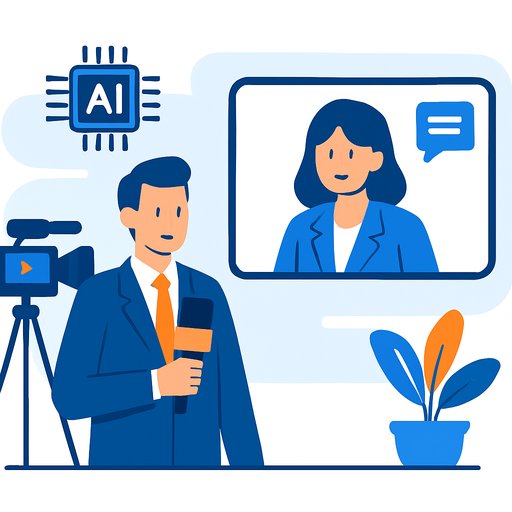
Octobank published an on-site video news report from the TAF!25 festival without sending a film crew. Every element-visual inserts, anchor avatar, script, voiceover, and edit-was produced by neural networks.
The bank acted as the event's title partner and released what it calls the region's first event report created without a journalist physically on location. The result: lower production costs, faster turnaround, and a clear signal that their PR tech stack is mature.
What happened
- Topic: TAF!25 festival coverage.
- Production: Fully AI-generated-no on-site journalist or camera team.
- Outputs: Visual B-roll, avatar anchor, auto-written script, synthetic voiceover, final edit.
- Goal: Publish timely news content while shrinking time and budget.
Why this matters for PR and Comms
- Speed: Same-day or next-day distribution becomes realistic for complex events.
- Cost: Travel, crew, and post-production hours drop, freeing budget for distribution and measurement.
- Consistency: On-brand voice and visual templates can be reused across campaigns.
- Scalability: One team can cover multiple locations in parallel.
How the workflow can look
- Pre-event: Define narrative beats, brand voice, and visual style templates.
- Data intake: Pull schedules, speaker names, and social feeds; collect public visuals and approved assets.
- Generation: Create scripts, avatar segments, voiceover, and inserts with neural networks.
- QA: Human editor reviews facts, tone, rights, and compliance; add on-screen disclosures for synthetic media.
- Publish: Export, caption, localize, and syndicate to owned and earned channels.
Risk and quality guardrails
- Accuracy: Cross-check names, titles, quotes, and figures with official event sources.
- Rights: Use licensed or owned visuals; keep an audit trail of sources and approvals.
- Disclosure: Label synthetic anchors/voices to maintain audience trust.
- Brand safety: Lock tone, visual identity, and disclaimers in templates to reduce drift.
Metrics to track
- Time to publish vs. prior events.
- Cost per finished minute of video.
- Completion rate, CTR, watch time, and earned pickups.
- Issue rate: number of corrections or takedowns required.
Where PR teams can apply this now
- Event recaps when travel is limited or schedules conflict.
- Executive updates and product news with consistent on-brand delivery.
- Localized variants for multiple markets without new shoots.
- Stakeholder briefings with quick turn edits as news develops.
Getting started (simple playbook)
- Pick one pilot event. Limit scope to a 60-90 second news hit.
- Build a reusable script outline: hook, 3 key facts, proof, CTA.
- Create one avatar and voice profile that match brand tone.
- Define a rights checklist and a two-step editorial review.
- Measure speed, cost, and engagement vs. your last human-shot recap.
Bottom line
Octobank showed that fully AI-produced event reporting is viable for PR. If you can protect accuracy, rights, and disclosure, you get faster publishing, leaner budgets, and repeatable quality-at scale.
Helpful resources
- Generative video tools shortlists for building your stack.
- AI courses by job function to upskill PR and Comms teams.
Get Daily AI News
Your membership also unlocks:
700+ AI Courses
700+ Certifications
Personalized AI Learning Plan
6500+ AI Tools (no Ads)
Daily AI News by job industry (no Ads)