OECD: Generative AI boosts grades fast - but the learning doesn't stick
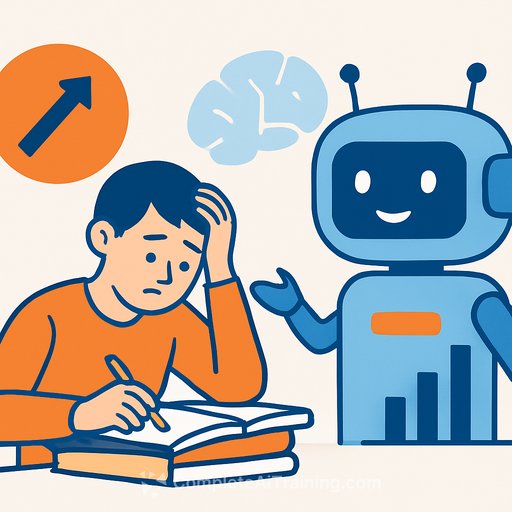
The OECD's Digital Education Outlook 2026 draws a hard line: generative AI can lift short-term performance, yet it often fails to build durable knowledge. Students finish tasks faster and score higher in the moment. Remove the AI, and the gains fade.
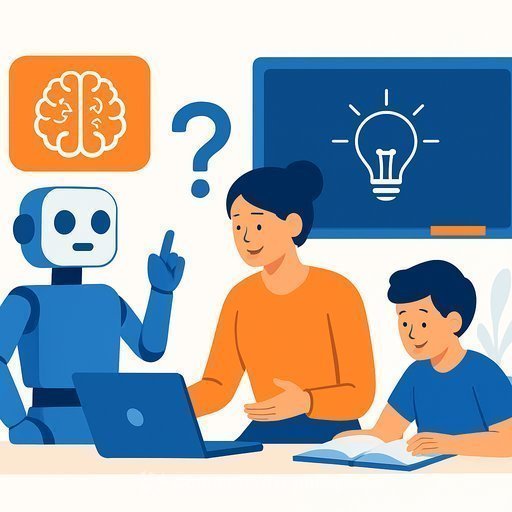
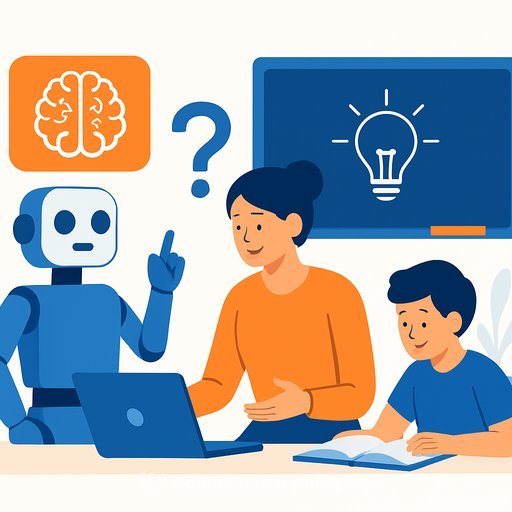
For educators, the message is clear. AI needs structure, purpose, and guardrails - or it trains students to outsource thinking.
What the data shows
- Across countries, general-purpose AI improved task speed and accuracy. Short-term grades rose.
- Türkiye field study (~1,000 high school students): with generic AI access, math performance jumped 48 percent short-term; with a "GPT tutor" version, it jumped 127 percent.
- When AI was removed, prior users underperformed. Students who had used AI scored up to 17 percent worse than peers who never had access.
- Similar patterns appeared in Canada, France, Sweden, and the Netherlands.
- AI built for learning - guided questions, hints, strategy prompts - showed better potential for durable learning than generic chatbots.
- Türkiye is among the countries where students heavily use AI outside school for explanations, homework, personalized plans, and tracking. Ten of 23 European systems, including Türkiye, now include generative AI in official strategies.
As Yelkin Diker Coşkun notes, general chatbots are not built to teach. Overreliance can turn students into passive users, especially on tasks that demand higher-order thinking, synthesis, and transfer.
Why short-term gains don't last
- Cognitive offloading: Students skip the struggle that encodes memories and strategies.
- Reduced retrieval practice: AI supplies answers; students don't recall or reconstruct knowledge.
- Weaker transfer: Without making and testing their own mental models, students can't apply concepts to new problems.
Principles for using AI without eroding learning
- Process over product: Grade the steps - problem framing, plan, reasoning, drafts - not just the final answer.
- Make thinking visible: Require brief rationales, error checks, and "why this step" notes.
- Alternate AI-on and AI-off: Practice with AI for guidance; assess without AI to check retention and transfer.
- Delay assistance: Encourage attempts before AI hints. Productive struggle first, then targeted support.
- Use pedagogy-first tools: Prefer tutors that ask questions, give hints, and prompt strategies over generic answer engines - see Design.
Classroom practices that work
- Structured prompting: Ask students to use AI to generate approaches, then compare, critique, and choose. No direct copying.
- Error hunting: Have AI produce a solution with intentional mistakes. Students find, fix, and explain.
- Retrieval first, AI second: Quick recall quiz → AI-assisted refinement → short reflection on what changed.
- Transfer tasks: After AI-supported practice, assign a novel problem without AI to test generalization.
- Process packets: Require planning notes, intermediate steps, AI prompts used, and student-written reflections.
Assessment design
- Frequent AI-off checks: Short, low-stakes quizzes for spaced retrieval and concept fluency.
- Oral defenses: Random spot-vivas on reasoning and choices made during AI-assisted work.
- Authentic constraints: Timed in-class items, variant data sets, or personal-context prompts that resist copy/paste.
- Rubrics that reward reasoning: Allocate points for strategy selection, error analysis, and reflection.
Choosing the right tools
- Favor guided tutors: Tools that ask questions, give hints, and nudge strategy use are more likely to support durable learning.
- Control answer reveal: Look for stepwise assistance, not instant solutions. Ideally, hints escalate in specificity.
- Data transparency and safety: Check privacy, data retention, and content filters before classroom use.
A simple AI policy you can roll out
- Allowed: Brainstorming, planning outlines, hint-based guidance, code/language debugging, study schedules.
- Required artifacts: Include prompts used, versions, and a 3-5 sentence reflection on how AI changed your approach.
- Not allowed: Submitting AI-written answers without revision or explanation; AI use on designated "AI-off" tasks.
- Assessment mix: Clear split between AI-on practice and AI-off grading moments.
For school leaders and departments
- Procurement: Prioritize pedagogy-first AI with teacher controls and analytics on student effort, not just outputs.
- PD focus: Train staff on prompt scaffolds, productive struggle, and assessment redesign.
- Equity: Provide school-managed access so support is consistent, safe, and auditable.
- Monitoring: Track shifts in retention and transfer, not just assignment completion rates.
Key takeaway
AI can accelerate tasks and inflate grades, but without intentional design it undercuts the very skills schools aim to build. Treat AI as a coach that asks, hints, and probes - not a shortcut to answers. Make thinking the product.
For the broader policy picture and research highlights, see the OECD's education resources here. For summaries of the evidence on AI and learning, see Research. If you're planning staff development or curriculum updates around AI use, explore practical training options by role here.
Your membership also unlocks: