Ohio's Model AI Policy for K-12: What District Leaders Need to Do by 2026
Ohio has released a model policy for artificial intelligence to guide how schools use AI in classrooms. Districts and charter schools must adopt a formal AI policy by July 1, 2026. The state's template can be used as-is or customized to fit local needs.
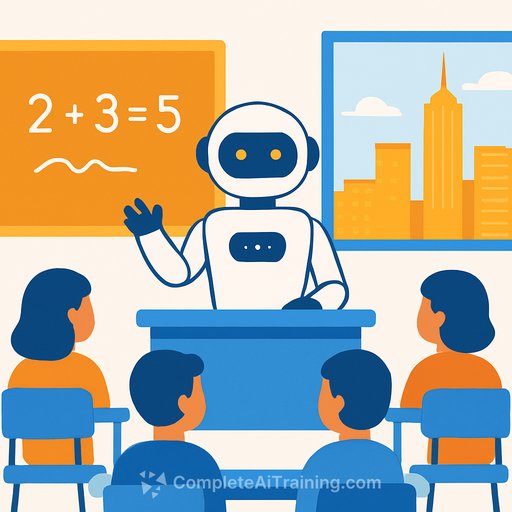
"AI implementation should be human-centered and should empower students, educators, and communities," the model says. It's clear: AI should support learning and teaching-never replace student effort or the role of the educator.
What the policy prioritizes
Use of AI by students is allowed only when teachers explicitly permit it. Appropriate uses may include brainstorming or certain types of research. AI cannot produce final work for students. The policy also asks users to follow tool terms of service, including age limits.
Districts should expect variability by grade level and subject-more use in older grades, tighter guardrails in younger grades, where teachers can draw on resources such as AI Learning Path for Primary School Teachers. If AI is required for an assignment, the school must be able to provide the tool. Suspected misuse should be investigated under clear procedures aligned with existing policies.
Safety, privacy, and conduct
The policy requires adherence to data privacy laws such as the federal Family Educational Rights and Privacy Act (FERPA). It explicitly bans using AI for bullying, harassment, or intimidation-including generating images to target a student or teacher.
Districts are encouraged to consider policies around non-consensual intimate imagery and state laws against sexual extortion. Braden's Law (House Bill 531) makes sexual extortion a felony in Ohio. Clear reporting pathways and consequences should connect to existing anti-bullying policies.
Build AI literacy and capacity
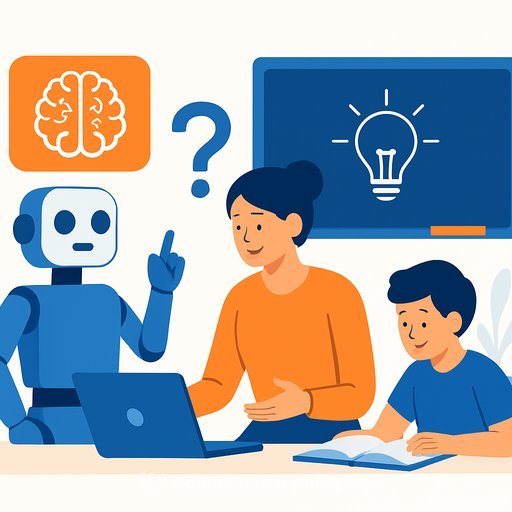
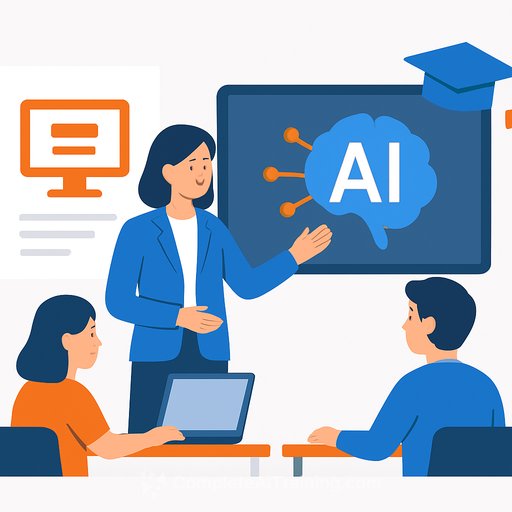
The model encourages AI literacy for all students and educators through curriculum and professional learning. Districts are urged to convene an AI workgroup that includes educators, special education professionals, students, local businesses, and post-secondary partners.
Leaders are also asked to communicate with families about how AI is used in classrooms, the skills students need for future careers, and the risks of unsupervised AI use at home. Practical resources for parents can reduce confusion and build trust.
State momentum and national context
Ohio's effort builds on the InnovateOhio and AI Education Project (aiEDU) AI Toolkit introduced in February 2024. State leaders have also highlighted Ohio's approach during recent White House Artificial Intelligence Education Task Force discussions focused on AI's impact in classrooms.
There's urgency on computer science as well. A new report shows 61% of Ohio high schools offer foundational computer science courses that include AI, but only 3% of Ohio high school students enrolled in a computer science course in 2024-2025. Smaller high schools (under 500 students) are twice as likely to lack computer science offerings compared to larger schools.
Policy on the horizon: graduation requirements
On Jan. 28, educators, students, and advocates will gather in Columbus to support computer science and AI graduation requirement legislation. House Bill 594 would require students entering ninth grade on July 1, 2029, to complete a computer science course for graduation, including instruction in emerging areas like AI.
Supporters argue students need clear awareness of career opportunities and skills to succeed. The event will feature hands-on student projects and conversations with legislators.
Action checklist for district leaders
- Form an AI workgroup with teachers, students, IT, special education, families, and community partners.
- Adopt or adapt the state model policy; define teacher-controlled use, grade-level expectations, and clear "can/can't" guidance for assignments.
- Establish investigation procedures for suspected misuse that align with existing academic integrity and discipline policies.
- Set tool vetting and data-privacy rules; avoid entering personally identifiable information into AI tools without safeguards or agreements.
- Reinforce anti-bullying rules to include AI-generated content; address deepfakes and extortion risks.
- Ensure equitable access: if a task needs AI, the school provides the tool or a viable alternative.
- Create an AI literacy plan for staff and students; offer targeted PD and classroom-ready examples like the AI Learning Path for Teachers.
- Launch a family communication plan: what tools are used, why they're used, age limits, and at-home safety tips.
- Map a timeline to meet the July 1, 2026 deadline with clear milestones and school board engagement.
Why this matters for your district
Leaders want the benefits of AI-faster feedback, personalized supports, workflow efficiency-without compromising academic integrity or student safety. The model policy gives you the guardrails to do that, plus a path to build skills across your system.
Pair policy with practice: train staff, pilot responsibly, communicate early, and monitor impact. The goal is confident use, not unchecked use.
Resources
- FERPA overview - U.S. Department of Education
- Code.org Advocacy Coalition data on computer science access
- Professional learning: AI courses by job role (Complete AI Training)
Key quotes to share with your board and staff
"While we are supportive of schools using AI to strengthen instruction and expand learning opportunities, it is also incredibly important that these tools are used responsibly, and in a way that maintains academic integrity."
Use that as your north star. Build clear guidelines. Train your people. Protect your students. And be ready by 2026.
Your membership also unlocks: