Qira: Lenovo's Cross-Device AI Bet for Continuity
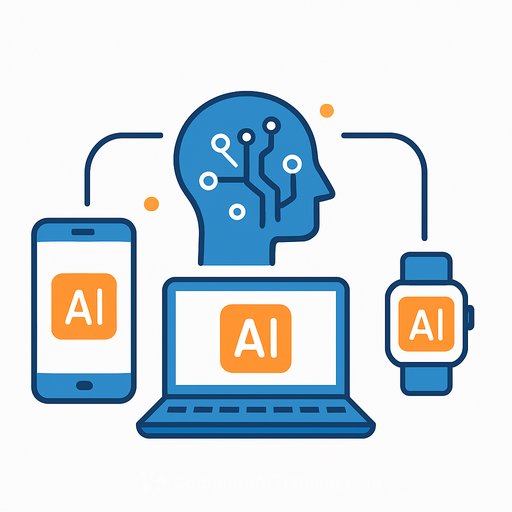
Lenovo's thesis is simple: one assistant should follow you across devices, carry your context, and quietly decide where the work gets done. Qira is that assistant-a cross-device "super agent" built to keep your research, notes, and next steps synced from phone to PC to future wearables. Designers and product teams can consult AI Design Courses to inform user interfaces and UX for cross-device assistants like Qira.
In a recent briefing, Lenovo Intelligent Devices Group president Luca Rossi outlined why Qira won't try to replace your current assistants. It sits above them, orchestrates what runs locally or in the cloud, and hands off context so you don't lose momentum switching screens.
Why Qira Thinks Bigger Than Single Devices
Most assistants are stuck on one device. Move from your phone to your laptop and the thread breaks.
Qira flips that. It tracks what you're doing across platforms-say, research on a Motorola during your commute, then drafting on a Lenovo laptop-and preserves context so you can pick up exactly where you left off. Its "Next Move" view surfaces the right files, links, and actions, even pulling from your smartphone's clipboard.
It's built to stitch ecosystems together: Android phones and tablets, Windows PCs, and iOS support on the way. Lenovo is starting on its own hardware, but the intent is broader-Qira should work across brands and operating systems without locking you in.
How It Works: Hybrid AI and Orchestration
Qira is an orchestration layer, not just another chatbot. It decides what to compute on-device for speed and privacy, and what to send to the cloud for heavier tasks. It also cooperates with existing assistants. For example, Microsoft Copilot can take tasks from Qira while Qira supplies the user context. Engineers and researchers evaluating multi-device orchestration, privacy, and edge compute trade-offs may find useful material in AI Research Courses.
Hardware matters here. PC NPUs have moved from roughly 10-11 TOPS in last-year's models to ~40 TOPS now, with 100+ TOPS parts coming. That headroom makes local inferencing practical for more apps. Lenovo is platform-agnostic-working with Intel, AMD, and Qualcomm-and pressing for better efficiency so AI can run continuously without draining batteries.
Rollout Plan: What Ships First and How It Expands
Qira won't hit every device at launch. It will show up first on newer, higher-performance Lenovo laptops and tablets with enough memory and NPU capacity, plus recent Motorola phones.
Expect over-the-air updates-monthly or at least quarterly-that expand features and lower the hardware bar over time. The goal: broaden support without sacrificing responsiveness or privacy.
Wearables and Ambient Sensors Plug Into the Network
Lenovo's roadmap extends Qira into wearables and ambient devices. Project Maxwell, a pendant-style AI pin, is a proof of concept that Lenovo says is technically viable at scale. Smart glasses demos are underway, and early exploration of ambient sensors for desks, walls, and outdoor areas could feed Qira more context.
The hard part is power. Packing meaningful compute into tiny, comfortable form factors that last all day is still a challenge-rings and pins most of all. Connectivity looks fine for now; current Bluetooth and Wi-Fi standards, and the roadmaps from the governing bodies, appear sufficient for early deployments. See Bluetooth SIG and the Wi-Fi Alliance for details.
Privacy Controls Sit at the Center of Qira's Design
Trust is the make-or-break. Lenovo says sharing happens only with your permission, with clear visibility into what stays on-device and what goes to the cloud. Expect granular controls and filters so teams can tune Qira to their comfort level and compliance needs.
Bystander privacy is the broader social issue as wearables and sensors spread. This will require norms-and likely regulation-to set clear boundaries in offices, public spaces, and events.
Why This Might Be the Only AI You'll Ever Need
The value here is continuity. Qira carries your context from phone to PC to wearable, across brands and operating systems, and works with assistants like Copilot instead of competing with them. Lenovo's footprint across PCs, tablets, and phones gives Qira a sizable launchpad.
Timing helps. As NPU capacity climbs and more tasks shift to the edge, a system that reliably decides what runs where-and does it privately-earns a daily place in the workflow. If Qira keeps context tight and respects privacy boundaries, it can become the layer most people actually use.
What to Watch Next as Qira Rolls Out Across Devices
- Seamlessness of handoffs between Motorola phones and Lenovo laptops: zero rework, instant context.
- Battery behavior under heavy use: can NPUs sustain on-device sessions without drain concerns?
- Third-party adoption: how quickly do popular apps surface Qira-aware actions and context sharing?
- OTA cadence and quality: monthly changes need to be stable, transparent, and measurable.
- Cross-brand expansion: evidence that Qira runs well beyond Lenovo-branded hardware.
- Wearables and sensors: proof points on comfort, battery life, and privacy safeguards.
Executive Actions
- Map high-value handoffs: identify workflows that cross phone, PC, and meeting rooms where context breaks today.
- Set hardware baselines: prioritize devices with strong NPUs (~40 TOPS or higher) for pilot groups.
- Define data boundaries: decide what must stay on-device, what can hit the cloud, and who approves exceptions.
- Prepare for bystander privacy: update office policies and signage before adding wearables or ambient sensors.
- Run a 60-day pilot: measure time saved from context carryover, AI task completion rates, and battery impact.
- Upskill teams: focus on orchestration workflows, not just prompts. For role-specific training, see courses by job.
Bottom Line
If Qira can tie your digital work together without locking you in, it stands a real chance of sticking. Watch the early handoffs, the battery math, and how fast third-party apps plug in-that's where the signal will show up first.
Your membership also unlocks: