OpenAI is building an AI-native code repository. Here's what that could mean for your team
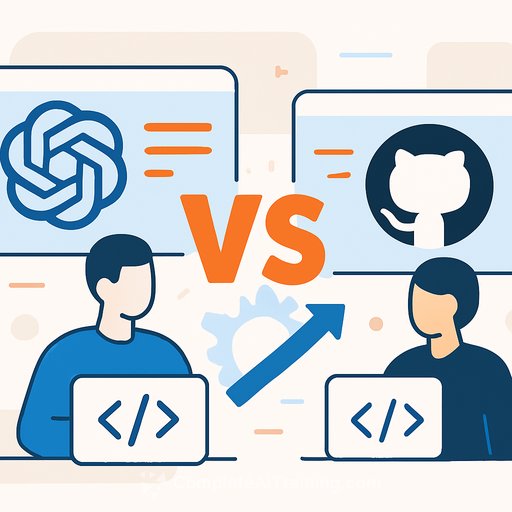
OpenAI is reportedly developing a code hosting platform that would compete with GitHub. The effort began after engineers ran into recent GitHub outages and started exploring an alternative. If productized, it could reduce OpenAI's dependence on Microsoft and reframe how code gets stored, reviewed, and shipped.
The project is still early and has been discussed internally for enterprise customers. That's a bold move in a market where GitHub hosts more than 180 million developers and hundreds of millions of repositories-plus has deep workflow gravity.
Why this matters
AI coding assistants have moved from novelty to workflow default. GitHub Copilot-built on OpenAI models-has shown the appetite for AI in everyday development. A repository platform built around AI models, not just plugins, could push this further and reduce reliance on a single cloud-tied ecosystem.
"While GitHub is deeply embedded and highly recognized within developer communities, it has been under heavy scrutiny since Microsoft's $7.5 billion acquisition in 2018," said Lian Jye Su, chief analyst at Omdia. "The deep ties to a hyperscaler led many independent developers to migrate to alternative platforms, such as GitLab and Gitea."
What "AI-native" actually means
Matching GitHub feature-for-feature won't be enough. "To dislodge that, OpenAI would need to deliver a platform that is meaningfully AI native rather than AI augmented," said Biswajeet Mahapatra, principal analyst at Forrester. "That means the repository itself becomes a living system that continuously understands the codebase, its intent, and its risks, rather than a passive store of files."
In practice, that could look like:
- Repository-level context that understands architecture, domains, and dependencies-then flags drift or anti-patterns in real time.
- AI that drafts or refactors pull requests, explains diffs, and attaches risk scores with rationale.
- Tests, issues, and pipelines feeding the same model so flaky tests, security gaps, and reliability risks are detected with suggested fixes.
- Continuous policy checks (security, privacy, licensing) before and after merge, with auto-remediation options.
Enterprise guardrails will decide adoption
"For enterprises, differentiation would also hinge on control and trust," Mahapatra said. "OpenAI would need to offer explicit guarantees around data isolation, model training boundaries, auditability, and compliance, with clear separation between customer code and foundation model improvement. Without that, regulated enterprises will not consider moving core IP."
Translate that into buying criteria:
- Data boundaries: per-tenant isolation, encryption, zero training on customer code by default, and clear retention/deletion controls.
- Deployment options: dedicated instances, private networking, or on-prem/VPC choices with consistent feature parity.
- Auditability: immutable logs, model/output versioning, reproducible suggestions, and redaction controls.
- Compliance and provenance: SOC 2/ISO certifications, SBOM support, signed commits, and supply chain integrity (e.g., SLSA goals).
Coexistence, not forklift migration
Mahapatra added that OpenAI would also need to support "coexistence rather than forced migration," letting organizations adopt AI-native workflows incrementally while keeping GitHub where it already works. That means clean integrations, mirrored repos, and workflow interoperability so teams can test AI-driven flows without breaking muscle memory.
What you can do now
- Map where AI has the biggest payback: reviews, test stability, security triage, documentation, or refactoring.
- Define hard governance lines: what code can be processed by models, where outputs can run, and who approves AI-suggested changes.
- Pilot on non-critical services with clear acceptance criteria: defect density, PR cycle time, incident rates, and developer satisfaction.
- Build a vendor checklist: training boundaries, data locality, audit trails, model/version transparency, and incident response SLAs.
- Upskill your team on prompt patterns and review discipline. See practical guidance on Generative Code.
The competitive angle
If OpenAI ships an AI-native repository, it will test loyalty to GitHub's ecosystem while highlighting concerns some teams have with hyperscaler alignment. It could also put OpenAI in a curious position: competing with a partner whose flagship coding assistant is powered by its own models.
For teams, the upside is choice. Whether you stick with GitHub, explore GitLab, or pilot an AI-first repo, the goal is the same: faster, safer shipping with less manual thrash-and clear controls for the code that runs your business.
Your membership also unlocks: