
AI news ·
Optum Health rolls out AI chart summaries to cut clinician administrative work
Optum Health is expanding an AI tool that summarizes patient charts to thousands of providers after a two-month pilot showed reduced after-hours paperwork. The rollout required sign-off from clinical, compliance, and privacy teams before scaling.
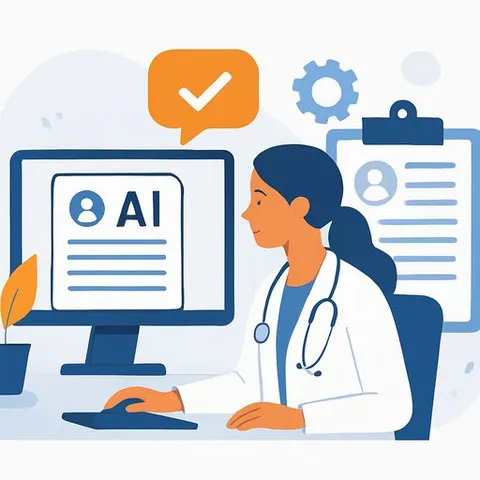
Optum Health Tests AI Chart Summaries to Cut Physician Paperwork
Optum Health has piloted an AI tool that automatically summarizes patient charts, reducing the time physicians spend reviewing records after clinic hours. The health system is now expanding the feature across thousands of providers after a two-month evaluation period.
The tool generates summaries designed to help clinicians quickly understand a patient's medical history before appointments. Early feedback from providers cited time savings, smoother visit preparation, and less administrative work bleeding into evenings.
How the Rollout Worked
Optum Health started small. The AI capability underwent review by informatics and clinical teams before launching in a regional electronic health record environment. Only after meeting internal performance thresholds did the organization expand into broader multi-market use.
The rollout included targeted training, peer-led demonstrations, and feedback surveys. Post-launch monitoring helped identify gaps and refine how clinicians used the tool.
Racquel Moore, vice president of EMR platform and product strategy at Optum Health, said the organization treated readiness as more than a technical problem. "Readiness is operational, clinical and human," Moore said. "A tool is only ready if it integrates seamlessly into existing workflows, delivers clear value, and reduces friction for both clinicians and patients."
Governance Built Into Deployment
Optum Health established a formal governance structure with clinical informatics, operations, data science, compliance, legal and privacy teams reviewing AI capabilities before release.
The organization monitors tools through dashboards and escalation pathways to ensure appropriate use, safety and regulatory alignment. Moore said the company treats governance with the same rigor applied to clinical interventions.
The phased approach reflects caution about scaling AI too quickly. Optum Health expands only after meeting predetermined performance, safety and adoption thresholds, which helps ensure tools work reliably in complex real-world clinical environments.
What Success Looks Like
The chart summarization tool now supports thousands of providers in Optum Health's largest environment, with expansion underway across additional EHR systems.
Moore emphasized that scale is not simply about expanding reach. "Scale is about sustaining meaningful impact over time," she said, requiring continuous monitoring, ongoing clinician partnerships, and flexibility to adapt as needs evolve.
The central measure of success is straightforward: whether the tool gives clinicians time back. "Done well, AI does more than improve efficiency," Moore said. "It gives time back to clinicians, strengthens trust and creates more space for human connection at the heart of care."
For healthcare organizations implementing AI for Healthcare, the challenge is no longer whether technology can perform tasks. The question is whether it integrates into daily clinical practice without adding complexity or eroding trust.