Oracle's 28% Slide: Are AI Spending Jitters Priced In?
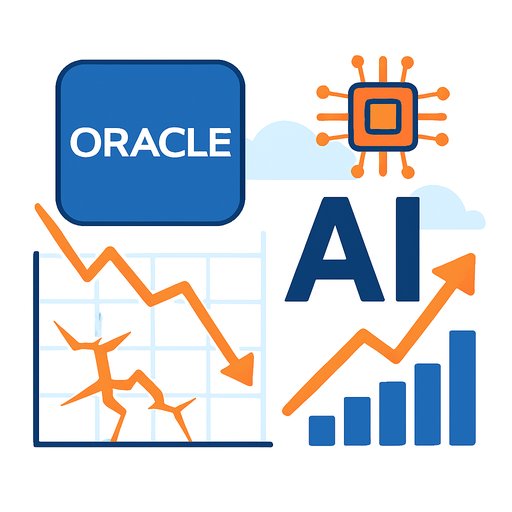
Oracle dropped 28% over the past month after a swift 40% peak-to-trough swing. This wasn't random. Investors are questioning whether heavy AI infrastructure spend will convert into cash flow fast enough.
Volatility cuts both ways. After a historic single-day surge, a sharp giveback was always in play. The real question for finance teams: does the current drawdown fairly discount execution, debt, and concentration risk-or is it overshooting?
The OpenAI Contract: Concentration Risk with Real Upside
Oracle holds a large cloud deal with OpenAI. That creates a simple equation: if OpenAI's usage scales, Oracle's cloud revenue should follow.
Yes, concentration risk is real. But if OpenAI remains a leader, exposure becomes a feature, not a bug. You're effectively underwriting OpenAI's growth path through Oracle's infrastructure footprint. For context on the counterparty, see OpenAI.
Model Race: Gemini's Momentum vs. OpenAI's Response
Google's Gemini 3.0 launch impressed the market and dented sentiment around OpenAI's near-term trajectory. The GPT-5 stumble didn't help.
But this race tends to leapfrog. Counting out OpenAI is premature. It's also plausible both Gemini and ChatGPT win meaningful share while staying ahead of Chinese competitors-leaving ample demand for compute and storage from multiple vendors, including Oracle.
Debt and Operating Execution: The Bear Case You Can't Ignore
Leverage amplifies both outcomes. If AI monetization lags, debt becomes heavier, and the stock could stay under pressure.
Deutsche Bank's view captures the setup: there is a very real opportunity, alongside financial and operational risks. That's the right frame-this is a high-variance bet tied to AI utilization, pricing, and the pace of model upgrades.
What Finance Teams Should Track Next
- Cloud backlog and RPO growth: Evidence that large AI workloads are locked in.
- IaaS growth vs. commitments: Are realized revenues catching up to contracted demand?
- Contract concentration: Customer mix and any updates on OpenAI-related exposure.
- Capex and financing mix: Share of debt-funded buildout and cash flow coverage.
- Interest expense trajectory: Sensitivity to rates and refinancing timelines.
- Utilization and supply signals: Any hints on capacity, lead times, or deployment cadence.
- Gross margin path: Scale effects as AI workloads mature.
Positioning: Practical Ways to Size the Risk
If you're constructive on AI infrastructure demand but cautious on single-name risk, think in spreads. Pair Oracle with a diversified basket across the AI stack (chips, cloud, models, apps) to avoid all-or-nothing exposure to one client outcome.
Inside a long-only book, consider a staged entry aligned to catalysts: contract disclosures, utilization updates, and quarterly guidance on capex and margins. Keep position sizing tied to leverage and revenue concentration-tighten if those trend the wrong way.
Valuation Frame
This is a utilization story more than a simple multiple story. If AI workloads inflect, operating leverage can surprise to the upside. If they stall, the debt narrative dominates.
In other words, the multiple you're underwriting is a function of how quickly contracted AI demand converts to recognized revenue with acceptable margins. That conversion pace will dictate whether the current selloff is value-or a value trap.
Bottom Line
The market is punishing AI-heavy balance sheets until cash flow proves the thesis. Oracle sits in that crossfire, with a big swing tied to OpenAI and broader model adoption.
If there's no bubble unwind and OpenAI keeps pushing product forward, today's price could be attractive. If monetization disappoints, debt and concentration can bite. Until the data breaks one way, treat it as a high-variance asset and manage risk like a pro.
For primary disclosures and updates, see Oracle Investor Relations.
Resource for Finance Teams
Exploring practical AI tools for workflow and analysis? Here's a vetted list for finance professionals: AI tools for finance.
Your membership also unlocks: