
AI news ·
Oracle records worst week in 25 years as AI debt concerns mount
Oracle shares fell 19%, the worst trading period in 25 years, as investors weigh $130 billion in debt. The company also cut its headcount by 13% to 141,000 employees.
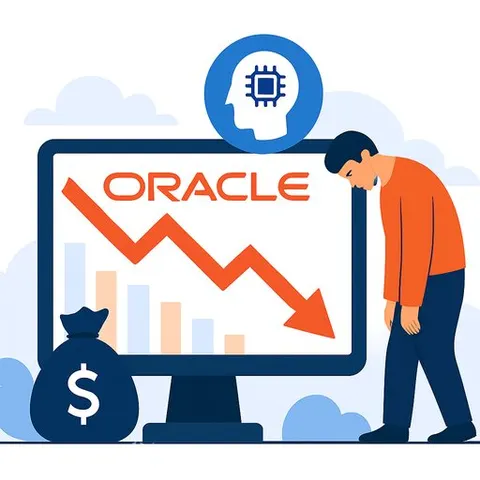
Oracle shares fell 19% this week, marking the software company's worst trading period in 25 years as investors weigh $130 billion in debt against its massive artificial intelligence infrastructure investments. The drop highlights the financial risks of funding data center expansions without the diversified revenue streams of larger cloud rivals.
Debt and cash flow pressures
The stock has lost 55% of its value since reaching a $900 billion market cap peak in September. Oracle recorded negative free cash flow of nearly $24 billion in the latest fiscal year while capital expenditures jumped 162% to $56 billion. To fund its AI commitments, primarily for OpenAI, the company plans to raise $40 billion through debt and equity financing in fiscal 2027.
Analyst sentiment and market headwinds
Despite the selloff, Wall Street remains largely optimistic. According to FactSet, 71% of analysts recommend buying the stock, the highest percentage in 15 years. Evercore analysts said in a note: "We expect financing/leverage and the pace of equity issuance to remain the central investor debate near term, even as demand signals stay strong."
Oracle is also facing a broader selloff in software stocks as investors worry AI models could replace traditional software capabilities. The iShares Expanded Tech-Software Sector ETF is down 16% this year, while Oracle has fallen 24%. Finance professionals analyzing these capital allocation decisions often use AI for Finance tools to evaluate infrastructure debt.
Operational shifts and leadership
Oracle reduced its headcount by 13% to 141,000 employees in fiscal 2026, with notable cuts in sales and marketing. Co-founder Larry Ellison missed the recent earnings call, leaving dual CEOs Clay Magouyrk and Mike Sicilia and finance chief Hilary Maxson to address investors.
Maxson defended the company's financial approach on the call. "As we pursue these opportunities, we'll remain focused on disciplined capital allocation, maintaining a strong balance sheet, and preserving our investment-grade credit rating," she said.
Why this matters for finance professionals
Oracle's situation illustrates the balance sheet risks of funding massive AI infrastructure buildouts through debt rather than operating cash flow. Finance teams must closely monitor how capital expenditure spikes and equity dilution affect credit ratings when evaluating tech companies with aggressive AI strategies.