Oracle's Debt Insurance Costs Surge on AI Worries
Published: December 12, 2025
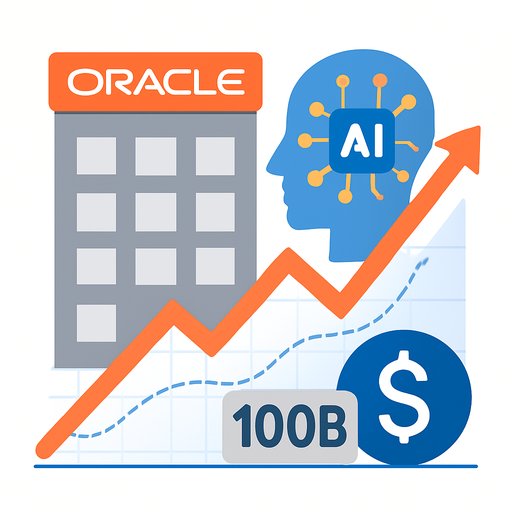
Oracle's cost to insure its debt has jumped, signaling rising credit risk tied to aggressive AI investment and debt-funded growth. The company now carries just over $100 billion in debt, making it a clean read on how the market prices AI exposure on large, leveraged tech names.
CDS trading in Oracle has climbed sharply. DTCC data shows it's now a top-20 corporate CDS name with an average daily notional of $75 million in Q3, up roughly 650% year over year. That sits within a global single-name CDS market of about $9 trillion, but activity can be thin-daily trades often land in the single digits-so smaller flows can move spreads more than you'd expect.
Why this matters for insurers
Oracle's CDS trades near 126 bps (S&P Global Market Intelligence). That's materially wider than other AI-linked leaders like Nvidia (~37 bps) and Meta (~50 bps) per LSEG data. For credit insurers, bond insurers, and specialty underwriters with technology exposure, this gap is a direct read on perceived default probability and loss severity if growth or cash generation disappoints.
What's pushing spreads
- Debt-funded AI buildout: Bigger capex and cloud commitments increase balance-sheet risk if returns lag.
- Signal from earnings: Guidance and cash flow cadence matter more than top-line AI narratives.
- High-beta sector mood: Tech valuations are up, but credit is voting with caution on leverage and payback timelines.
- Liquidity premium: Thin single-name CDS trading can exaggerate moves, especially around events.
Liquidity caveat (and basis risk)
Oracle's CDS is active, but the market is still prone to price gaps on small tickets. Don't anchor to one print. Cross-check cash bond spreads, rating outlooks, and the CDS-bond basis before you adjust pricing or hedges.
Practical actions for insurance teams
- Refresh PD/LGD inputs: Recalibrate default and recovery assumptions for highly leveraged AI spenders; reflect the spread gap vs. peers.
- Run spread shocks: Test +50-200 bps on single-name tech credits and flow the impact through premiums, limits, and reserve loadings.
- Aggregate exposure check: Tally Oracle look-through across bonds, loans, counterparties, vendors, clients, and reinsurers.
- Tighten new business terms: Consider lower limits, narrower tenors, higher attachment points, and stronger covenants on Oracle-adjacent risks.
- Hedging discipline: If using CDS, set pre-defined trigger levels, watch basis vs. cash bonds, and size for liquidity.
- Maturity focus: Map Oracle's debt ladder; near-term walls raise refinancing risk if funding costs keep rising.
- Governance watch: Track capex approval rigor, return hurdles, and FCF coverage-these drive medium-term credit outcomes.
Benchmarks and monitoring
- Data sources: Monitor S&P Global Market Intelligence and LSEG for spread levels. For market structure and flow context, see DTCC.
- Market size context: For derivatives statistics, the BIS overview helps frame notional vs. risk terms: BIS derivatives data.
What to watch next
- Earnings and guidance: Any shift in AI capex pace, margin trajectory, or FCF to debt service.
- Primary market prints: Size, tenor, and pricing of new issuance-especially if maturities bunch.
- Rating actions: Outlook changes tied to leverage, utilization of AI investments, and cash conversion.
- Peer dispersion: Persistent spread gap vs. Nvidia and Meta could signal a lasting credit differentiation inside AI.
- Second-order effects: Suppliers and enterprise customers with Oracle dependence-check correlation and contagion assumptions.
Bottom line: the equity story may be upbeat, but credit is asking harder questions. Use the spread as a signal, not the full story, and price the debt path, not just the AI promise.
If your underwriting team needs a fast primer on AI dynamics driving capex and balance-sheet risk, see our job-focused learning tracks: AI courses by job.
Your membership also unlocks: