Creative Optimisation in the Age of AI: Predictions on a New Craft
AI has redrawn the ad ecosystem. It can already handle most steps of a campaign with minimal human touch - concepting, targeting, optimisation - and some platforms have even set timelines to automate the lot by 2026. That said, giving AI the keys to the big idea introduces risk: bias, cultural misses, and unintentional copycatting. The smart line is clear: let AI optimise; keep humans accountable for strategy, taste, and meaning.
Human input and oversight aren't optional. They're where brand value lives. The question for creatives in 2026 isn't "Will AI replace me?" It's "How do I direct it so the work gets sharper, faster, and more original?"
The shift: from production to orchestration
Creative excellence is moving from making assets to directing systems. The craft is orchestration - selecting the right models, structuring prompts, stacking outputs, and steering nuance. Think of it as briefing with code: you're not clicking buttons; you're shaping constraints, references, and rules that guide outcomes.
Teams will evolve. You'll see creative orchestrators who brief AI as precisely as they once briefed designers, performance-savvy art directors who interpret signals, and producers who build workflows instead of just schedules. Treat AI as a multiplier for ambition, not a blunt cost-cutting tool.
What changes for creative teams in 2026
- From "finals" to modular systems: assets built as interchangeable parts for fast iteration.
- From gut-only to signal-led: creative decisions informed by live feedback loops, not quarterly reports.
- From slow testing to same-day learning: ideas assessed within hours and evolved in-market.
- From one hero concept to many variants: narrative frameworks that adapt to audience, time, and placement.
Strategy, storytelling, and differentiation become the edge
As AI tunes placements, timing, and mix, creative sameness becomes a real threat. Optimisation tends to converge on lookalike answers. That's your opportunity: carve distinct storylines, codify your brand's taste, and protect original angles while the system handles the busywork.
Set the goal and product, sure. Then build the guardrails that keep outcomes unique: tone, references, structure, and what to avoid. Differentiation is now a process, not a lucky accident.
Visual production without the bottlenecks
Image generation lets you build scenes instead of sourcing them. Roles blend - art direction, styling, and retouch merge into one flow - which invites bolder experiments and same-day concept checks. Asset visualisation becomes instant: photo-real mock-ups align teams sooner and reduce risky late pivots for Design teams.
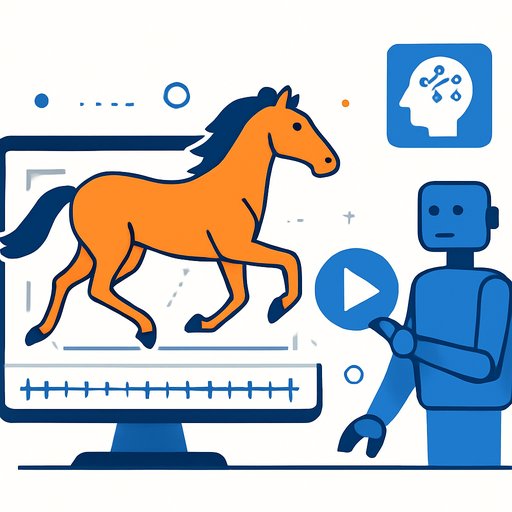
For video, AI-driven animatics move stories from flat frames to motion, pacing, and mood early. You'll make stronger choices before a single shot is filmed.
Game ads and beyond: fluid creativity, fast learning
The hunt for one perfect asset is fading. Better to ship modular concepts, read signals quickly, and evolve in real time. The advantage isn't just speed - it's clarity on why something hits so you can double down with intent.
But there's a trap: if everyone optimises the same way, everything looks the same. Keep the precision; protect the voice.
The next evolution of optimisation: from "what worked" to "why it worked"
Machine learning has been picking winners for years. The next step is using AI to explain the result - context, culture, trend cycles, and human behavior around the creative, not just the click. Dynamic creative optimisation will be more visible, but the real unlock is explainability that guides the next idea.
We're inching closer. Expect better tooling in 2026 that tags creative elements, reads environments, and surfaces patterns you can actually use. If you need a primer on the mechanics of DCO, this guide is helpful: IAB on Dynamic Creative Optimisation.
A practical playbook for creatives
- Define the non-negotiables: brand voice, visual rules, ethical lines, and what never ships.
- Build a modular asset kit: headlines, hooks, CTAs, visuals, and story beats that swap cleanly.
- Create prompt sheets: references, negative prompts, style ranges, and "do/don't" examples.
- Instrument for learning: tag creative elements in every variant so you can read which parts drive results.
- Run small-batch tests: ship 5-10 variants, learn in hours, promote winners, retire laggards.
- Layer AI models: ideation, visual build, refinement, compliance checks, and distribution - each with a clear role.
- Close the loop weekly: review signals with creative, media, and data in the same room; update the system, not just the asset.
- Keep human review: check cultural nuance, originality, and brand fit before anything scales.
Bias, culture, and copyright: simple guardrails
- Bias audits: test prompts across demographics; flag stereotypes; rotate review councils.
- Cultural checks: run markets through local reviewers; avoid borrowed trends without context.
- Originality control: keep reference libraries; use similarity checks; document source inputs.
- Data hygiene: separate sensitive data; log decisions for compliance and learning.
Skills to level up in 2026
- Prompt Engineering: structure, constraints, references, and negative prompts that steer outputs consistently.
- Signal reading: creative analytics, cohort patterns, and how to translate insights into the next brief.
- System design: workflows, templates, and QA that make quality repeatable.
If you want focused training on prompts and creative workflows, explore the AI Learning Path for UX/UI Designers.
What to expect in 2026
More automation across ad platforms, more intelligent optimisation, and more pressure on creative differentiation. The winners will treat AI as a collaborator: precise with data, aggressive with testing, and unapologetically human in taste. Orchestration is the craft. Build the system, then let your ideas breathe inside it.
Your membership also unlocks: