Oregon Court Issues Record $10,000 Fine for AI-Generated Fake Citations in Legal Brief
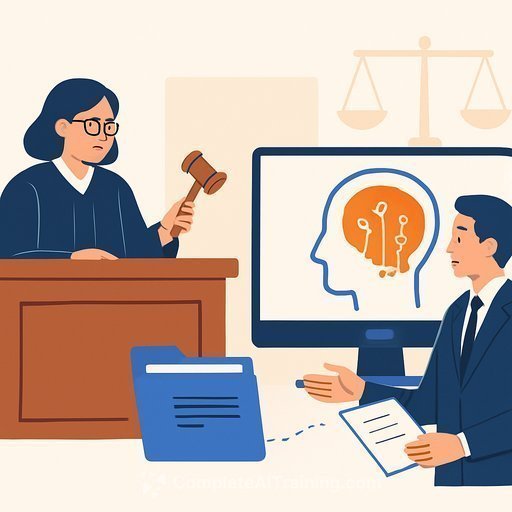
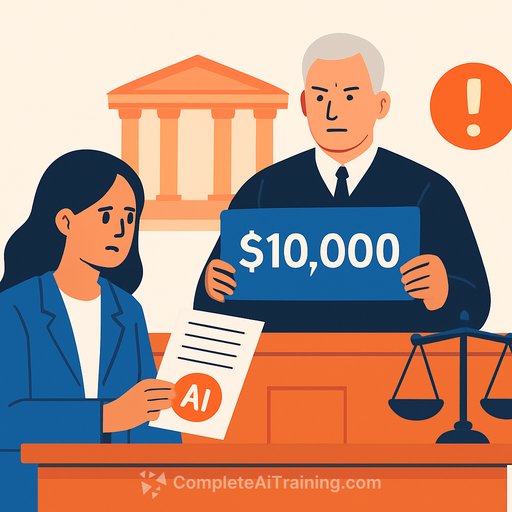
The Oregon Court of Appeals fined civil attorney Bill Ghiorso $10,000 after he submitted a legal brief containing 15 fabricated case citations and nine quotes "contrived from thin air." The March 18 ruling marks the largest financial penalty an Oregon attorney has faced for errors produced by generative AI.
Ghiorso, a Salem-based attorney, challenged the fine by arguing he did not knowingly include false material. He said his paralegal conducted the research and relied on Google search results that included AI-generated summaries. But the appellate court rejected that defense.
Presiding Judge Scott Shorr wrote that "counsel at least should have known… that submitting a brief with unchecked and ultimately fabricated citations may breach an attorney's duties of professionalism, truthfulness and candor to the court."
How the Fine Was Calculated
The appeals court established a fee schedule in December when it penalized another attorney $2,000 for AI errors. That precedent set penalties at $500 to $1,000 per artificial error. Under those rules, Ghiorso's fine could have reached $16,500 - the highest potential liability for an Oregon attorney using generative AI.
Shorr capped the fine at $10,000 citing Ghiorso's recent medical troubles.
The Case Background
The dispute began when the Oregon Liquor and Cannabis Commission revoked a marijuana production license in 2022. The licensee, Henry Doiban, missed a 15-minute window to appear at a remote hearing and hired Ghiorso to challenge the decision.
Ghiorso said he had only one day to write the AI-assisted memo on a relatively new area of law. Court records show he requested six delays to file his opening brief and ultimately set November 4, 2024 as his final deadline.
Ghiorso's paralegal used Google to research the memo. Google's search results often include AI-generated summaries. "If one asks Google's search engine whether many of the fabricated cases are real, it will generate a response… affirming that the fabricated cases are in fact real," Ghiorso explained.
The Missed Warning
Patricia Rinco, an assistant Oregon attorney general representing the OLCC, flagged the errors in Ghiorso's brief seven months before the appellate court identified them during oral arguments in November 2025. Ghiorso did not respond to her email.
In his brief to the appellate court, Ghiorso apologized, saying the errors "fell short of the standards of my office and of the profession."
Broader Pattern
This is the second financial penalty an Oregon appellate court has issued this year for AI-generated errors. In February, the court fined Keith E. Powell $500 for errors in a self-represented employment board case.
For legal professionals using AI for research and document preparation, the rulings underscore a basic principle: attorneys remain responsible for verifying the accuracy of material they submit to courts, regardless of who conducted the initial research or what tool was used. Learn more about AI for Legal professionals, or explore how AI Learning Path for Paralegals addresses document accuracy and verification standards.
Your membership also unlocks: