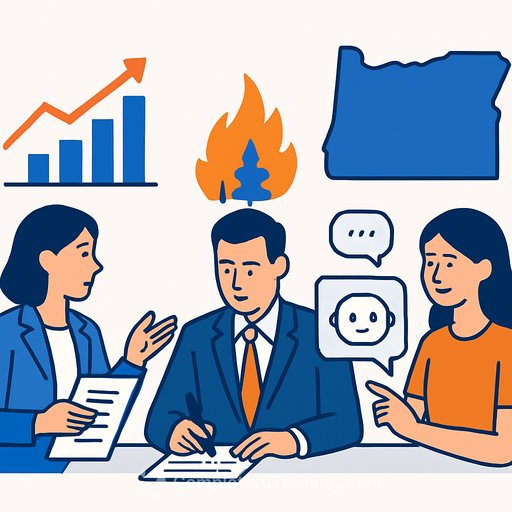
Oregon's short session targets three insurance touchpoints: transportation funding, wildfire coverage, and AI chatbots
Oregon lawmakers open a 35-day session on Feb. 2 with proposals that could affect underwriting, pricing, and compliance across multiple lines. The agenda: fix transportation maintenance shortfalls, stabilize wildfire insurance, and set guardrails for AI chatbots used by minors.
Transportation funding: maintenance gaps raise exposure and claim severity
State, county, and city officials pressed for more funding, warning that delayed maintenance compounds costs. Most road work has been reactive, not proactive, and counties say they'll miss critical work on more than 4,500 miles of roads without new revenue in the next five years.
For insurers, deteriorating infrastructure can mean higher frequency and severity for personal and commercial auto, heavier loss costs for cargo and logistics, and more liability risk for municipalities and contractors. Expect pressure on rates in rural and secondary networks, not just major corridors.
- Revisit territorial and road-quality factors in models; add questions about detours, load limits, and substandard surfaces.
- Stress-test severity assumptions for bridge and secondary road incidents.
- Coordinate with claims on subrogation and municipal liability trends tied to maintenance backlogs.
Wildfire insurance proposal (LC 182): rate methods, appeals, and mitigation discounts
Lawmakers aim to keep carriers in high-risk markets and improve affordability. LC 182 would regulate how wildfire rates are calculated, give homeowners a path to appeal denials and hikes, and require discounts for documented mitigation using accepted standards for risk reduction.
Translation for carriers and MGAs: you'll need transparent methodologies, defensible rating factors, and repeatable mitigation credit rules. Discounts won't hinge on ad hoc yard work-they'll tie to standardized practices like defensible space, ember-resistant vents, and fuel breaks.
- Map current models and filings to the contemplated requirements; prepare documentation for how mitigation impacts loss costs.
- Stand up a verification workflow (photos, inspections, third-party attestations) and align it with underwriting and billing.
- Train agents on eligible mitigation and proof standards; publish clear discount schedules to reduce friction and complaints.
For reference on community mitigation practices, see the NFPA Firewise program here.
AI chatbot proposal (LC 282): disclosures, safety monitoring, and engagement limits
Oregon joins other states in proposing rules for how AI chatbots interact with children. LC 282 would require chatbots to state they're not human, monitor for self-harm signals, direct users to professional help, and avoid tactics that keep a user engaged after they say they're leaving.
If your org uses chatbots for claims, billing, or customer support, compliance will touch product design, data handling, and vendor contracts. You'll need clear disclosures, escalation protocols, and controls that prevent manipulative engagement loops.
- Add persistent non-human disclosures and audit logs for all chats.
- Implement self-harm detection with immediate, approved escalation paths and resource handoffs.
- Disable "stay with me" nudges and any reward mechanics tied to session length.
- Bake compliance terms into vendor agreements; require attestations and testing results.
To track broader state activity, the NCSL's state AI legislation tracker is a useful overview here.
If your teams need upskilling on safe and compliant AI use, explore role-based options here. Product and UX teams can also review AI Design Courses for guidance on disclosures, safety monitoring, and engagement controls.
What to watch in the next 35 days
- Text and amendments: definitions for "universally accepted" mitigation standards and specifics on acceptable proof.
- Rate regulation mechanics: how wildfire risk factors must be documented, and any filing or reporting changes.
- Chatbot scope: whether rules apply to all consumer interactions, specific age ranges, or only products likely to be used by minors.
- Effective dates and grace periods: lead time for filings, system changes, training, and vendor compliance.
Immediate actions for insurance teams
- Stand up a cross-functional working group (actuarial, underwriting, claims, legal/compliance, product, vendor management).
- Inventory wildfire rating factors, mitigation credits, and documentation; pre-draft filing updates.
- Review chatbot implementations; add disclosures, safety monitoring, and session-end rules now to reduce scramble later.
- Reassess auto and liability exposure tied to deferred infrastructure maintenance; adjust pricing and appetite where needed.
The session is short, and timelines will be tight. Prepare your evidence, align your filings, and get your systems ready-so you're not retooling under the clock after passage.
Your membership also unlocks: