India's Education Reset in 2026: From Disruption to Discipline
After a year of AI-driven disruption and fast-tracked online learning, 2026 is the year to steady the system. If 2025 was about adapting at speed, 2026 is about clear AI rules, tighter industry alignment and a sharper focus on skills tech can't easily replace.
Five years into NEP 2020, the conversation is moving from intent to outcomes. Institutions will be judged on enrolment, employability and measurable Productivity - not promises.
What Changed in 2025
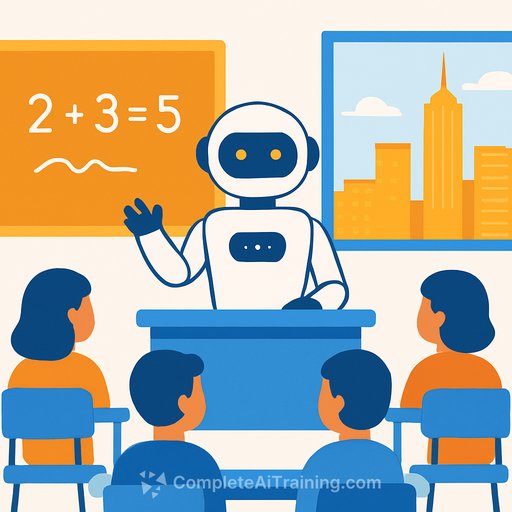
AI tools became normal in classrooms: drafting help, automated feedback, simulations and hybrid teaching. Online and hybrid moved into the mainstream with recorded lectures, modular credits and virtual internships.
The gains came with friction-shorter attention spans, screen fatigue and patchy infrastructure. By year-end, campuses agreed on one thing: AI is here, but it needs rules.
The 2026 Mandate: Consolidate, Regulate, Deliver
"We are moving away from the idea that education ends at a certain age," says Dr Ranjan Banerjee. Degrees are increasingly modular, and continuous upskilling becomes routine.
According to Dr Raman Ramachandran, the core question now is how AI should be integrated. Institutions must pinpoint redundant skills, define new competencies and enforce ethical use with clear frameworks.
Practical Moves for Universities and Colleges
- Publish an AI-use policy: define acceptable assistance, disclosure norms and penalties; differentiate low-stakes learning support from graded work.
- Redesign assessment: more oral vivas, in-class problem solving, project logs and version histories; less pure recall testing.
- Curriculum refresh: set a 6-12 month update cycle with industry input; embed AI literacy, data reasoning and ethics across subjects.
- Experiential learning as default: internships, live projects, simulations and apprenticeships tied to credits.
- Life skills at parity with functional skills: communication, adaptability, teamwork and ethical judgment are non-negotiable.
- Faculty development: hands-on training in AI tools, prompt quality, feedback design and assessment integrity.
- Academic integrity: require AI-disclosure statements; sample-check with oral defenses; focus on process evidence, not just final outputs.
What to Teach: Skills Tech Can't Easily Replace
- First-principles thinking and problem framing
- Written and verbal communication across contexts
- Systems thinking and decision-making under uncertainty
- Creativity, critique and iteration
- Ethics, civic reasoning and cultural context
- Collaboration, leadership and client-facing skills
Guardrails Against Over-Reliance on AI
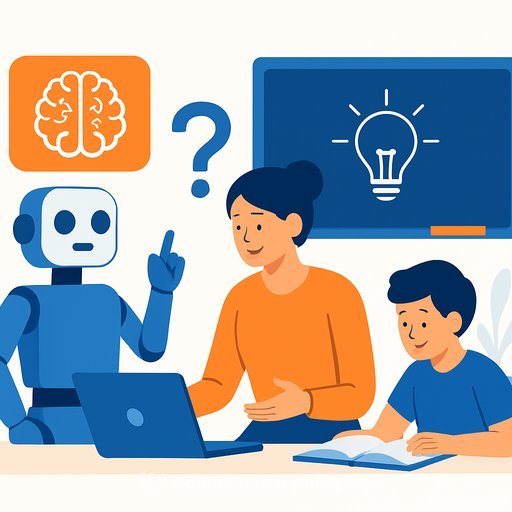
"Excessive dependence on AI can weaken cognitive engagement and analytical depth," warns Poulomi Bhadra. The fix is Design, not bans.
- Require AI-optional drafts, then in-class refinement without tools.
- Use oral checks, whiteboard walkthroughs and reflective memos.
- Mix screen time with analog work: labs, studios, fieldwork and seminars.
- Teach verification: source checking, replication and bias detection.
Mental Health: From Counselling Room to Campus Strategy
Rising student suicides and the Supreme Court's suo motu focus have pushed mental health to the policy front. Stigma, academic pressure, money stress and information overload sit at the core.
- Early alerts: attendance, LMS activity and grade drops trigger outreach.
- Peer networks: trained student listeners and buddy systems.
- Faculty readiness: basic training on signs, response and referral.
- Financial triage: rapid micro-grants and fee relief pathways.
- Workload audits: cap concurrent deadlines; align assessment weight with time-on-task.
Reference data: NCRB's ADSI reports on student suicides provide context for policy design. See the official series here: NCRB ADSI.
NEP 2020 at Five: Scale With Accountability
Gross Enrolment Ratio has risen to 28.4% (from 23.7% in 2014), with total enrolment crossing 4.46 crore. "The focus will shift from policy formulation to quantitative performance," notes Kuldip Sarma.
To reach a 50% GER by 2035, India needs ~86 million additional enrolments. That scale requires deep industry-academia partnerships, apprenticeships and credit-linked on-the-job training. Review the policy backbone here: NEP 2020.
Metrics That Matter in 2026
- Skills proficiency by course (rubrics + external benchmarks)
- Placement quality: role relevance, CTC-to-cost ratio and 12-month retention
- Employer satisfaction and repeat hiring rates
- Apprenticeship-to-job conversion %
- Micro-credential uptake and credit stacking
- AI policy compliance and academic integrity incidents
- Student well-being indicators: help-seeking rates, time-to-support, absence days
- Faculty adoption of active learning and AI-informed pedagogy
For Working Professionals and Adult Learners
Modular degrees, stackable credits and recognition of prior learning should be standard. Flexible calendars, weekend labs and virtual internships open doors without career breaks.
If you're building AI fluency for work, curate short, job-linked courses and stack them with credits. A practical starting point: AI courses by skill.
A Simple 90-Day Plan for Academic Leaders
- Weeks 1-2: Audit assessments for AI risk; set disclosure norms; identify three programs for pilots.
- Month 1: Publish v1 AI-use policy; run faculty workshops; set up an industry advisory huddle.
- Month 2: Launch experiential pilots (internships/live projects) with credit; start well-being early alert system.
- Month 3: Review pilot data; refine rubrics; scale to 30% of programs; publish a public dashboard with 6-8 KPIs.
The Bottom Line
2025 forced change. 2026 demands discipline.
Degrees will matter less than the skills, ethics and employability your institution delivers. Build for outcomes, stay close to industry and design learning that keeps humans-not tools-at the center.
Your membership also unlocks: