The AI moment communicators have been waiting for
There's a reason many comms pros feel stuck in a messy middle. You're asked to explain, to mediate, to clarify-while AI rewrites how work gets done. That tension is a signal. This is the opening to move from order taker to decision driver.
AI is a career accelerant if you pull the right levers. Productivity gains haven't hit full stride yet, but the early adopters with a clear plan are already outpacing their peers. The prepared communicator wins.
Machines are learning your culture. Own the language.
Large language models are ingesting your public statements, policies, FAQs, and executive quotes. They absorb tone, infer risk, and mirror patterns back to your stakeholders. If machines learn from your language, someone has to steward that language. That's you.
The highest-value communicators won't ask AI what to say. They'll teach it how to think through constraints, intent, and context. That's the new moat.
Treat AI as a stakeholder
ChatGPT, Claude, and Copilot aren't just tools. They're tireless stakeholders that influence perception, decisions, and trust. They never sleep, rarely forget, and won't read your mind.
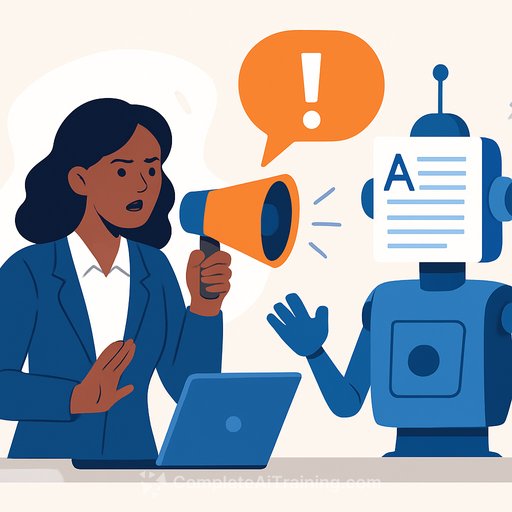
Like any stakeholder, they can be biased, inconsistent, or sloppy. Your job is to set expectations, provide clear inputs, and audit outputs. Technology will move; your judgment must lead.
Own the "language layer" of your AI strategy
AI can generate infinite content. It can't decide what should be said. It won't weigh ethics, timing, or consequences the way a seasoned communicator does.
Claim the language layer: define boundaries for how your organization speaks about values, decisions, employees, and customers. Treat each "quick note," policy, and leadership update as training data-because it is. These systems remember more than your longest-tenured colleague.
Build your AI comms operating system
- Create AI communication principles: clarity, evidence, empathy, accountability, and consistency across channels.
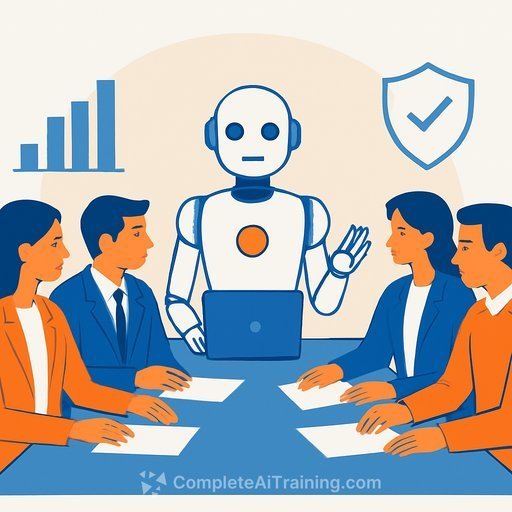
- Stand up a cross-functional task force with HR, Legal, Risk, and IT to set governance and escalation paths. Equip tech leaders with role-specific guidance such as the AI Learning Path for CIOs.
- Write message playbooks for high-stakes scenarios: crises, layoffs, M&A, executive transitions, regulatory events, and good-news moments like promotions and launches.
- Use an "AI chief of staff" pattern: a private, secure workspace to draft, critique, red-team, and simulate stakeholder reactions before anything ships.
- Stress-test language across multiple LLMs to find inconsistencies, ambiguity, or phrasing that invites misinterpretation.
- Institute prompt standards, but don't confuse prompts with strategy. Prompts are tactics; principles make them useful.
- Treat internal memos as long-term inputs. Align tone, definitions, and naming so machines don't learn mixed signals.
- Back product and campaign ideas with AI-assisted research, then validate with human judgment and small pilots.
- Refresh governance quarterly. Map what AI can draft, what must be human-edited, and what is strictly human-only.
Practical governance resources
If you're formalizing policy, the NIST AI Risk Management Framework is a solid reference for process and oversight. Review it here.
What to measure
- Message clarity: fewer follow-up questions, shorter approval cycles, reduced legal rework.
- Consistency: alignment of terminology and tone across internal and external assets (and across LLM outputs).
- Trust signals: sentiment shifts, spokesperson credibility, employee confidence scores.
- Speed with safety: time from brief to final without quality drops or risk spikes.
- Outcome lift: earned coverage quality, owned engagement, and conversion tied to clearer messaging.
Common traps to avoid
- Prompt obsession. Prompts help, but principles prevent messes.
- Over-automation. Keep humans in final control for sensitive topics.
- Mushy governance. Vague rules create inconsistent outputs and reputational risk.
- Single-model dependence. Cross-check across models to catch blind spots.
- Short-term thinking. Today's memo becomes tomorrow's model input. Write with that in mind.
From middle to leadership
Comms has moved from "nice to have" to a top-line driver. The teams taking the lead are building internal task forces, rewriting governance, accelerating go-to-market, improving media results, and informing product through AI-backed research.
Meaning is scarce. Those who define meaning earn trust. Step out of the middle and take the wheel.
Level up your AI fluency
Want a structured path to build job-specific AI skills for comms teams? Explore curated programs here: AI courses by job. Leaders can also review strategic guidance in AI for Executives & Strategy.
One last note
If you're looking for deeper discussion and live examples, the AI Horizons Conference in Fort Lauderdale (Feb. 2-4) will be focused on this moment for communicators. Bring your questions, and bring your standards. Your organization needs both.
Your membership also unlocks: