AI Is Now a Practical Challenge for Schools. Reform Can't Wait.
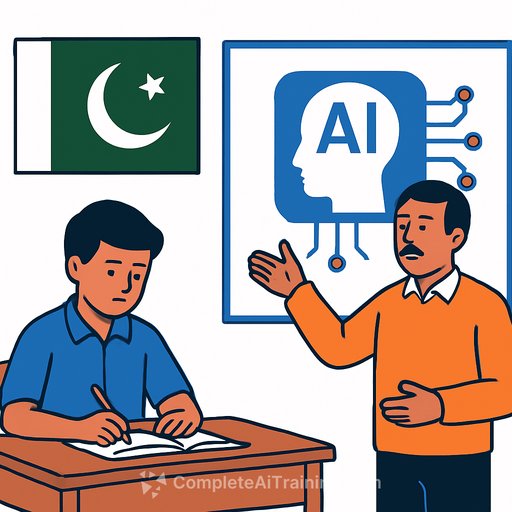
Quetta, December 25, 2025 - Education expert Zahid Jan Mandokhel, CEO of Leaders Odyssey School, put it plainly: AI for Education is already changing how students learn and how schools operate. The gap between current classrooms and AI-enabled work is widening. Waiting for policy to catch up won't help our students.
At an AI awareness conference, Mandokhel introduced the Scholar Tech model-built on STEAM and modern instructional practices. The core idea: shift from rote content to applied problem-solving, project work, and purposeful use of AI tools. It's a push to make learning hands-on, ethical, and aligned with real jobs.
What's Broken-and Why It Matters
Traditional systems still reward memorization, not thinking. Assessments lag behind how students actually learn and create with AI. Teacher training is fragmented. The result: students graduate without the critical thinking, digital fluency, or practical skills they need.
Mandokhel's message was clear: Pakistan's youth must build judgment, creativity, and technical literacy to compete globally. That requires curriculum reform, new teaching methods, and school-wide AI policies-now, not later.
What Schools Can Do This Term
- Set clear AI use policies: what's allowed, what's not, and how to cite AI assistance. Teach academic integrity with AI, not against it.
- Build AI literacy across subjects: basic model limits, bias, prompt writing, evaluation of AI outputs, and tool selection.
- Switch from rote tasks to projects: data analysis in science, AI-assisted drafting in language, simulation in history, creative coding in art and design.
- Update assessment: grade process, reasoning, and source transparency. Include oral defenses and artifact logs showing how AI was used.
- Run teacher PD sprints: short workshops on classroom-safe tools, prompt patterns, rubric redesign, and feedback workflows.
- Integrate ethics: fairness, privacy, consent, and bias testing as standing checkpoints in student work.
- Strengthen infrastructure: device access, filtered tools, and classroom-ready alternatives when the internet is unreliable.
Inside the Scholar Tech Model (STEAM, Applied, Accountable)
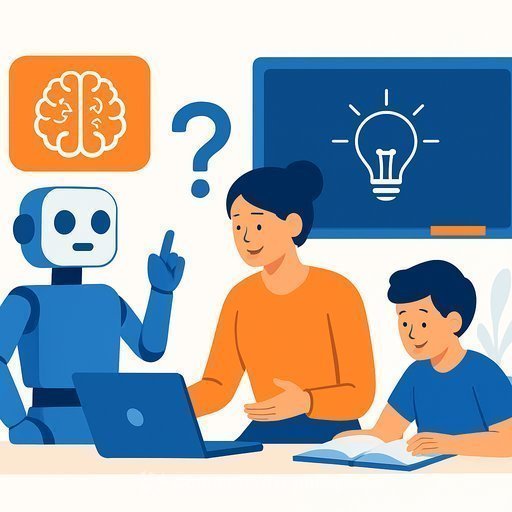
The model emphasizes interdisciplinary projects that mirror real problems, not textbook exercises. Students plan, prototype, use AI to draft or analyze, then validate results against data or primary sources. Teachers coach thinking and process-not just the final answer.
Key features include explicit AI usage logs, peer reviews, and mixed assessments (products, reflections, and short defenses). This makes AI visible and accountable instead of hidden in the background.
Ethics and Guardrails Come First
Ethical training isn't a lecture at the end of a unit-it's baked into the workflow. Teach students to test AI outputs for bias, verify facts, and cite sources. Align school policy with global guidance and local context.
For reference, see UNESCO's guidance on generative AI in education and research. It's a solid baseline for policy and practice.
The Stakes for Pakistan's Youth
Employers are hiring for skills, outcomes, and adaptability. Content recall is cheap; judgment and practical execution are not. If schools don't update fast, students will pay the price in higher education and the job market.
Mandokhel's call is direct: adopt advanced, AI-aligned models now. Build critical thinkers who can use tools with care, create value, and prove their work.
Quick Wins You Can Launch in 30 Days
- Publish a two-page AI policy and a student-facing citation guide.
- Run a school-wide "AI in practice" week with short, subject-specific projects.
- Add an AI usage log to every major assignment.
- Pilot one capstone per grade where students solve a local problem with STEAM and AI.
- Host a parent session to set expectations and build trust.
If your team needs structured upskilling, explore focused AI course paths by job role for educators and academic leaders: Complete AI Training - Courses by Job, or consider the AI Learning Path for Primary School Teachers.
Your membership also unlocks: