CEO Spotlight: Palina Litvinkovich on Leading with AI and Human Judgment
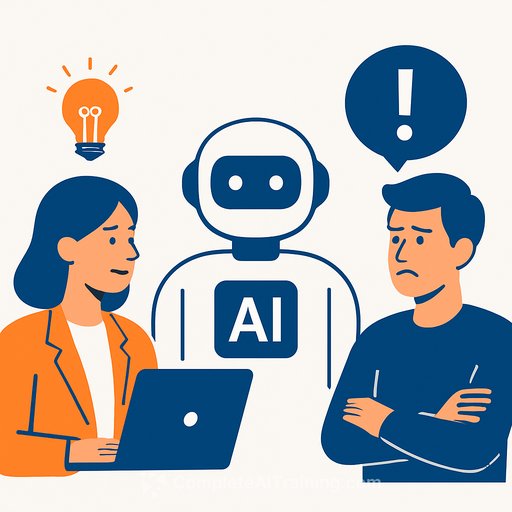
Building agile, resilient teams is crucial as AI tools become more prevalent in the workplace. A recent Gallup report highlights that nearly 70% of employees feel anxious about AI’s growing role, which directly impacts engagement and productivity. Palina Litvinkovich, a seasoned IT management expert, offers practical insights on how leaders can navigate this reality.
Building Adaptive Teams for Business Resilience
With close to a decade of experience, Palina has earned her reputation by creating delivery systems, scaling operations, and fostering agile cultures within international teams. She believes resilience comes from adaptable processes and teams that can pivot quickly to meet new challenges.
Her leadership style focuses on transparency, flexibility, and trust. “I build teams that don’t need micromanagement. It’s about clear goals, shared responsibility, and genuine engagement,” Palina explains. This approach encourages ownership and reduces the need for rigid control.
Driving Results with AI-Enabled Projects
Palina highlights several projects where AI was integrated as a practical tool rather than a buzzword. One notable example is an AI module for a beauty e-commerce platform that identifies products in influencer video reviews and displays product cards in real time. This system combined video, audio, and visual analysis without compromising user experience, turning AI into a growth engine for sales and customer loyalty.
In the FashionTech sector, her team developed a platform that uses Generative Adversarial Networks (GANs) to create hyper-realistic clothing try-ons based on individual body measurements. Palina's team designed the entire data pipeline and established technical constraints to enhance model accuracy and scalability.
AI as a Collaborative Tool, Not a Replacement
For Palina, AI’s value lies in enhancing team workflows rather than replacing human judgment. She stresses the importance of involving teams in AI integration, distinguishing between tasks suited for automation and those requiring human insight.
At a digital marketing agency, her team built a client portal featuring an AI module that filters leads by analyzing speech and written input. Achieving 90% accuracy, this tool reduced manual workload by 2.5 times and cut client lead review time by 80%. Palina's role was to interpret AI metrics and align the technology with clear business goals, ensuring it remained a useful asset rather than a flashy addition.
Leadership That Fosters Engagement and Purpose
Palina is known for transforming groups into cohesive, purpose-driven teams through structured processes like regular one-on-one meetings and horizontal communication systems. She points out that real flexibility is about understanding the “why” behind agile practices, not just following frameworks blindly.
“Many teams appear agile but are buried under excessive task management,” she notes. Her philosophy prioritizes conscious project management that puts people and purpose first, enabling quality scaling without burnout.
Her leadership earned her the Gold Award for Strategic Growth & Client Delivery Leadership at the 2025 ECDMA Global Awards, and the CREA Global Award for entrepreneurship and innovation. She continues to advise startups and share insights on integrating AI thoughtfully in business.
Pragmatic Approach to AI Implementation
In projects with high uncertainty, Palina applies lean methodologies and situational leadership to stay adaptable while maintaining control. She emphasizes that AI adoption is an evolving process requiring ongoing assessment and flexibility.
“Implementation should start with ‘why,’ not the tool itself,” she says. When teams understand AI’s purpose as a support system — not a replacement — resistance diminishes. AI can’t grasp ambition, sense team dynamics, or understand user fears; only people can make those decisions.
Palina’s experience demonstrates how intentional, empathetic AI integration can become part of a company’s strategic approach without negatively affecting people.
Further Learning
Executives interested in building agile teams and integrating AI thoughtfully can explore practical training resources on AI tools and leadership at Complete AI Training.
Your membership also unlocks: