Through the Patent Minefield: How Legal Expertise and AI Shield Baltic Business
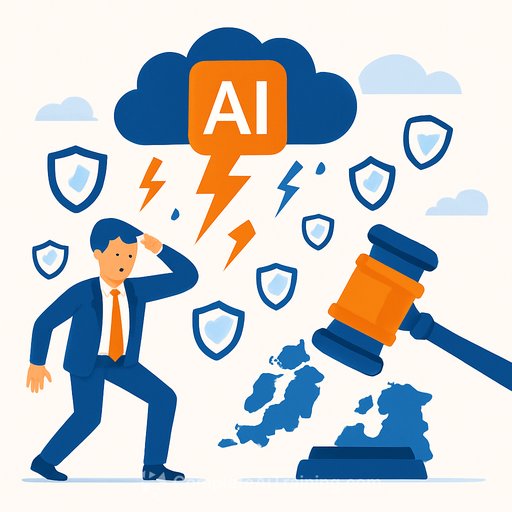
Since 2022, the patent pressure in Estonia, Latvia, and Lithuania has jumped. Fewer global players skip protection here, and more rights now cover this market through European routes. For legal teams, that means higher infringement exposure, faster escalation, and tighter launch windows.
The headline risk isn't strategy-it's scale. Patent data volume is exploding, and manual review alone can't keep pace without draining budgets. Teams that still run "wait and see" are effectively budgeting for injunctions.
The Unitary Patent changed the incentives
The Unitary Patent made broad, cost-efficient coverage across participating EU states more attractive, while the enforcement environment has become more coordinated. Result: more patents with reach, more filings that spill over to Baltic operations, and more active enforcement.
If you need a refresher, see the European Patent Office's overview of the UP system here and the Unified Patent Court framework here.
Why "Freedom to Operate" stalls
FTO is a data problem. A single competitor's portfolio might run into the hundreds or thousands. Reviewing every asset line-by-line can cost tens of thousands of euros, per product line, per release.
So teams defer. The product ships. A letter arrives. Now you're fighting on the opponent's timeline, in their venue, with their claim charts setting the pace.
AI first, counsel always
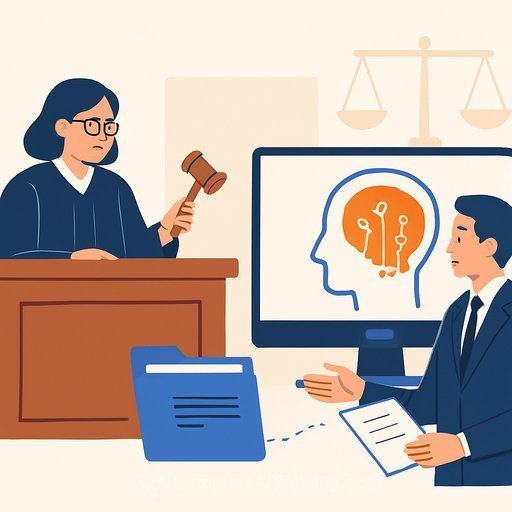
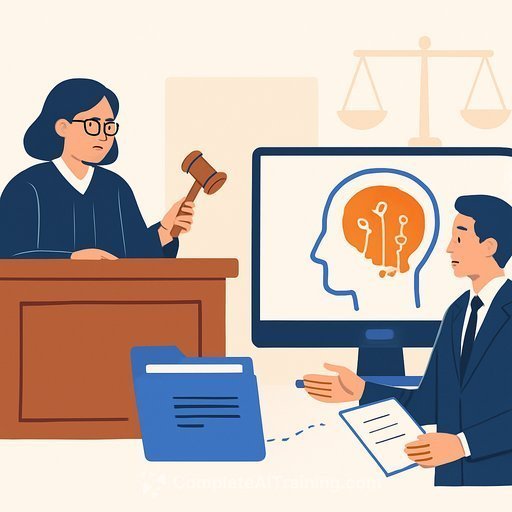
The fix is a hybrid workflow: AI filters, counsel decides. Feed technical specs and claim concepts into an AI search and classification layer. In hours, you cut 500 assets to the 20-30 that actually deserve attention.
From there, legal takes over: claim construction, literal vs. equivalents mapping, prosecution history checks, prior art angles, design-arounds, and clearance positions. You spend money where risk is real, not where it's theoretical.
A practical FTO playbook for legal teams
- Define the product scope: break features into claim-like elements (inputs, processes, outputs).
- AI triage: run semantic searches on specs and drawings; cluster results by feature; score by proximity to core claims.
- Portfolio cutdown: retain only high-similarity families; de-duplicate continuations/divisionals.
- Counsel review: build claim charts on the top set; assess literal coverage and doctrine of equivalents exposure.
- Design-arounds: pull weak points the AI flagged (e.g., narrow means-plus-function support) and propose alternatives.
- Positioning: prepare FTO memos and negotiation levers (licenses, cross-licenses, prior use, prior art search tasks).
- Monitoring: set alerts on families tied to your core features and re-run triage at each release.
Who can help? Legal partners built for volume
For high-volume portfolios and Baltic coverage, these firms combine legal depth with efficient workflows:
- METIDA: Early adopters of the hybrid AI-legal model for cost-effective FTO and portfolio handling.
- Papula-Nevinpat: Strong Nordic-Baltic presence with technical bench strength.
- GEVERS: Benelux-based, high-volume practice for broader EU coverage.
Turn defense into offense
Design-around intelligence is value you can ship. AI highlights what's truly claimed, what's loosely supported, and where competitors left gaps. Engineers get concrete change requests; counsel gets cleaner claim charts and better settlement posture.
There's another upside: R&D stimulus. Patent databases are public R&D logs. With portfolio-wide analysis, you spot white spaces-features no one has protected-so you can file first or build confidently.
What to set up this quarter
- Stand up an AI-driven search baseline for your top three product lines.
- Agree risk thresholds with the business (what triggers a design change vs. license outreach).
- Pre-negotiate fixed-fee packets with outside counsel for triage, claim charts, and clearance opinions.
- Implement a portfolio watchlist for your top five competitors and key technology keywords.
- Keep an auditable trail: inputs, models used, search prompts, and counsel conclusions.
- Run a lightweight training for product managers so specs map cleanly to claim elements.
Upskill the legal function on AI
If your team is formalizing AI search and review workflows, structured training helps. Explore curated AI course catalogs by role here: AI courses by job.
A call to Baltic legal leaders
Ignoring foreign patents is no longer viable, and freezing product roadmaps isn't either. The path forward is simple: use AI to screen, then use legal judgment to act. Faster triage, tighter opinions, fewer surprises.
If you want to stress-test your current approach or scope an FTO sprint, get in touch. Contact METIDA for a free consultation.
Your membership also unlocks: