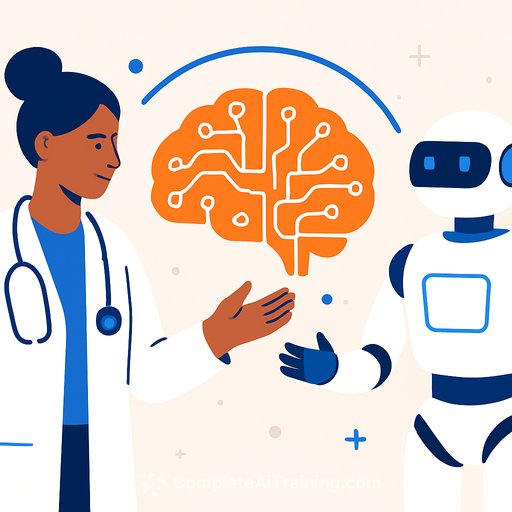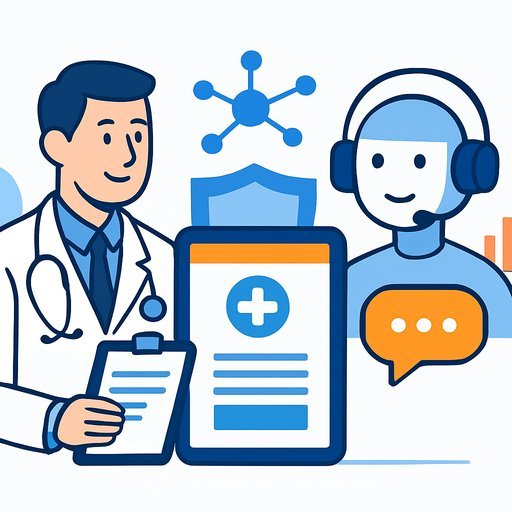
Are AI Chatbots Exposing Healthcare's Patient Engagement Limits?
Debate the safety all you want. The throughline is clear: there's a widening patient engagement gap, and consumer AI chatbots are stepping into it.
That should be a wake-up call for every healthcare leader. Patients are finding answers elsewhere because the system makes it hard to get basic help.
The spark: consumer health chatbots went public
In early 2026, three major players released consumer-facing health chatbots. OpenAI launched ChatGPT Healthcare. Anthropic announced Claude for Healthcare. Amazon One Medical rolled out a Health AI assistant.
Each tool promises context from patient records, plain-language explanations, and support for common questions. One even routes to care when symptoms are concerning. The market moved fast because demand is already there.
The real issue: patients can't get in
About 100 million people lack a usual source of care. Costs push visits off. The provider shortage is getting worse. Even if a patient tries to book, they face a clunky process and a 31-day wait on average, with transportation adding another barrier.
As one analyst put it, spending 30 minutes just to reach a doctor shouldn't be normal. Patients are tired of the maze and default to a tool that answers instantly.
Demand signals you can't ignore
OpenAI reported 2 million health-related messages to ChatGPT at the start of 2026. A Sacred Heart University survey found roughly a third of patients already use AI to research conditions and are open to using it for coordination.
"What utilizing ChatGPT, or any AI, shows is that there's a broken healthcare system," said Nicole Lamoureaux of the National Association of Free and Charitable Clinics. With coverage shifts and affordability pressures, expect more people to try AI first.
Trust isn't dead-access is
Patients still trust their own clinicians. But the path to those clinicians is blocked by usability issues and poor digital experiences.
Provider websites often bury or miss the content patients actually need. If the official door is closed or confusing, patients will try the open one-ChatGPT, Claude, or whatever sits on their phone.
Health literacy upside-and the catch
Nearly a third of adults have basic or below basic health literacy, and only 12% are proficient. AI can translate clinical language into plain English and help patients prepare questions for visits. "AI tools are there to help fill that gap and help patients be more empowered when they feel powerless," said Foluke Omosun, Ph.D.
But accuracy, bias, and overconfidence remain risks. Expecting patients to audit sources or spot model errors on their own is unrealistic. That puts responsibility back on providers to guide safe, appropriate use.
For context on health literacy, see the U.S. Department of Health and Human Services overview: HHS: Health Literacy.
What healthcare leaders should do now: a practical playbook
- Define scope and guardrails: Education, reminders, and basic navigation are in. Diagnosis and complex triage are out. Hard-stop any urgent or high-risk symptoms with clear escalation to nurse lines, urgent care, or 911.
- Consent and data governance: Use explicit, revocable consent before pulling any record context. Minimize PHI exposure. Prefer on-prem or BAA-backed environments. Log access and requests end-to-end.
- Safety system: Retrieval only from vetted clinical sources. Require citations. Build refusal policies for out-of-scope asks. Red-team regularly with clinicians and QA. Version and rollback models like meds-changes need oversight.
- Equity by design: Reading level checks (aim for 6th-8th grade). Multilingual support. Accessibility compliance. Bias audits on outputs, plus targeted fixes where disparities appear.
- Human-in-the-loop: Easy handoff to care teams via secure messaging, callback, or virtual visit. Give clinicians a transcript and context so they aren't starting from zero.
- Patient education: Upfront disclaimers, examples of good questions, how to verify advice, and clear emergency rules. Provide a feedback button on every response.
- Staff enablement: Train clinicians and call center teams on what the bot can and can't do, plus escalation paths. Give scripts for closing loops and correcting AI errors.
- Integration, not isolation: Connect to EHR, scheduling, and CRM. Mirror content across web/app/IVR so answers are consistent wherever a patient starts.
- Vendor due diligence: Demand model cards, safety reports, red-team results, uptime, and exit plans. Sign BAAs. Confirm data use limits and deletion SLAs.
- Metrics that matter: Time-to-first-answer, call deflection, portal activation, no-show reduction, refill adherence, readmissions, and patient-reported understanding. Track safety incidents and equity gaps.
For workforce upskilling and governance training, consider role-based AI coursework: Complete AI Training - Courses by Job.
Policy still matters
AI won't fix affordability, coverage, or transportation. Expanding subsidies, stabilizing Medicaid eligibility, and funding social needs will reduce dependence on stopgaps. As Lamoureaux noted, ignoring AI is risky-but relying on it alone is a mistake.
The provider shortage isn't easing quickly. See current projections from the Association of American Medical Colleges: AAMC Workforce.
What "good" looks like in 2026
- Plain-language explanations of labs, meds, and after-visit summaries with citations.
- Record-aware education only with consent, with clear "how this was used" receipts.
- Symptom guidance that sets care thresholds and escalates anything risky immediately.
- Self-service booking and refills, with smart prompts to prep patients for visits.
- Privacy by default, transparent logs, and simple ways to delete data.
- Continuous monitoring for accuracy, bias, and patient understanding.
The bottom line
Patients are already using AI because it answers fast and speaks plainly. The gap isn't going away on its own.
Build safe, useful assistants that extend your team, protect patients, and reduce friction-or watch trust and demand shift to tools you don't control.
Your membership also unlocks: